
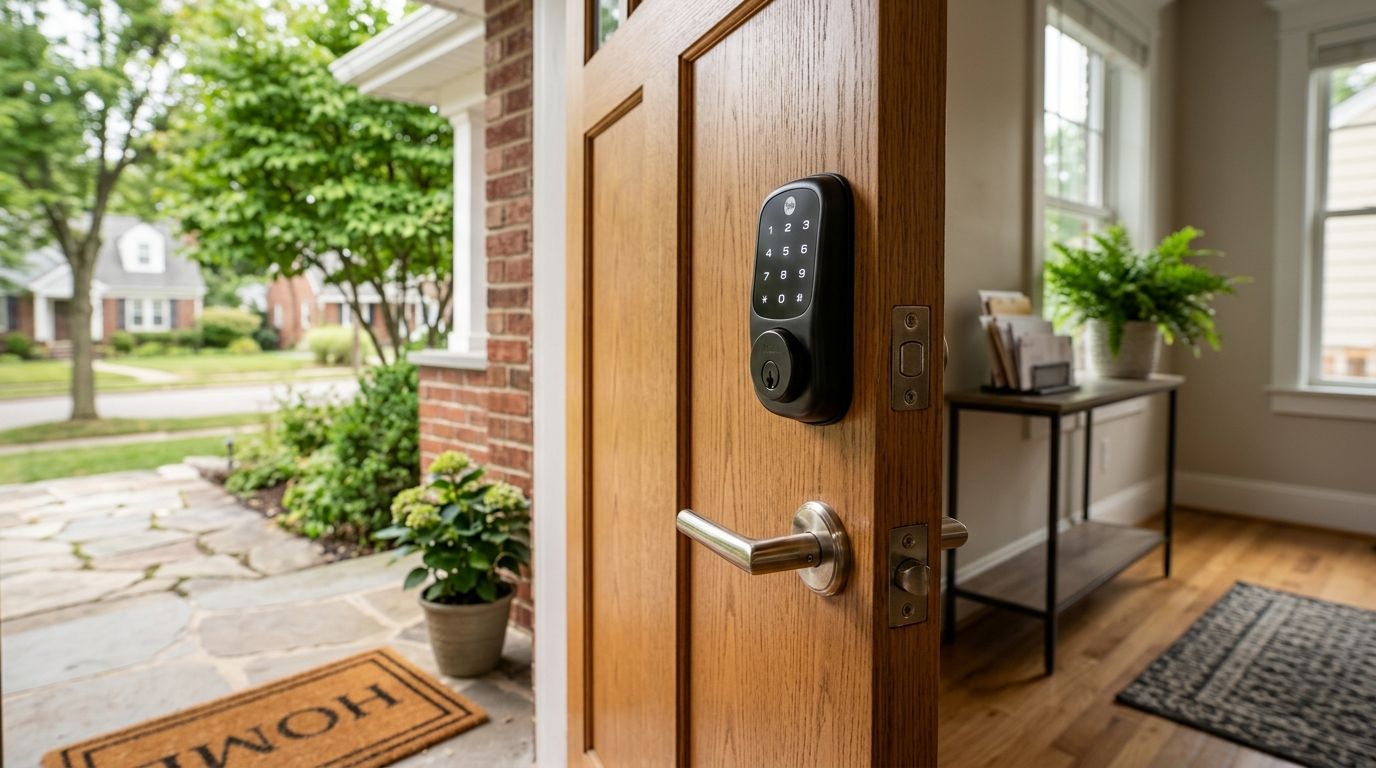
A smart lock for a long-term rental property should be a keypad or Z-Wave/Zigbee deadbolt that lets you reset access codes between tenants without swapping hardware or calling a locksmith every turnover. The catch landlords miss: not every smart lock is legal to install without violating a lease, and Wi-Fi-only models drain batteries fast in New England winters, leaving tenants locked out in January.
- A keypad or Z-Wave deadbolt beats Wi-Fi locks for long-term rentals because codes reset without a locksmith visit.
- Massachusetts landlords still need a physical key backup on file for emergency entry and fire code compliance in 2026.
- Bluetooth-only locks are the cheapest option but offer no remote access when something goes wrong.
- Rekeying between tenants costs less than replacing hardware, and a smart lock for a long term rental property should support both.
Why this matters
A lock swap between every tenant adds up fast across a multi-unit portfolio, and a smart lock that lets you reprogram access instead of rekeying pays for itself after two or three turnovers. The wrong pick creates a different problem: a lease violation, a tenant locked out at midnight, or a lock that stops talking to its app after a firmware update. Before you install anything on a rental in Middlesex County, check whether your lease terms allow a hardware change — some leases require restoring the original lock at move-out, which changes which smart lock makes sense.
2026 rental smart locks fall into four categories, and the right one depends on how often you turn units over, not how much tech you want to show off.
How to pick the right smart lock for a long-term rental property
Start with turnover frequency and remote-management needs, then match those to the lock type. Here's how the four common categories stack up for a landlord managing tenants over months or years, not weekend guests.
| Lock type | Best for | Pro | Con |
|---|---|---|---|
| Keypad deadbolt (no app) | Single-family rentals with infrequent turnover | Simple, no app dependency, works during a power or Wi-Fi outage | Code changes require a site visit |
| Z-Wave/Zigbee smart lock | Multi-unit buildings with a property management hub | Remote code changes, works with existing access-control systems | Needs a hub to unlock remote features |
| Wi-Fi smart lock | Landlords who want app control without a hub | Direct app access, no extra hardware | Battery drain is worse in cold garages and unheated hallways |
| Bluetooth-only lock | Secondary doors and outbuildings | Easy DIY install, no network dependency | No remote access — you have to be on-site or near the door |
Verdict: a Z-Wave or Zigbee keypad deadbolt is the best smart lock for a long term rental property when you manage more than two or three units, because it lets you reset tenant codes remotely without a truck roll. Single-family landlords with one or two doors can get by with a standalone keypad deadbolt and skip the hub entirely.
Keypad deadbolts: best for landlords who turn over units once a year or less
A standalone keypad deadbolt with no app dependency is the most reliable option for a single rental house. You punch in a new four-to-eight digit code at move-out and you're done — no app to maintain, no firmware update breaking access. Buy this if you own one or two doors and don't need remote access.
Z-Wave and Zigbee locks: best for property managers running multiple buildings
These locks talk to a central hub, which means you can push a new code to a unit in Waltham from your office in Framingham without driving anywhere. Property managers coordinating rekeying between tenants across several addresses get the most value here, since one dashboard handles every door. Buy this if you manage three-plus units and already run a smart-home hub.
Wi-Fi smart locks: best for landlords who want app control with zero extra hardware
Wi-Fi locks skip the hub and connect straight to your router, which simplifies setup but stresses the battery harder — expect more frequent battery swaps in poorly insulated hallways during a Massachusetts winter. Buy this if convenience matters more than battery life and you're comfortable checking batteries every few months.
Bluetooth-only locks: best for a secondary door or shed on the property
No hub, no remote access — just a lock that talks to your phone when you're standing at the door. These make sense for a garage or storage door on the rental, not the main entry a tenant relies on daily. Wait on this for your primary door; use it for secondary access points instead.
Why smart lock choice varies for rental properties
- Turnover frequency — annual leases need less remote flexibility than properties that turn over every few months
- Number of units under management — a single-family landlord doesn't need the same hub infrastructure as a 12-unit building
- Lease terms — some leases require the original lock restored at move-out, which rules out permanent hardware changes
- Massachusetts fire and building code — egress doors generally need to open from the inside without a key or code, which limits which lock models qualify
- Power reliability in the unit — basements, unheated hallways, and older buildings drain batteries faster than climate-controlled entries
- Insurance requirements — some carriers specify a minimum ANSI grade deadbolt on rental unit entry doors
“A smart lock that saves you a locksmith trip at every turnover pays for itself faster than one with more app features.”
Is a smart lock better than a traditional deadbolt for a rental?
A smart lock is better than a traditional deadbolt for a rental when you manage multiple units or turn tenants over often, because you reset access without changing hardware. A single-family rental with a tenant staying multiple years often does fine with a traditional deadbolt and a straightforward rekey between leases.
Do I need a locksmith to install a smart lock in a rental?
Most keypad and Z-Wave deadbolts fit standard door prep and install with basic tools, but older Middlesex County housing stock often has non-standard bore holes or a misaligned strike plate that a DIY install won't fix. A licensed locksmith checks door alignment and hardware compatibility before mounting, which matters more on a rental where a failed install means a tenant lockout call at 11pm.
Can I rekey a smart lock between tenants instead of replacing it?
Yes — most smart locks let you wipe old codes and issue new ones in under a minute, which is the entire point of choosing one for a rental over a mechanical deadbolt. If you're managing several buildings, master key systems for multi-unit apartment buildings pair well with smart locks on individual units so maintenance staff keep one master credential while tenants keep their own codes.
For landlords weighing a full hardware upgrade rather than a rekey, electronic deadbolt installation for homeowners covers what's involved in swapping a mechanical deadbolt for a smart one on a rental unit in 2026.
Get a lock recommendation for your rental
Licensed locksmith advice for Middlesex County landlords, available 24/7.
FAQ
What's the best smart lock for a long term rental property?
A Z-Wave or Zigbee keypad deadbolt is the best smart lock for a long term rental property when you manage more than two units, since codes reset remotely without a site visit. Single-door landlords do fine with a standalone keypad deadbolt instead.
Is a smart lock allowed under a standard Massachusetts lease?
It depends on the lease language, not state law directly — some leases require restoring the original lock at move-out. Check the lease before installing hardware that cannot be reversed easily.
How often do smart lock batteries need replacing on a rental?
Battery life varies by usage and temperature, with unheated hallways and basements draining batteries faster than climate-controlled entries. Keypad deadbolts without Wi-Fi typically last longer between changes than Wi-Fi-connected models.
Can tenants get locked out of a smart lock the same way as a traditional key?
Yes — a dead battery, a wrong code entry lockout, or a firmware glitch can all lock a tenant out just like a lost key. A backup physical key or code should always exist for emergency entry.
Do smart locks work during a power outage?
Battery-powered keypad and Z-Wave locks keep working during a power outage since they run on their own batteries, not household electricity. Locks wired into a building access system behave differently depending on the backup power setup.
Should landlords rekey or replace locks between tenants?
Rekeying costs less than replacing hardware and works for both traditional and many smart locks, making it the default move between tenants. Replacement makes sense when the lock is damaged or the property is upgrading to a smart system for the first time.
Are Bluetooth-only smart locks reliable for a rental main entry?
Bluetooth-only locks work fine on secondary doors but are not ideal for a main entry a tenant relies on daily, since they offer no remote access if something goes wrong. They are a better fit for a garage or storage door on the property.
How many access codes should a landlord keep active on a rental lock?
Keep one tenant code, one maintenance code, and one owner code active, and delete everything else at each turnover. Stale codes from previous tenants are the most common security gap on rental smart locks in 2026.
One last thing
The detail landlords skip: Massachusetts egress rules generally require doors to open from the inside without a key or special code, which rules out certain double-cylinder configurations on an exit door — confirm that before buying, not after installation day in 2026.


