
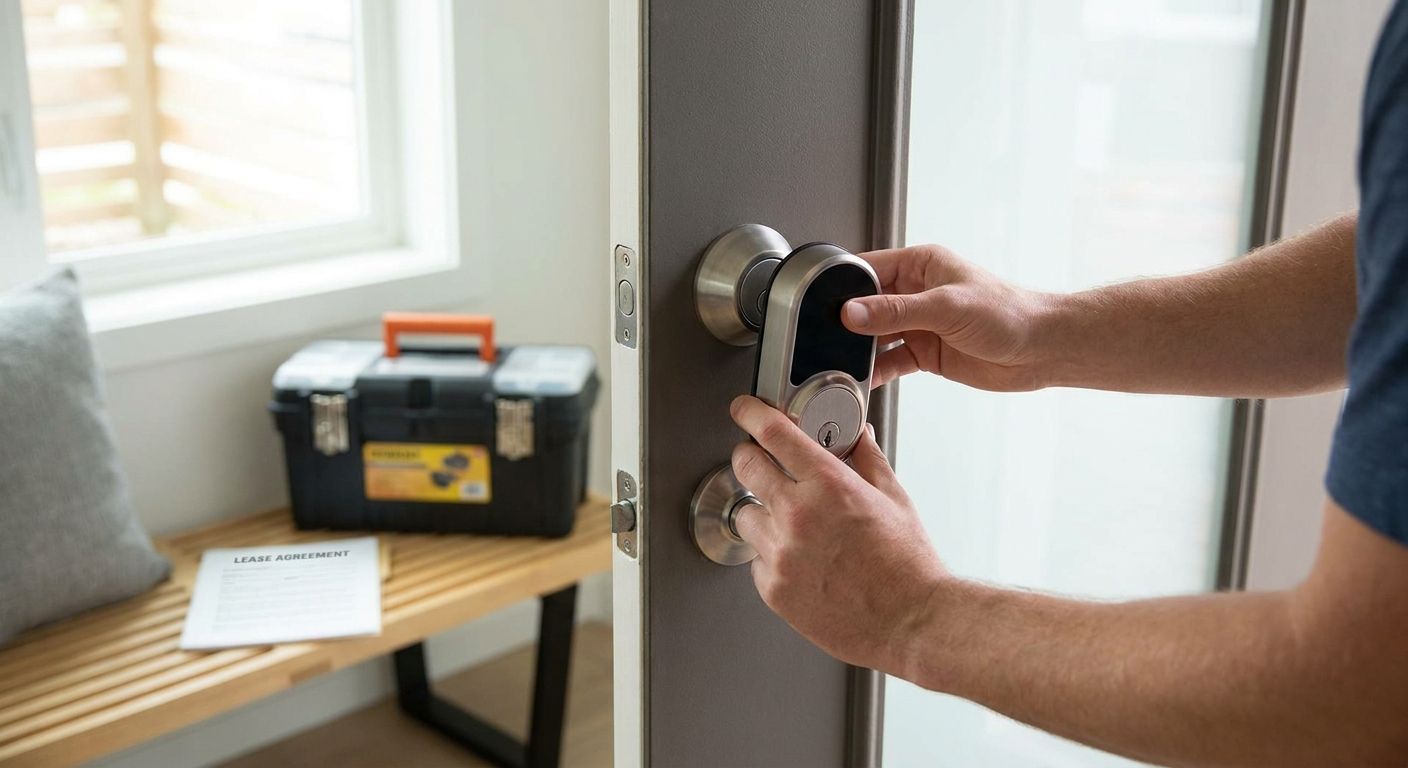
Renter lock upgrades are security additions you can install and remove without altering the door, the frame, or the original hardware your landlord expects back. The goal is protection that doesn't cost you a security deposit or trigger a lease violation notice.
- Reversible lock upgrades for renters include portable door locks, battery keypad add-ons, and reinforced strike plates that leave no drill marks.
- Rekeying is allowed in most leases only with written landlord permission and the original cylinder saved for move-out.
- Smart locks that replace the entire deadbolt body usually violate no-alteration clauses — swap-in keypad covers over the original cylinder don't.
- Window and sliding door pin locks close the gap most renters ignore because leases mention doors, not windows.
- Apex Lock N Key installs and removes rekey work in Middlesex County without damaging original hardware, so lease compliance stays intact.
Why lock upgrades matter for renters
A rental lease usually restricts permanent changes to doors, frames, and locks — but it rarely restricts you from adding a second layer of protection you can pack up and take with you. Renters search for lock upgrades because the stock hardware landlords install is often the cheapest deadbolt available, and previous tenants may still have unaccounted-for keys.
The practical constraint isn't security, it's reversibility. Every upgrade on this list can be removed in under 10 minutes, leaving the original lock exactly as it was when you signed the lease in 2026.
The verdict: renters get real security gains from add-on hardware and permitted rekeying, without ever needing to replace a lock body the landlord owns.
Check your lease before you buy anything
Most leases have a clause about alterations, but the wording varies enough that assuming is a mistake.
- Search the lease text for "alteration," "modification," or "lock" specifically
- Note whether the clause bans permanent changes only, or any change at all
- Check if there's a required-notice period for lock changes (rekeying included)
- Confirm whether you need to provide the landlord a copy of any new key
- Save a copy of the clause and your written request in the same file
If the lease is silent on locks, email your landlord and get a one-line written yes before you touch anything. A text message counts as documentation.
Start with a portable door lock or door brace
This is the fastest, cheapest, fully reversible option and it works on almost any interior or exterior door.
- A door security bar that wedges under the handle and against the floor
- A portable travel lock that slides into the strike plate slot
- A door jammer bar angled against the base of the door
- A chain guard add-on that mounts with adhesive strips, not screws
- A door brace kit rated for forced-entry resistance testing
These don't replace your primary lock — they add a second obstacle that has to be defeated before anyone gets past the first one.
Add a keyless entry cover instead of a new deadbolt
Battery-powered lock covers fit over the existing thumb-turn on many standard deadbolts without removing the original cylinder. That distinction matters for lease compliance: the landlord's lock stays in the door, you're just adding a keypad or app-controlled shell on top.
- Retrofit keypad covers that clamp onto the existing turn-piece
- Bluetooth padlock-style additions for secondary doors
- Battery-powered keypad add-ons for sliding closet or storage doors
- Smart lock covers with auto-lock timers you control from a phone
Check compatibility with your exact deadbolt shape before buying — not every cover fits every cylinder, and returns on installed hardware are a hassle.
Upgrade the strike plate without touching the frame
Most apartment strike plates use 3/4-inch screws that barely reach the door jamb stud. A stronger plate resists kick-in attempts, and in many cases the upgrade uses the same screw holes.
- A reinforced strike plate rated for higher impact resistance
- Longer screws (3-inch) that reach the framing stud behind the jamb
- A door frame reinforcement kit that wraps the strike area
- Hinge-side reinforcement plates for outward-swinging doors
This is the one step where you're touching factory screws, so photograph the original setup first and keep the original screws in a labeled bag.
Rekey with landlord permission instead of replacing
Rekeying changes the internal pins so old keys stop working, without swapping the lock body itself. It's the middle ground between "do nothing" and "install new hardware," and it directly answers the question of who else might still have a key to your apartment.
- Get written approval before scheduling the work
- Keep the original pins and cylinder in a sealed bag
- Provide the landlord a copy of the new key if the lease requires it
- Schedule the rekey the same week you move in, before settling in
- Confirm the locksmith can restore original pins at move-out if required
A licensed locksmith like Apex Lock N Key can walk through how to choose between rekeying and replacing a lock before the appointment, so you're not guessing which option your lease actually allows.
Secure windows and sliding doors without permanent hardware
Leases talk about door locks constantly and windows almost never. That gap is exactly where a lot of renters skip a step that costs under an hour to fix.
- Window pin locks that drill a small hole through the sash (ask permission first)
- Removable sash locks that clamp without drilling
- A sliding door security bar dropped into the track
- A charley bar for sliding glass doors, adjustable and removable
- Window alarm sensors with adhesive mounts, no drilling required
If your lease bans drilling anywhere, stick to clamp-style and track-bar options — they hold up fine against opportunistic entry attempts.
Document everything and keep original hardware
Move-out disputes over security deposits often come down to whether you can prove the door is back to its original condition.
- Photograph every lock and hinge before you install anything
- Keep original cylinders, pins, and screws in one labeled container
- Save the written permission email or text for the length of your tenancy
- Photograph the finished install and the removal afterward
Know when to call a licensed locksmith instead of DIY
Rekeying, strike plate reinforcement involving structural screws, and anything touching a fire-rated door assembly are jobs where a mistake costs more than a locksmith visit would have.
- The door is fire-rated or part of a multi-unit building's egress plan
- The existing lock is already damaged or sticking
- You need the original hardware restorable at move-out with zero visible marks
- The lease specifically requires licensed-professional work for any lock change
A mobile locksmith who works in Middlesex County day and night can usually handle a rekey appointment same-day, which matters if you just signed a lease and want the change done before your first night in the unit.
Comparison: lock upgrade options for renters
| Option | Best for | Reversible without a trace? | Key limitation |
|---|---|---|---|
| Portable door brace/bar | Anyone, any door type | Yes | Only works while you're home; doesn't help when you're out |
| Battery keypad cover | Renters who want app/code access | Yes, if it clamps over existing cylinder | Compatibility varies by deadbolt shape |
| Reinforced strike plate | Renters worried about kick-in force | Mostly (same screw holes) | Requires keeping original screws for move-out |
| Rekeying with permission | Anyone who inherited unknown keyholders | Yes, with cylinder restoration | Needs written landlord approval first |
| Window/sliding door pin locks | Ground-floor and sliding-door units | Depends on drilled vs. clamp style | Drilled versions leave small holes |
Verdict: rekeying with written permission solves the biggest renter risk — unknown keys in circulation — and a portable brace or strike plate reinforcement covers the rest without touching anything the landlord owns.
Need a rekey before move-in?
Licensed mobile locksmith service across Middlesex County, MA, 24/7.
Common mistakes renters make with lock upgrades
- Drilling into a door without saving the removed hardware — landlords deduct deposit money for holes they can't match back to original screws.
- Rekeying without written permission — a verbal "sure, go ahead" doesn't protect you if a new manager takes over and disputes it.
- Buying a smart lock that replaces the whole deadbolt body — most full-replacement smart locks violate a standard no-alteration clause even if they look reversible.
- Ignoring windows because the lease only names doors — a locked front door means nothing if a ground-floor window has no secondary lock.
- Skipping spare house key planning — after a rekey, forgetting to cut new spares for roommates or emergency contacts leaves someone locked out later.
FAQ
Can a renter legally rekey an apartment lock in 2026?
Yes, in most cases, but only with written landlord permission and the original cylinder kept for restoration at move-out. Check the lease's alteration clause first before scheduling any locksmith visit.
What's the best lock upgrade for renters that doesn't violate a lease?
A portable door brace or a battery keypad cover that clamps over the existing deadbolt turn-piece is the safest bet since neither removes or replaces the landlord's lock. Rekeying with written approval ranks second because it's reversible if the original pins are saved.
Do I need my landlord's permission to add a door brace?
Usually no, since a door brace or bar doesn't attach permanently to the door or frame. Confirm the lease's alteration language if you're unsure, since some leases define "any addition" broadly.
Is a smart lock a good idea for a rental unit?
Only if it's a cover-style add-on that fits over the existing cylinder rather than a full deadbolt replacement. Full-replacement smart locks typically require landlord sign-off since they swap out hardware the landlord owns.
How much does it cost to rekey an apartment lock?
Pricing varies by lock type and location, so check current rates directly with a licensed locksmith before booking. A licensed provider can quote the job during the same call as scheduling.
What happens if I lose a key during my lease?
Notify your landlord in writing immediately and consider a rekey if the missing key can't be located within a day or two. An unaccounted-for key is one of the most common reasons tenants request an early rekey.
Can I install a window lock without drilling?
Yes, clamp-style sash locks and sliding door track bars secure windows and sliding doors without any drilling. Drilled pin locks work too but leave small holes that need to be filled at move-out.
Do lease alteration clauses cover window locks too?
Most leases only mention doors explicitly, but some broader clauses cover any structural change including windows. Read the exact wording rather than assuming windows are excluded.
One last thing
The upgrade renters skip most often isn't a smart lock or a brace — it's simply asking who else has a key. A rekey solves that question permanently, and it's the one upgrade on this list that a landlord can't reasonably object to once it's requested in writing and the original cylinder is preserved for the next tenant.


