
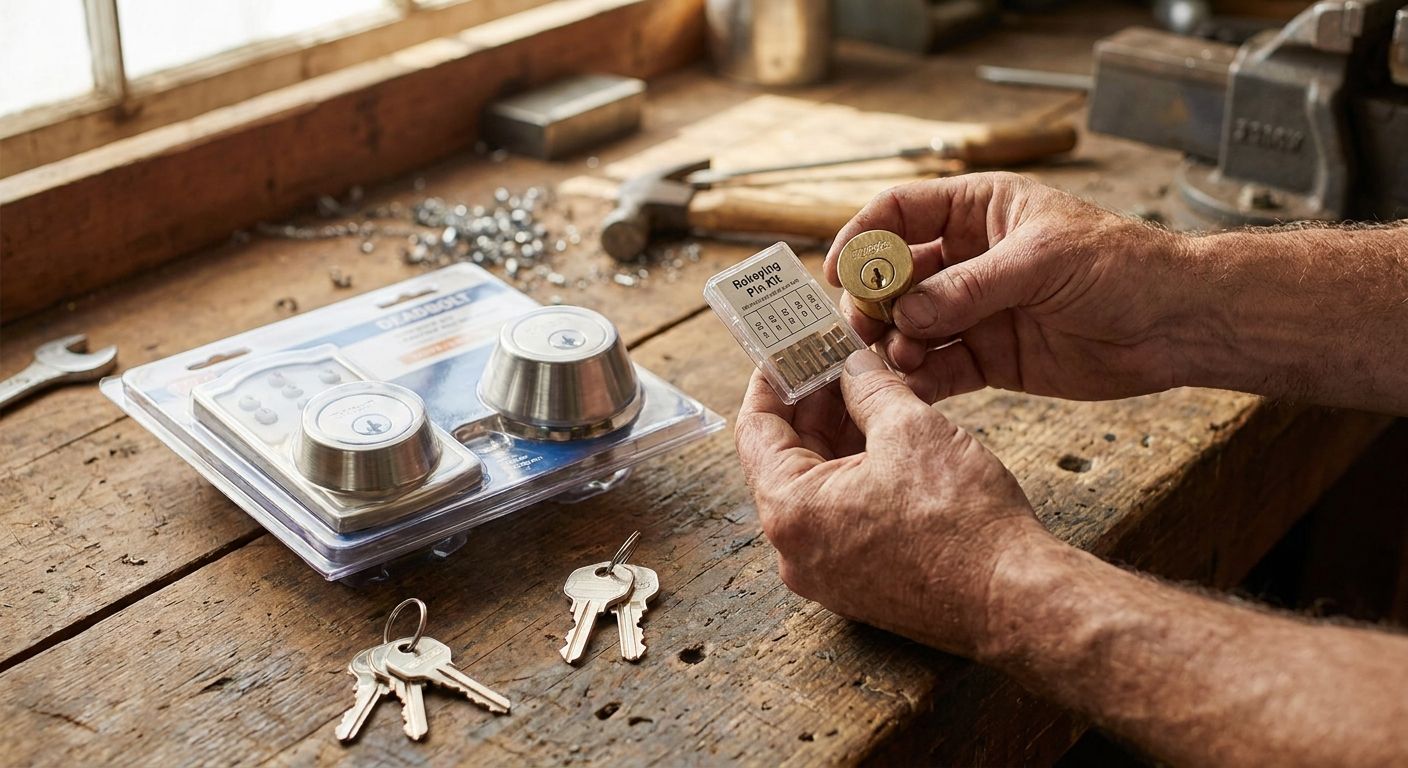
Rekeying and replacing a lock solve different problems, and picking the wrong one wastes money or leaves a security gap. This guide walks through the decision step by step so you know exactly which service to book in 2026.
- Rekey vs replace lock comes down to hardware condition: if the lock body works, rekeying is faster and cheaper.
- Apex Lock N Key rekeys most residential locks same-day for less than a full replacement in 2026.
- Replace the lock instead of rekeying when the cylinder is damaged, the brand is discontinued, or you're upgrading to electronic access.
- After a break-in or lost keys with an address attached, rekey immediately — don't wait for a full renovation.
- Landlords between tenants and new homeowners after closing should rekey as a default, not an option.
Why this matters
A lock left unrekeyed after a move, a breakup, or a break-in is a lock that still opens for someone who shouldn't have access. Most homeowners don't realize rekeying and replacing solve the same core problem \u2014 controlling who holds a working key \u2014 at very different price points and timelines.
Getting this decision wrong in either direction costs you. Replace a lock that only needed rekeying and you pay for hardware you didn't need. Rekey a lock that's actually failing and you'll be calling a locksmith again within months. Before you book anything, know how to spot a locksmith scam — vague pricing and "we have to replace it" pitches on a lock that's clearly fine are the two most common ways homeowners get overcharged.
What you'll need
- The lock hardware itself, still installed and functioning (for rekeying) or the model/brand info if you're shopping for a replacement
- A rough count of how many people currently hold working keys
- Your reason for the change: lost key, break-in, move-in, tenant turnover, or upgrade
- 15-30 minutes per lock if a locksmith is rekeying on-site; longer if hardware needs to be sourced and replaced
- A decision on whether you want traditional keyed locks or an upgrade to electronic entry
The steps
1. Check whether the lock still works mechanically
This is the single fastest way to narrow the decision. If the deadbolt throws smoothly, the key turns without forcing, and there's no visible damage to the cylinder or strike plate, rekeying is almost always the right call. A lock that sticks, grinds, or has a worn keyway needs replacement regardless of who holds the keys, because rekeying only changes the pins inside \u2014 it doesn't fix worn mechanical parts.
Common mistake: assuming a lock is "old" means it's broken. Many deadbolts from the 1990s and 2000s still function fine and rekey without issue.
2. Identify why you need the change
Your reason drives urgency and, often, the answer itself. A lost key with no address attached is a rekey-tonight situation. A break-in or attempted burglary is also a rekey-immediately situation \u2014 residential rekeying after a break-in restores control fast without the cost of full hardware replacement in most cases.
A new homeowner after closing has a different reason: you have zero idea how many copies of the previous owner's key exist. Rekeying immediately after closing is standard practice, not paranoia.
3. Count how many keys are floating around
If you've lost track of who has copies \u2014 old roommates, a past contractor, a previous cleaning service \u2014 rekeying resets every key to zero instantly. This matters more than most homeowners think: a $30 hardware store duplicate from three years ago still opens your door today unless the pins have changed.
Landlords managing turnover between tenants face this constantly. Rekeying between every tenant, rather than trusting that all copies were returned, is the only way to guarantee a clean slate.
4. Compare the actual cost, not the assumption
Most people assume replacing is only marginally more expensive than rekeying. It isn't. Rekeying typically runs well under the cost of new hardware because you're paying for labor and pins, not a new lock body, cylinder, and strike plate. Check current locksmith cost to rekey a house pricing before you commit to a full swap you don't need.
Replacement costs climb further if you're changing brands or upgrading to a smart or electronic deadbolt, since that includes new hardware plus setup.
5. Decide if you're upgrading functionality, not just security
Rekeying only ever restores control over who has a key \u2014 it never adds features. If you want keyless entry, remote access, or a code-based deadbolt, that's a replacement decision, not a rekey decision. Electronic deadbolt installation for homeowners is worth pricing out here since you're already budgeting for a lock change.
Don't rekey a traditional deadbolt today and replace it with a smart lock next month \u2014 that's two service calls for one outcome.
6. Match the hardware to the property type
A single-family home with one or two entry doors is a straightforward rekey-or-replace call. Multi-unit buildings, rental turnovers, and small commercial spaces often need a broader look at master key systems or access control instead of a one-off swap, since the goal is managing many doors under one system rather than a single lock.
Expected outcome after this step: you know whether you're solving a single-door problem or a whole-property access problem, which changes both the service and the price.
Not sure which service you need?
Get a straight answer and a fast quote from a licensed local locksmith.
Troubleshooting
The lock was "rekeyed" but an old key still works. This means the job wasn't finished correctly, or the wrong cylinder was pinned. A properly rekeyed lock should reject every key except the new ones cut for it \u2014 call the locksmith back rather than assuming it's normal.
You don't know if your lock brand can even be rekeyed. Most standard pin-tumbler deadbolts and knob locks (Kwikset, Schlage, Baldwin, and similar) rekey without issue. High-security or proprietary cylinders sometimes require specific key blanks or can't be rekeyed at all, which pushes you toward replacement.
The deadbolt is fine but the strike plate is stripped. This is a replacement-adjacent repair, not a rekey. Rekeying won't fix a door that doesn't latch properly \u2014 that's a hardware alignment issue separate from the pinning inside the cylinder.
You're locked out and can't tell which service you need yet. Get back inside first. How to find a reliable 24-hour locksmith covers what to check before you call anyone, then decide rekey vs replace once you're inside and can inspect the hardware.
A key broke off inside the lock during this process. That's a separate, more urgent problem than rekey vs replace \u2014 don't force it, and don't try to extract it with pliers, which usually pushes the fragment deeper.
You're a landlord unsure if rekeying between every tenant is overkill. It isn't. It's the standard, low-cost way to guarantee no former tenant, guest, or contractor still holds a working key.
Tools and resources
- A working key and the lock's brand name, if known, before calling anyone
- A licensed, insured locksmith \u2014 verify this before any technician touches your locks
- Transparent, upfront pricing with no "we'll know once we're there" quotes
- A short list of everyone who's held a key to the property in the last 12 months
- Apex Lock N Key handles both rekeying and full lock replacement on the same visit when needed, so you're not scheduling two separate appointments
What to do next
If your situation involves a move-in rather than a lost key or break-in, the decision tree looks slightly different. Residential rekeying for new homeowners after closing walks through the closing-day checklist in more detail, including what to ask your locksmith before they leave.
FAQ
Is it cheaper to rekey or replace a lock?
Rekeying is almost always cheaper than replacing in 2026 because you're paying for labor and new pins, not a full lock body and cylinder. Replacement only costs more when you're also upgrading to new hardware or a different lock brand.
How long does rekeying a lock take?
A standard residential rekey takes roughly 15-30 minutes per lock when the hardware is in good condition. Multiple doors on one visit typically take under an hour total.
Can any lock be rekeyed?
Most standard pin-tumbler deadbolts and knob locks can be rekeyed, but some high-security or proprietary cylinders cannot. A locksmith can confirm compatibility on-site before starting the job.
Should I rekey or replace after a break-in?
Rekey immediately after a break-in if the lock hardware itself wasn't damaged during the attempt. If the cylinder or deadbolt was forced or pried, replacement is the safer call since the mechanism may no longer be reliable.
Do new homeowners need to rekey after closing?
Yes — rekeying after closing is standard practice in 2026 because you have no way to know how many key copies the previous owner distributed. It's a low-cost step compared to the risk of skipping it.
How much does it cost to rekey a house?
Cost varies by number of locks and lock brand, with per-lock rekeying typically far below the price of full replacement. Check current rekey pricing before booking to confirm what's included in the visit.
Can a locksmith rekey and replace locks on the same visit?
Yes, a licensed locksmith can rekey working locks and replace damaged ones in the same appointment. This is common for homes where some doors need repair and others just need new pins.
Is rekeying as secure as replacing the whole lock?
Rekeying provides the same security level as replacement when the lock hardware itself is in good condition, since the security comes from the pinning and cylinder quality, not the exterior housing. Replacement only adds security when the new hardware is a higher grade than what was removed.
One last thing
The detail most homeowners skip: ask whether your current lock uses a standard or restricted keyway before assuming a hardware store can cut a spare. Restricted keyways require a locksmith to cut duplicates, which is a feature, not an inconvenience \u2014 it means nobody else can walk into a hardware store and copy your key without authorization.


