
Locksmith scams in Massachusetts follow a predictable pattern: a rock-bottom phone quote, an unmarked van, and a bill that triples the second your door is unlocked. This guide breaks down how the con works in 2026 and the exact checks that shut it down before you hand over a card.
- Locksmith scams usually start with a quoted price under $30 that becomes $200+ once you're locked out and stuck. Verify the price by phone before anyone touches your lock.
- A licensed Massachusetts locksmith gives a license number without hesitation in 2026 — refusal is the single clearest scam signal.
- Drilling a residential deadbolt in under two minutes is rarely necessary; a legitimate locksmith like Apex Lock N Key picks or bypasses first and drills only as a last resort.
- Unmarked vehicles and one phone number answering under ten different 'locksmith' listings are the top complaint pattern reported to Massachusetts consumer protection offices.
- Get the full price in writing before work starts — a residential rekey should not balloon past the quoted range once the technician arrives.
Why this matters
Locksmith scams thrive on urgency. You're locked out at 11pm, panicked, and not in a position to negotiate — which is exactly the moment a scam operator wants you in.
The scheme is simple: quote low to get the call, show up, then claim the lock is "high security" or "drilled and needs full replacement" once you're already committed. By the time you realize the number bears no relation to the quote, the job's half done and you feel stuck paying it. Apex Lock N Key sees the aftermath of these calls regularly in Middlesex County — homeowners and drivers who paid $300-$400 for a job that should have cost a fraction of that.
Knowing the signs before you dial cuts the risk to almost zero. None of this requires special tools or expertise — just five minutes of verification before someone starts working on your lock.
What you'll need
- A saved, verified phone number for a licensed locksmith — not just a Google search result
- Ten minutes to make one verification call before dispatch
- A written or texted quote before any work begins
- Photo ID and, for a car lockout, proof of ownership or vehicle registration
- A way to look up Massachusetts locksmith licensing if you're unsure about a company
If you're dealing with an after-hours vehicle lockout specifically, know ahead of time what a legitimate after-hours car lockout service typically charges so you have a baseline for comparison when a quote comes in.
The steps
1. Search the business name, not just "locksmith near me"
Generic searches surface scam call centers that buy ad placement and dispatch whoever's cheapest and closest, regardless of licensing. Search the exact business name plus "Massachusetts" or "Middlesex County" and check whether it has a real address and consistent reviews going back years, not just a burst of five-star reviews from the last month. A company with no verifiable history before 2026 answering a dozen different "locksmith" listings is a red flag, not a coincidence.
Common mistake: tapping the first sponsored result without reading who actually answers the phone.
2. Ask for the license number before you say yes
Massachusetts locksmiths are required to operate under state licensing. A legitimate technician gives you a license number on request, no hesitation, no deflection. If the person on the phone says "we don't need that" or changes the subject to how fast they can arrive, hang up and call someone else.
Common mistake: accepting "licensed and insured" as a spoken claim without ever asking for the number itself.
3. Get the total price in writing, not a "starting at" number
Scam quotes are always vague on purpose: "starting at $19," "as low as $35." That number is bait, not a price. Ask directly: what's the total for my situation, including the service call and labor? Text or email confirmation before the technician leaves for your location. When you're comparing quotes for something like a rekey, check a real locksmith cost guide first so you know what a normal 2026 range actually looks like before you accept anything.
Common mistake: agreeing to dispatch based on a number with no scope attached to it.
4. Watch what shows up in the driveway
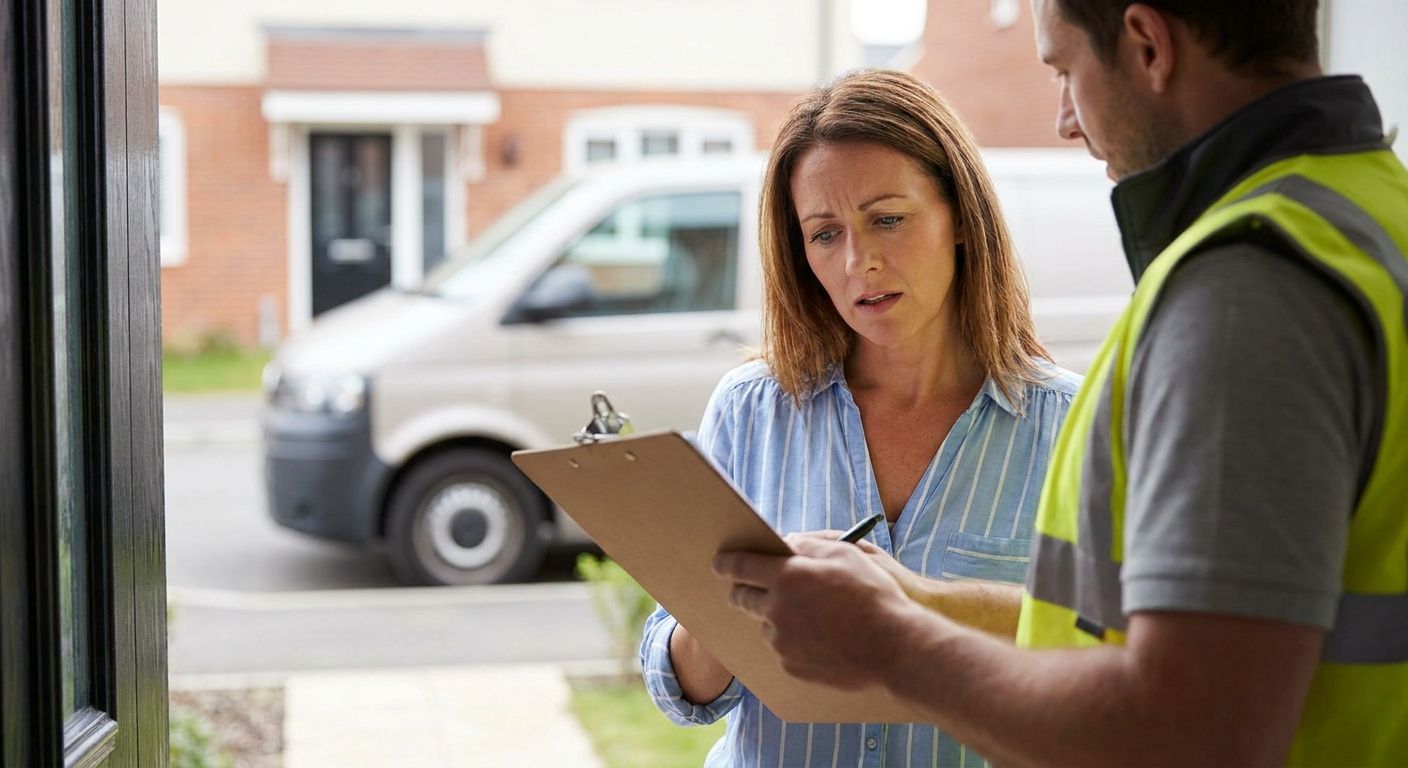
A legitimate locksmith typically arrives in a marked vehicle or at minimum can state the company name and give you a technician name before arrival. An unmarked van, a technician who can't name their own dispatcher, or someone who insists on inspecting the lock before confirming who they work for is a signal to stop before they touch anything.
Common mistake: letting a stranger start working because they "look the part" with a tool bag.
5. Question a drill-first diagnosis
Drilling is sometimes necessary — a broken key snapped off in the cylinder, a lock damaged in an attempted break-in — but it should never be the default answer to a standard residential lockout. If a technician reaches for a drill within thirty seconds of looking at a normal pin-tumbler deadbolt and says it's the "only option," ask why picking or bypass isn't being tried first. Drilling means a full lock replacement, which is where the real markup gets added.
Common mistake: assuming drilling is standard procedure for every lockout, when it's actually the last resort.
6. Pay only after the job matches the quote
Don't hand over payment before the work is done and the final number matches what you agreed to. If the number changed, ask for the itemized reason in writing before paying anything. Cash-only demands with no receipt are a pattern specific to scam operators trying to leave no paper trail.
Common mistake: paying up front "to get things moving" before any work has started.
7. Report it and dispute the charge if something's off
If you've already paid and realize afterward the price was inflated through pressure or misrepresentation, contact your card issuer to dispute the charge and file a complaint with the Massachusetts Attorney General's consumer protection division. Documentation — texts, the original quote, photos of the vehicle — makes the dispute far stronger.
Common mistake: assuming nothing can be done once the card's already been charged.
Get a licensed locksmith, not a gamble
Apex Lock N Key is licensed and insured, available 24/7 across Middlesex County.
Troubleshooting
The price doubled once they arrived. Stop the job, ask for the discrepancy in writing, and decline to continue if they won't itemize it. Walking away before work starts costs you nothing; walking away mid-job usually costs a service fee, but it's cheaper than an inflated final bill.
They can't produce a license number. End the call. A licensed locksmith carries this information and states it without friction — refusal is disqualifying on its own.
They insist on cash only, no receipt. This is one of the most consistent patterns behind Massachusetts locksmith scams reported in recent years. A legitimate operator can run a card and provide a receipt without issue.
The van has no company markings and the driver can't name a dispatcher. Don't let them start. Call the number you originally dialed and ask them to confirm who's on-site.
They already charged your card and won't itemize the invoice. Dispute the charge through your card issuer immediately and request the itemized invoice in writing as part of that dispute.
You're not sure if the price you were quoted is normal. Compare it against a published local range before agreeing — for rekeys specifically, a locksmith cost guide gives you a real 2026 benchmark instead of guessing.
Tools and resources
- Massachusetts Division of Occupational Licensure — verify a locksmith's license status directly
- Your card issuer's fraud dispute line — save it before you need it, not after
- A saved, verified locksmith contact for your area so you're not searching cold during a lockout
- After-hours car lockout service benchmarks for comparing quotes on late-night calls
What to do next
If your key actually snapped off in the lock rather than a simple lockout, the diagnosis and pricing conversation looks different — read the guide on broken key extraction before agreeing to a full lock replacement, since extraction alone is often all that's needed.
FAQ
What's the most common locksmith scam in 2026?
The most common locksmith scam quotes a price under $30 by phone, then claims the lock is 'high security' on arrival and charges $200 or more. Verifying the total price in writing before dispatch stops this pattern almost every time.
How do I know if a locksmith is actually licensed in Massachusetts?
Ask for the license number directly and check it against the Massachusetts Division of Occupational Licensure. A legitimate locksmith provides this without hesitation; refusal or deflection is the clearest scam signal.
Is it normal for a locksmith to drill my lock instead of picking it?
No, drilling should be a last resort, not the default response to a standard residential lockout. Picking or bypass methods work on most pin-tumbler locks without damaging the cylinder.
Should I pay a locksmith before or after the work is done?
Pay only after the job is finished and the final price matches the written quote you agreed to. Paying up front removes your leverage if the price changes mid-job.
What should I do if a locksmith already overcharged me?
Dispute the charge with your card issuer and file a complaint with the Massachusetts Attorney General's consumer protection division. Keep any texts, quotes, or photos as documentation for the dispute.
How much should a locksmith rekey cost in Massachusetts in 2026?
Rekeying costs vary by number of locks and lock type, and a published cost guide gives a realistic local range before you accept a quote. Any quote well below or dramatically above that range deserves a second look.
Why do scam locksmiths insist on cash only?
Cash with no receipt leaves no paper trail for a dispute, which is exactly why scam operators push for it. A licensed locksmith can run a card and provide an itemized receipt without pushback.
Can I trust a locksmith that shows up in an unmarked vehicle?
Treat it as a warning sign, not a dealbreaker on its own — ask the technician to name their dispatcher and confirm it matches the company you called. If they can't, decline the service before any work starts.
One last thing
The fastest scam-check you can run costs zero dollars and takes under a minute: ask for the license number, then stop talking and wait. A legitimate technician answers immediately with a number you can verify; a scam operator stalls, changes the subject, or gets defensive. That one pause tells you more than any review site will.


