
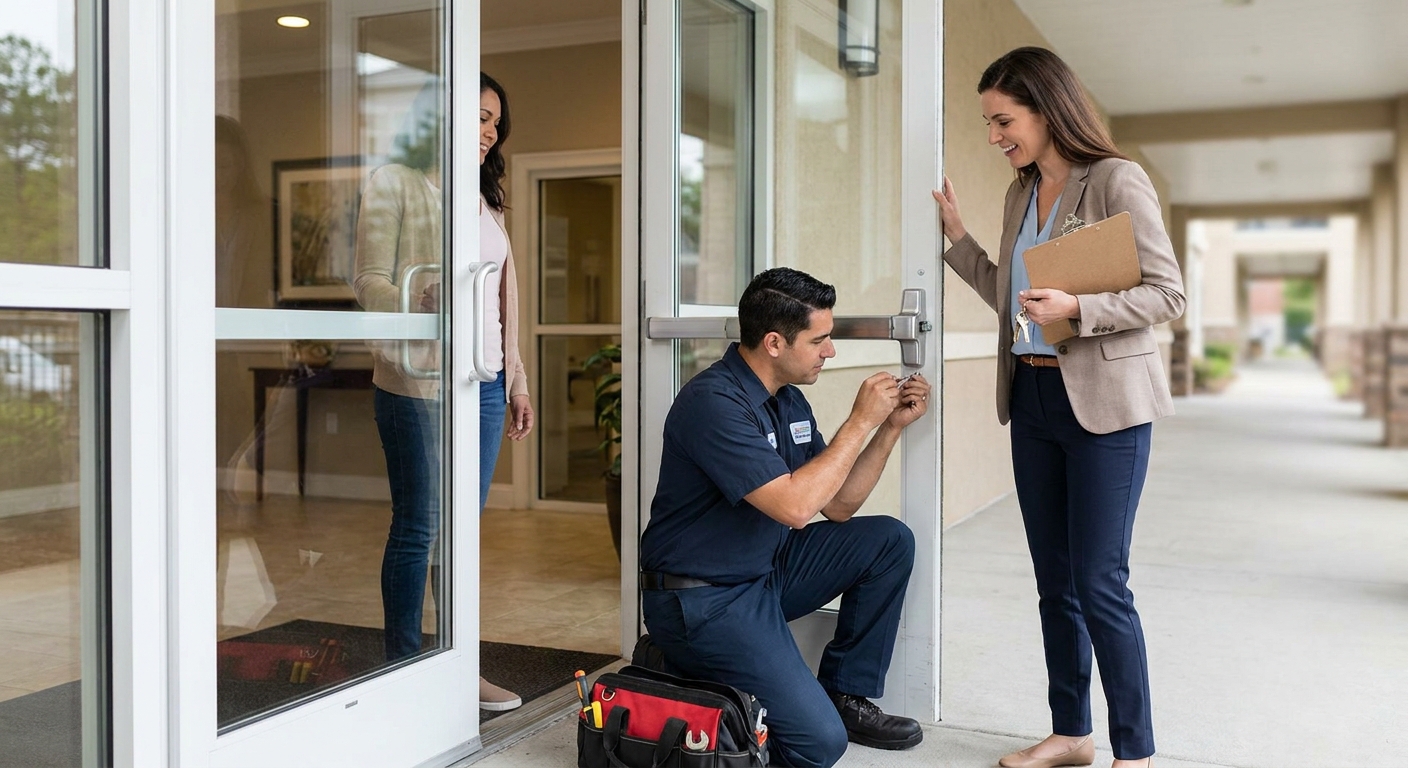
When a tenant calls at 2 a.m. locked out of their unit, the clock is already working against you — and the wrong locksmith call can turn a $75 problem into a liability headache. This guide breaks down what an emergency locksmith for landlords actually needs to deliver, which setups earn a verdict of Buy, and which ones waste your time in 2026.
- Master key systems solve multi-unit lockouts fastest for landlords managing several doors — Buy.
- An emergency locksmith for landlords should rekey a unit same-day after tenant turnover — Buy.
- Keyless entry fits Airbnb-style turnover speed, not long-term single-family leases — Consider.
- Lead-gen locksmith directories create surprise call-back fees landlords end up eating — Skip.
Why this matters
A tenant lockout isn't just an inconvenience — it's a liability event. If a tenant is locked out of a unit with a pet inside, a medical need, or a safety concern, and the landlord's response is slow or unlicensed, that delay becomes evidence in a dispute. Massachusetts landlords are also on the hook for rekeying between tenants in most lease agreements, which means the locksmith relationship isn't a one-time call — it's infrastructure.
A master key system for multi-unit apartment buildings changes the math entirely. Instead of juggling a key ring for every door across a 12-unit or 24-unit property, one master credential opens common areas while tenant units stay independently keyed. That single decision cuts emergency response time because the technician — or in some cases, the property manager — isn't hunting for the right key at midnight.
Who this is for
This guide is for landlords, property managers, and HOA boards in Middlesex County juggling more than one rental unit — whether that's a triple-decker with three leases, a 20-unit apartment building, or a portfolio of single-family rentals spread across town. If you're fielding tenant lockout calls yourself, coordinating rekeys between move-outs, or trying to figure out whether a master key system is worth the upfront cost, this is written for you and not for a single homeowner locked out of their own front door.
What to look for in an emergency locksmith for landlords
Licensed and insured, not just "available"
Any locksmith can post a phone number online. What matters for a landlord is licensing and insurance, because if a technician damages a door frame or mis-keys a unit, that liability needs to sit with the locksmith's insurance — not yours. Ask for license verification before the first job, not after something goes wrong.
Rekey capability without full lock replacement
Rekeying swaps the internal pins so old keys stop working, without replacing the hardware itself. For landlords cycling tenants every 12 months, rekeying between leases is the standard move — it's faster and cheaper than swapping deadbolts every time someone moves out. A locksmith who defaults to "just replace the whole lock" every visit is padding the invoice.
Master key compatibility for multi-door properties
If you manage more than a handful of doors, ask whether the locksmith can set up or service a master key hierarchy — one key for common areas, unit-specific keys for tenants, and a master override for emergencies. Not every locksmith stocks the core pins needed for this, and retrofitting later costs more than building it right the first time.
24/7 dispatch that actually means 24/7
"Emergency service" on a website means nothing if the after-hours line routes to voicemail. Confirm the locksmith runs live dispatch around the clock — tenant lockouts don't happen on business hours, and a 2 a.m. lockout with no answer is the kind of gap that shows up in a bad Google review with your property's name attached.
Transparent, itemized pricing before the work starts
Landlords need a quote structure that doesn't shift once the technician arrives. Ask for a breakdown of service call fees, labor, and parts before dispatch, and get it in writing if you're setting up a standing account for multiple properties.
Top picks for landlords managing tenant lockouts
Master key systems — the time-saver for multi-door buildings. One key opens shared entries, laundry rooms, and mechanical closets while each tenant keeps an independent unit key. For a landlord fielding lockouts across several units, this cuts the average call from "which key is it" to "here's the master." Verdict: Buy for any property with more than four units. See master key systems for multi-unit apartment buildings.
Same-day rekey after tenant turnover — the non-negotiable. Every unit needs a fresh set of pins the day a lease ends, full stop. Skipping this step means a former tenant, a subletter, or a contractor with copied keys still has access, and that's a liability landlords don't want to explain after an incident. The locksmith cost to rekey a house guide breaks down pricing by lock type so you can budget it into turnover costs. Verdict: Buy — build this into every lease-end checklist.
Keyless entry for short-term or high-turnover units — the wildcard. Code-based or app-based entry lets you issue and revoke access remotely, which is useful for Airbnb-style turnover where a new guest arrives every few days. It's less useful for a 12-month lease where a physical key works fine and costs less to maintain. Check the keyless entry systems for Airbnb hosts and short-term rentals breakdown before committing. Verdict: Consider for short-term units, Skip for standard year-long leases.
24/7 mobile emergency dispatch — the liability shield. When a tenant is locked out at an odd hour, the landlord's response time is part of the record if anything goes wrong. A locksmith running true around-the-clock mobile dispatch means you're not the one driving over with a spare key at midnight. Verdict: Buy — this is the baseline, not an upgrade.
Managing lockouts across multiple units?
Get a licensed, 24/7 locksmith set up for your properties in Middlesex County.
What to avoid
- DIY lock swaps by property managers. Changing a deadbolt yourself feels cheaper, but an improperly installed lock is a liability claim waiting to happen if a tenant gets locked in or out during an emergency.
- Lead-generation locksmith directories. These sites list a local-sounding number that routes to a national call center, which then dispatches a subcontractor and adds fees once they're on-site. Landlords managing multiple properties get burned repeatedly by this model.
- Rekeying only the unit door and skipping the master core. If a building runs on a master key system, rekeying one tenant's lock without updating it to match the master hierarchy breaks the system — now that unit needs its own separate key forever.
If your locksmith can't rekey a unit and hand you a working key in one visit, they're not built for landlords.
Verdict comparison
| Setup | Best for | Setup speed | Liability protection | Verdict |
|---|---|---|---|---|
| Master key system | 5+ unit buildings | Moderate upfront | High | Buy |
| Same-day rekey per turnover | Every rental property | Fast, per unit | High | Buy |
| Keyless entry / smart lock | Short-term or Airbnb units | Fast | Moderate | Consider |
| 24/7 mobile dispatch account | All landlords | Immediate | High | Buy |
| Lead-gen directory locksmith | No one | Unpredictable | Low | Skip |
FAQ
What does an emergency locksmith for landlords do?
An emergency locksmith for landlords handles tenant lockouts, rekeys units between leases, and sets up master key systems for multi-unit buildings. In 2026, most landlords keep a standing account with one licensed provider instead of calling around during an emergency.
How fast should a locksmith respond to a tenant lockout?
A licensed locksmith running true 24/7 dispatch should be reachable any hour, not routed to voicemail after business hours. Confirm live dispatch before you need it, not during the emergency call.
Should the landlord or the tenant pay for a lockout call?
This depends on the lease terms, but most landlords require the tenant to cover their own lockout unless the lock itself failed. Spell this out in the lease so there's no dispute when the call comes in.
How often should landlords rekey locks between tenants?
Rekey every unit after every tenant turnover, without exception. A former tenant or anyone who copied a key during the lease still has access until the pins change.
What's the difference between rekeying and replacing a lock?
Rekeying swaps the internal pins so old keys stop working while the existing hardware stays in place, which is faster and cheaper than replacement. Full lock replacement is only necessary if the hardware itself is damaged or outdated.
Is a master key system worth it for a small apartment building?
For buildings under four or five units, a master key system often adds cost without much benefit since a landlord can manage individual keys directly. It becomes worth it once a property has enough shared doors and turnover to make one master credential faster than tracking separate keys.
Can Airbnb hosts use the same locksmith as long-term landlords?
Yes, the same licensed locksmith can service both, but the setup differs — short-term rentals lean toward keyless entry for remote code changes, while long-term leases typically stick with standard rekeying.
How much does it cost to rekey a rental property in 2026?
Rekey pricing varies by lock type and how many doors need service, and it's typically lower per door when bundled across multiple units in one visit. Check current pricing directly since it depends on the specific hardware installed.
One last thing
The landlords who stop getting 2 a.m. panic calls aren't the ones with the newest locks — they're the ones with a standing locksmith relationship set up before the first lockout happens. Set the account up during a slow week, not during an emergency.


