
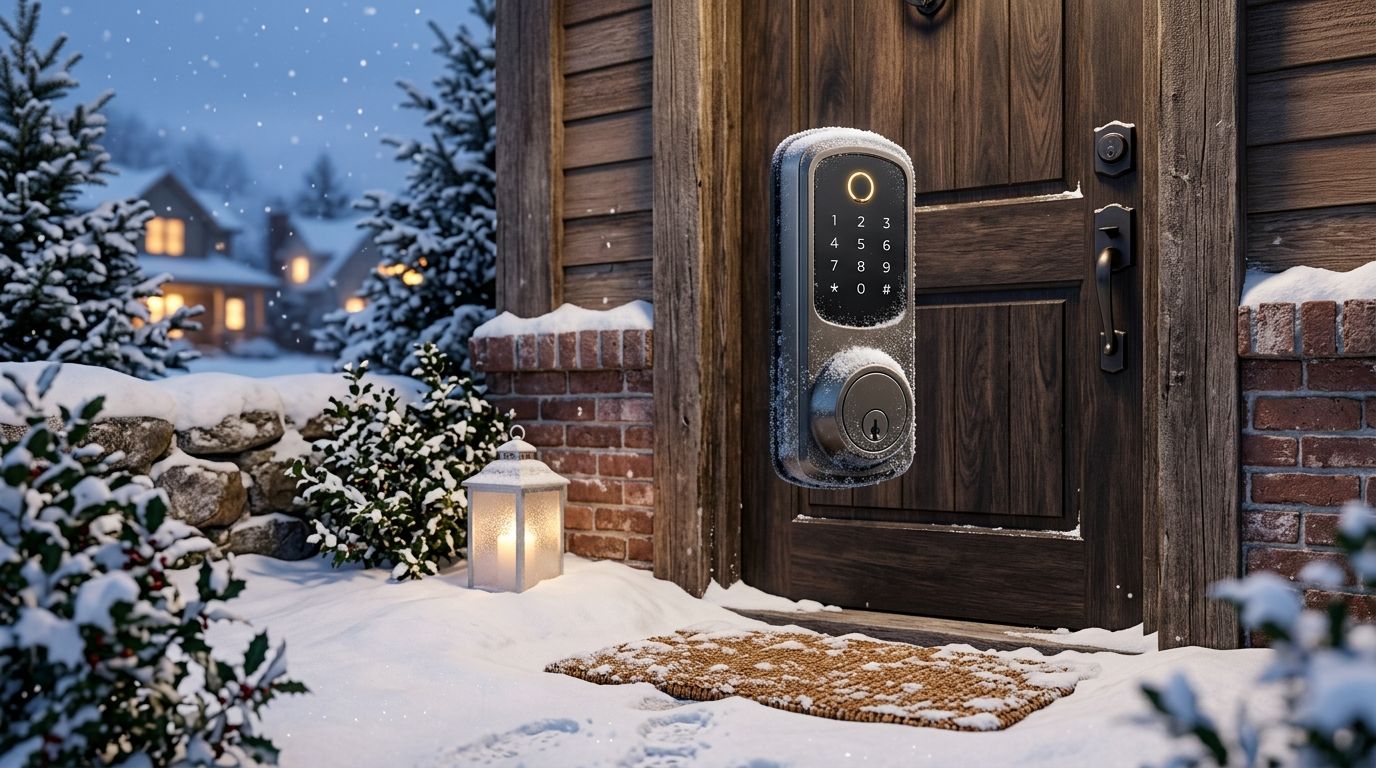
Best overall: Schlage Encode Plus. Best for renters: August Wi-Fi Smart Lock (4th Gen). Best keypad option: Yale Assure Lock 2. Schlage Encode Plus is the best smart lock for cold weather because its published exterior temperature range, physical key backup, built-in Wi-Fi, and 4-AA battery system address the main winter failure points. This 2026 guide compares five options and explains the preparation covered in Apex Lock N Key's exterior lock winterization guide.
- Schlage Encode Plus is the best smart lock for cold weather overall in 2026.
- August Wi-Fi Smart Lock (4th Gen) wins for renters because it preserves the existing exterior lock.
- Choose a keyed Yale Assure Lock 2 if you want a keypad with physical backup entry.
- Kwikset Halo Touch is best for fingerprint access, but gloves prevent biometric entry.
- A smart lock still needs smooth deadbolt alignment, fresh batteries, and a backup key for Massachusetts winters.
Why this matters
Cold weather attacks the entire door system, not just its electronics. Battery output falls, touchscreen response can slow, moisture can freeze around the bolt, and seasonal movement can push the latch out of alignment. Water freezes at 32°F, so a wet strike plate can become a mechanical obstruction even when the smart lock still has power.
Massachusetts homes add another complication: an exterior keypad faces the weather while the motor and battery compartment usually sit indoors. An enclosed, heated entry behaves differently from an unheated mudroom or detached garage. Apex Lock N Key's 2026 smart-lock guidance therefore prioritizes backup entry and correct door preparation over app features.
The lock cannot fix a door that needs lifting or pushing before the deadbolt moves. That resistance forces the motor to work harder on every cycle and can leave an automatic lock showing a false failure. Correct the alignment first, then install the electronics.
What makes the best smart lock for cold weather
- Published operating range: Check the manufacturer specification for the exterior escutcheon and the interior assembly. Those components can have different limits.
- Physical backup entry: A keyed cylinder provides access after battery failure, app failure, or a lost phone. Key-free variants need another documented emergency-power method.
- Battery format: Common batteries are easier to keep on hand. Schlage Encode Plus and several Yale and Kwikset models use 4 AA batteries, while August Wi-Fi Smart Lock uses 2 CR123 batteries.
- Glove-friendly access: Fingerprint readers do not work through gloves, and flat touchscreens can be awkward with covered hands. Raised buttons or a physical key are easier during a storm.
- Smooth bolt travel: The deadbolt should extend without pulling, lifting, or leaning on the door. Tight alignment matters because a small motor has less tolerance for binding than your hand.
- Local control: Keypad, fingerprint, Bluetooth, or physical-key access should still work when home Wi-Fi is unavailable.
These criteria define the 2026 ranking. Smart-home compatibility matters, but it comes after weather exposure, backup access, battery management, and proper fit.
Smart locks for cold weather at a glance
| Rank | Smart lock | Best for | Standout feature | Key limitation |
|---|---|---|---|---|
| 1 | Schlage Encode Plus | Most Massachusetts homes | Built-in Wi-Fi, Apple Home Key, keypad, and physical key | Flat touchscreen is less convenient with thick gloves |
| 2 | August Wi-Fi Smart Lock (4th Gen) | Renters | Retains the existing exterior cylinder | Winter reliability still depends on the existing deadbolt |
| 3 | Yale Assure Lock 2 | Keypad-first households | Multiple keypad, touchscreen, keyed, and key-free configurations | Buyers must choose the correct configuration before installation |
| 4 | Kwikset Halo Touch | Fingerprint entry | Built-in fingerprint reader and keyed backup | Fingerprint entry does not work through gloves |
| 5 | Level Lock+ | Discreet appearance | Electronics and battery fit inside the door hardware | Bolt alignment must be especially smooth |
1. Schlage Encode Plus: best overall for cold weather
Schlage Encode Plus combines a touchscreen keypad, built-in Wi-Fi, Apple Home Key support, and a conventional keyed cylinder. The lock uses 4 AA batteries, and the exterior assembly has a manufacturer-published operating range extending below typical Massachusetts winter temperatures.
The physical key is the decisive feature. If cold reduces battery output or electronic entry becomes unavailable, you still have a direct mechanical path into the house. Built-in Wi-Fi also avoids a separate bridge, although remote features still depend on power and internet service inside the home.
Schlage Encode Plus pros:
- Physical key cylinder provides backup entry
- Built-in Wi-Fi does not require a separate plug-in bridge
- Keypad supports entry without carrying a phone
- Low-battery warnings provide time to replace all 4 AA batteries
Schlage Encode Plus cons:
- A flat touchscreen is awkward with thick winter gloves
- Built-in Wi-Fi can increase battery demand compared with local-only operation
- The interior assembly still needs protection from direct exterior exposure
Best for: Homeowners who want several entry methods and a straightforward mechanical backup.
Verdict: Buy. Schlage Encode Plus is the strongest default for a primary exterior door in 2026.
2. August Wi-Fi Smart Lock (4th Gen): best for renters
August Wi-Fi Smart Lock replaces the interior thumbturn while preserving the existing exterior cylinder and key. That retrofit design matters for tenants because the visible exterior hardware remains unchanged and the original parts can be reinstalled later.
The lock uses 2 CR123 batteries and places its electronics on the interior side of the door. Cold-weather performance still depends on the existing deadbolt, cylinder, strike plate, and door alignment. Review lease restrictions before making any change, even a reversible one; this guide to renter lock upgrades explains the practical checks.
August Wi-Fi Smart Lock pros:
- Keeps the existing exterior key cylinder
- Reversible installation suits many rental situations
- Built-in Wi-Fi avoids a separate bridge
- Phone access and the original key provide two entry paths
August Wi-Fi Smart Lock cons:
- No exterior keypad is included with the lock itself
- Uses CR123 batteries rather than common AA batteries
- Cannot improve a worn or poorly aligned existing deadbolt
Best for: Renters and homeowners who want smart control without replacing the exterior lock.
Verdict: Buy for a sound existing deadbolt; skip if the current hardware already sticks in winter.
3. Yale Assure Lock 2: best keypad option
Yale Assure Lock 2 is a product family with button-keypad, touchscreen, keyed, and key-free versions. For a Massachusetts exterior door, the keyed configuration is the safer winter choice because it preserves physical backup entry.
Connectivity also varies by configuration. Confirm whether the exact package supports the smart-home system you use rather than assuming every Assure Lock 2 has identical radios. Basic keypad entry remains the central advantage: you can unlock the door without a phone or internet connection.
Yale Assure Lock 2 pros:
- Available with physical buttons or a touchscreen
- Keyed versions preserve mechanical backup access
- Keypad entry does not depend on home Wi-Fi
- Uses 4 AA batteries in common configurations
Yale Assure Lock 2 cons:
- Key-free versions remove the mechanical backup recommended here
- Connectivity differs across packages and modules
- Touchscreen versions are harder to operate with gloves than button-keypad versions
Best for: Households that want code entry first and app control second.
Verdict: Buy the keyed keypad configuration; skip a key-free version for an exposed primary entrance.
4. Kwikset Halo Touch: best for fingerprint entry
Kwikset Halo Touch uses a fingerprint reader as its main electronic entry method and includes a keyed cylinder for backup. Built-in Wi-Fi supports remote management without a separate hub, while the physical key remains available when electronics or batteries fail.
Fingerprint entry is fast with clean, uncovered hands. It is not a glove-friendly method, and wet or dirty fingers can require another attempt. Keep the key accessible instead of treating the fingerprint reader as the only way inside.
Kwikset Halo Touch pros:
- Fingerprint access avoids memorizing a code
- Physical key provides backup entry
- Built-in Wi-Fi does not require a separate hub
- Uses 4 AA batteries
Kwikset Halo Touch cons:
- Fingerprint entry cannot read through winter gloves
- The sensor needs to remain clean and uncovered
- Guests need enrollment or another approved entry method
Best for: Small households that prefer fingerprint entry and will maintain a physical-key backup.
Verdict: Hold unless fingerprint access is your main priority. A keypad is easier for frequent guests and service providers.
5. Level Lock+: best for discreet hardware
Level Lock+ places the motor and battery within the door hardware rather than using a large interior housing. It supports phone-based access, Apple Home Key, and a physical key while keeping the exterior appearance close to a conventional deadbolt.
The compact design makes installation quality critical. The bolt must enter the strike without rubbing because the motor sits within a tighter assembly and should not fight door pressure on every cycle. Older doors need measurement and alignment checks before purchase; this guide explains adding a smart lock to an older front door.
Level Lock+ pros:
- Discreet exterior and interior appearance
- Physical key remains available
- Phone and Apple Home Key provide additional entry methods
- Battery is accessible through the bolt assembly
Level Lock+ cons:
- Uses a CR2 battery rather than AA batteries
- Tight or sagging doors need correction before installation
- No built-in exterior number pad on the lock itself
Best for: Homeowners who prioritize a conventional appearance and already have a smooth, correctly aligned door.
Verdict: Buy for appearance; wait if the door binds or has nonstandard preparation.
How the 2026 ranking works
The ranking gives the most weight to physical backup entry, published environmental limits, battery accessibility, and operation without home Wi-Fi. Door compatibility and glove-friendly access follow. App design and smart-home integrations matter only after the lock passes those practical checks.
Manufacturer documentation defines battery type, entry methods, connectivity, and installation requirements. Because product families can include keyed, key-free, touchscreen, and keypad variants under similar names, the exact model number matters more than the family name on a retailer page.
Apex Lock N Key recommends checking the interior and exterior temperature limits separately. A weather-resistant keypad does not make the interior battery compartment suitable for an unheated location.
“The best winter smart lock is the one that still gives you a second way inside when its electronics stop cooperating.”
Which cold-weather smart lock should you choose?
Choose Schlage Encode Plus if you are undecided. It offers keypad, phone, Apple Home Key, Wi-Fi, and physical-key entry in one lock, making it the clearest all-purpose choice for Massachusetts homes in 2026.
Choose August Wi-Fi Smart Lock when you must preserve the existing exterior hardware. Choose a keyed Yale Assure Lock 2 when you want keypad entry without making a phone the primary credential. Kwikset Halo Touch makes sense when fingerprint access is the deciding feature, while Level Lock+ wins when visible hardware is the concern.
Before buying, close the door and operate the existing deadbolt with one finger. If the bolt needs pressure, lifting, or repeated attempts, repair the alignment first. Apex Lock N Key can assess the door preparation and install compatible electronic deadbolt hardware across Middlesex County.
Schedule smart lock installation
Licensed, 24/7 mobile locksmith service for homes and businesses in Middlesex County.
FAQ
What is the best smart lock for cold weather in 2026?
Schlage Encode Plus is the best overall smart lock for cold weather in 2026. It combines multiple electronic entry methods with a physical key cylinder and a published exterior operating range suitable for cold climates.
Do smart locks work below freezing?
Smart locks can work below freezing when the manufacturer rates the exterior assembly for those temperatures. Battery output, door alignment, ice, and interior-component exposure still affect real-world operation.
Do smart-lock batteries die faster in winter?
Cold can reduce available battery output and trigger earlier low-battery behavior. Replace the complete battery set together, follow the manufacturer's battery guidance, and keep the physical key available.
Is a keypad or fingerprint smart lock better in winter?
A keypad is more practical when you regularly wear gloves because fingerprint readers require uncovered skin. Physical buttons are generally easier with gloves than flat touchscreens, but every option still needs backup entry.
Can I install a smart lock on an older Massachusetts door?
You can install a smart lock on many older doors after confirming bore size, backset, thickness, and bolt alignment. Nonstandard preparation or original decorative hardware can require professional assessment before installation.
Does a smart lock work when Wi-Fi is down?
Local keypad, fingerprint, Bluetooth, Apple Home Key, and physical-key methods can still work without Wi-Fi when the chosen model supports them. Remote control and notifications normally require an active home connection.
How much does smart-lock installation cost in Massachusetts?
Smart-lock installation cost varies with the model, door preparation, alignment, and existing hardware. Request a door-specific quote instead of relying on a fixed figure that excludes corrective work.
Should a cold-weather smart lock have a physical key?
A cold-weather smart lock should have a physical key unless it provides another documented emergency-entry method you trust. A key remains the simplest backup after battery, phone, network, or touchscreen failure.
One last thing
Do not lubricate a sticking smart lock with an unspecified household oil. Residue can collect dirt and make the cylinder or bolt harder to operate over time. Follow the lock manufacturer's maintenance instructions, clear ice from the strike area, and correct alignment instead of forcing the motor.
The decisive 2026 winter test is simple: the deadbolt must move freely before the smart lock is powered. Apex Lock N Key treats that mechanical check as part of choosing the best smart locks for cold weather because software cannot overcome a jammed bolt.


