
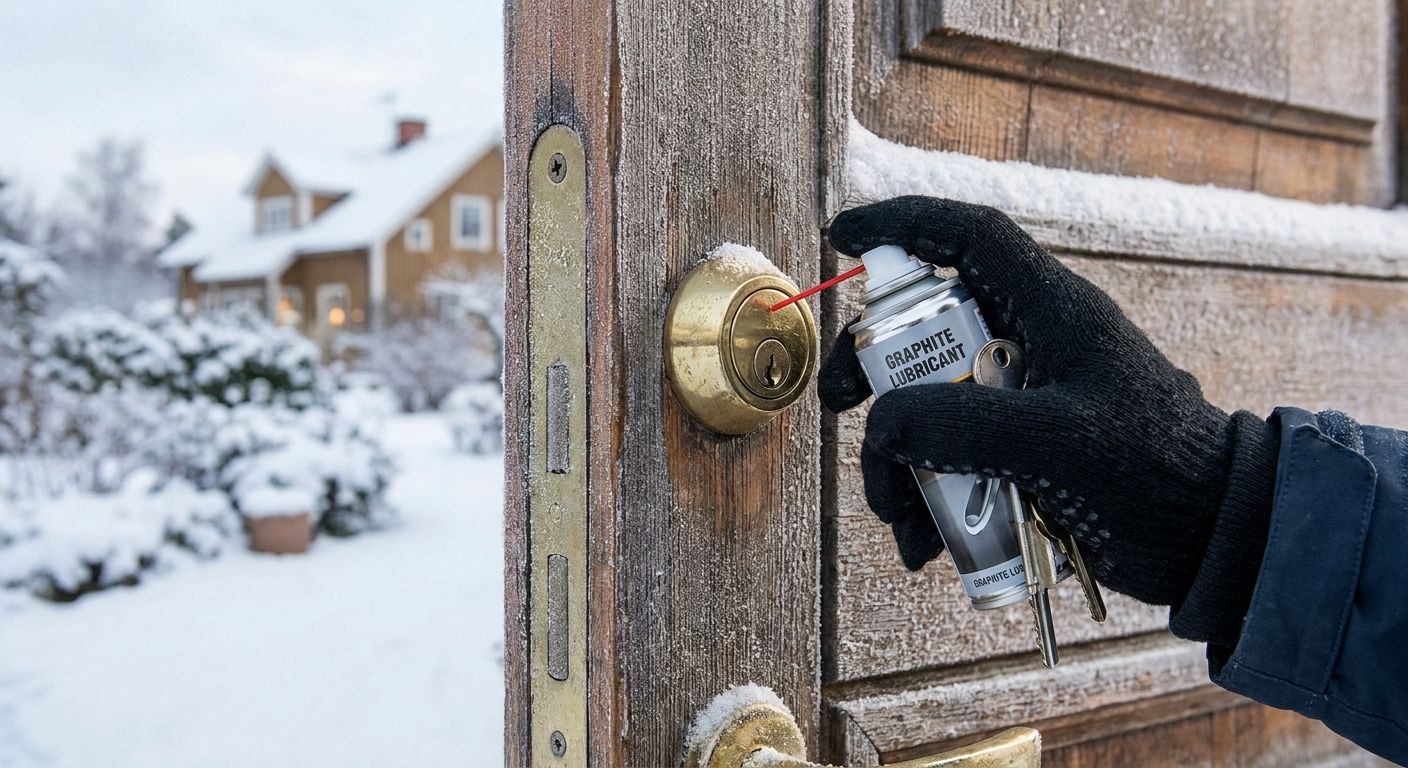
Cold snaps below 32°F swell metal, freeze moisture inside the cylinder, and turn a smooth deadbolt into a stuck one — usually at the worst possible moment. Winterizing exterior door locks before winter 2026 takes under an hour and prevents most of the frozen-lock calls Apex Lock N Key handles once temperatures drop in Middlesex County.
- Dry graphite or PTFE lubricant beats oil-based sprays for winterizing exterior door locks in 2026 — oil thickens and jams in cold.
- Worn weatherstripping lets moisture into the strike plate area, which is the top cause of frozen deadbolts each winter.
- Smart and electronic deadbolts lose battery capacity faster below freezing — check them before the first hard freeze, not after.
- A misaligned strike plate forces extra torque on the bolt, which is exactly what snaps keys off inside cold cylinders.
- Skip WD-40 entirely on exterior locks — it attracts grit that gums up the pins once temperatures fall.
Why this matters
A lock that works fine at 55°F can seize completely at 15°F because condensation inside the cylinder refreezes overnight. Homeowners across Middlesex County call Apex Lock N Key every January for the same three problems: a key that won't turn, a deadbolt that won't retract, and a keyway packed with ice.
All three are preventable. Winterizing exterior door locks for winter 2026 is maintenance, not repair — it costs nothing but a lubricant tube and 30 minutes, and it's far cheaper than an emergency locksmith call at 6 a.m. in a snowstorm.
What you'll need
- Dry graphite or PTFE-based lock lubricant (not oil-based spray)
- Compressed air can or a soft-bristle brush
- A clean microfiber cloth
- A screwdriver matched to your strike plate screws
- Replacement weatherstripping or a foam door sweep, if the existing seal is compressed or torn
- A spare key you can test-turn without forcing it
- Fresh batteries, if any exterior door uses an electronic deadbolt
Do this before the first hard freeze — once ice forms inside a cylinder, lubricant alone won't fix it and you're looking at a service call instead of a five-minute task.
The steps
1. Clean out the cylinder first
Dirt and old lubricant residue trap moisture, and trapped moisture is what freezes. Blast the keyway with compressed air or work a soft brush around the pin openings to knock loose debris before adding anything new.
Do this on a dry day, ideally above 40°F, so residual moisture evaporates instead of sitting in the mechanism overnight. Common mistake: spraying lubricant into a dirty cylinder just pushes grit deeper into the pins.
2. Lubricate with dry graphite or PTFE, never oil
Oil-based sprays like WD-40 feel like a fix in the moment but thicken as temperatures fall, turning into a gummy paste that jams pins by January. Dry graphite or a PTFE-based product stays liquid at low temperatures and doesn't attract airborne dirt.
Insert the nozzle into the keyway, apply a light coating, then work your key in and out 8-10 times to distribute it across the pins. Common mistake: over-lubricating — excess graphite dust builds up and can actually stiffen the mechanism over a full winter.
3. Inspect and replace worn weatherstripping
Compressed or cracked weatherstripping lets cold air and moisture reach the strike plate area, which is the single biggest driver of frozen deadbolts in exterior doors. Run a hand along the door seal — if you feel a draft or see daylight, it's compromised.
Replace foam or rubber gasket strips around the frame and check the door sweep at the bottom. This is a $10-15 hardware fix that prevents the moisture problem before it starts. Common mistake: replacing the weatherstripping but skipping the door sweep, which leaves the bottom gap exposed.
4. Check strike plate alignment and bolt throw
A deadbolt that has to be forced even slightly at room temperature will bind completely once metal contracts in cold weather. Close the door and extend the bolt slowly — it should slide into the strike plate without any resistance or scraping.
If it catches, loosen the strike plate screws, shift the plate 1-2 millimeters toward the resistance, and retest. Common mistake: ignoring a slightly stiff bolt in fall — it gets significantly worse, not better, once temperatures drop.
5. Shield exposed keyways from direct weather
Locks mounted on doors with no overhang take direct rain, sleet, and snow, all of which becomes ice inside the cylinder overnight. A small lock cover — a hinged metal or plastic flap over the keyway — blocks precipitation without affecting daily use.
This matters most on side doors, garage entries, and storm doors that lack roof coverage. Skip this step and you're relying on lubricant alone to fight standing moisture, which it can't do indefinitely.
6. Test and charge smart and electronic locks
Lithium battery capacity drops in cold weather, and an electronic deadbolt that reads 40% battery in October can fail outright by January. Replace batteries proactively before winter rather than waiting for the low-battery alert.
Test the keypad, app connection, and manual key override together — the physical override is your backup if the electronics fail during a cold-weather power dip. Common mistake: assuming the manual key override still works without testing it; if the cylinder underneath hasn't been serviced in a year, it may be just as prone to freezing as any traditional lock.
Book a pre-winter lock inspection
Licensed Middlesex County technicians check every exterior lock before the freeze hits.
7. Address rust before it locks the mechanism
Surface rust on exterior hardware traps moisture against metal, and once ice forms over rust it's nearly impossible to clear without heat or force. Check the bolt, strike plate, and any exposed screws for orange discoloration now, while it's still cosmetic.
Light rust wipes off with a cloth and fine steel wool; anything deeper than surface staining usually means the hardware needs replacing before winter, not after a lock has already seized.
Troubleshooting
Key turns but the bolt won't retract. Ice has likely formed around the bolt mechanism inside the door edge, not just the cylinder — apply gentle heat (a hair dryer on low, held 6+ inches away) rather than forcing the key, which can snap it.
Key won't go in at all. The keyway itself is frozen. Warm the key with a lighter for a few seconds and insert it carefully, or use a de-icer spray formulated for locks — never boiling water, which can crack the cylinder housing.
Deadbolt sticks only in the mornings. This points to overnight condensation refreezing inside the mechanism, which is exactly what dry graphite lubricant and a lock cover are meant to prevent — revisit steps 2 and 5.
Key snapped off inside the cylinder. Stop trying to extract it yourself with pliers, which usually pushes fragments deeper. This is a job for broken key extraction rather than DIY, since a damaged cylinder often needs full replacement.
Smart lock keypad unresponsive in cold weather. Confirm battery contacts aren't corroded and swap in fresh batteries — cold-weather voltage drop is the most common cause, not a hardware fault.
Car door lock frozen too. Vehicle locks freeze for the same reason exterior door locks do, but the fix differs slightly — see the frozen car door lock guide for vehicle-specific steps.
Tools and resources
- Dry graphite or PTFE lock lubricant (hardware store or locksmith supply)
- Compressed air can for cylinder cleaning
- Replacement weatherstripping and door sweep
- Screwdriver set for strike plate adjustment
- Spare battery set for electronic deadbolts
- A licensed locksmith for anything beyond lubrication — see how to find a reliable 24-hour locksmith if a lock has already frozen solid
What to do next
If a lock is already frozen shut or a key has broken off, don't keep forcing it — that's how a $30 lubrication job turns into a $150 cylinder replacement. Save the 24-hour locksmith link above for the night a lock fails at 11 p.m. in a February storm, because that call happens more often than most homeowners expect.
FAQ
What's the best lubricant to winterize door locks for winter?
Dry graphite or PTFE-based lubricant is the best choice for winterizing exterior door locks in 2026. Oil-based sprays like WD-40 thicken in cold temperatures and attract dirt, which causes the jams they're supposed to prevent.
Is graphite better than WD-40 for winterizing locks?
Yes, graphite and PTFE lubricants stay effective at low temperatures while oil-based sprays like WD-40 get gummy in the cold. WD-40 also draws in dust and grit that build up inside the pins over a full winter.
How much does it cost to winterize exterior door locks?
A tube of dry graphite lubricant and basic weatherstripping typically costs under $20 total for a DIY approach. A professional pre-winter lock inspection adds a service call fee but catches strike plate and alignment issues most homeowners miss.
Can a frozen door lock damage the lock permanently?
Yes, forcing a frozen key or bolt can snap the key inside the cylinder or bend internal pins, both of which usually require professional repair. Gentle heat and de-icer spray are safer first steps than force.
Do smart locks need winterizing too?
Yes, electronic and smart deadbolts need fresh batteries before winter since cold weather reduces battery capacity and can cause keypad failures. The manual key override on a smart lock also needs the same lubrication as a traditional cylinder.
How often should exterior locks be lubricated before winter?
Once per year, ideally in late fall before the first hard freeze, is enough for most exterior locks. High-use doors or coastal properties with more moisture exposure benefit from a mid-winter check as well.
Why does my deadbolt only stick in the morning during winter?
Morning sticking usually means overnight condensation is refreezing inside the mechanism. Dry lubricant and a lock cover over the keyway typically resolve this within one treatment.
When should I call a locksmith instead of DIY winterizing?
Call a locksmith if a key has broken inside the cylinder, the bolt won't retract after gentle heat, or the lock has frozen solid more than once in a season. Those situations usually mean internal damage that lubrication alone won't fix.
One last thing
Most frozen-lock calls Apex Lock N Key gets in Middlesex County trace back to one root cause: worn weatherstripping, not a bad lock. Fix the seal around the door before winter 2026 and the lubrication step does far less work all season.


