
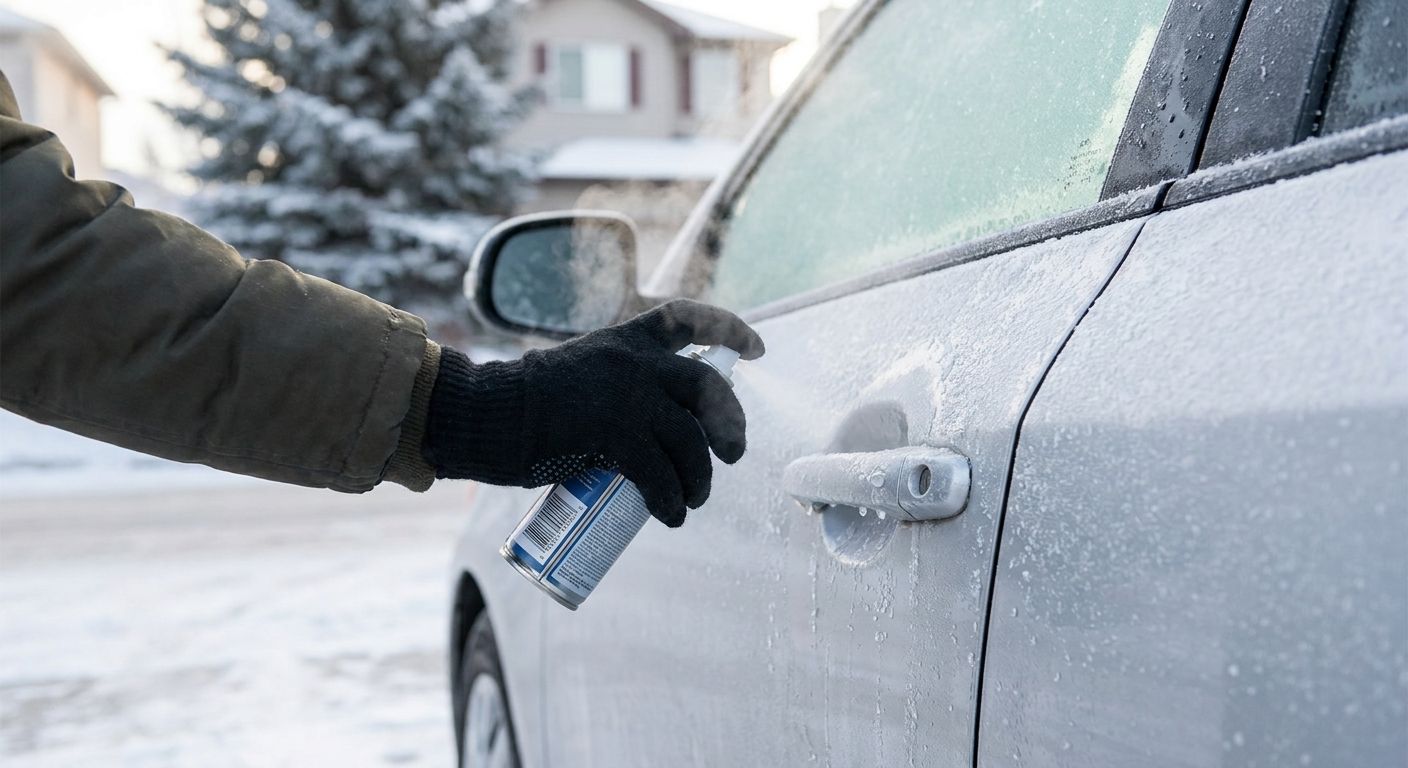
Frozen car door lock in the middle of a Massachusetts cold snap? You can usually thaw and open it yourself in under 10 minutes with tools most people already have in the garage.
- A frozen car door lock almost always clears with hand-warmed pressure, isopropyl alcohol, or a lock de-icer in under 10 minutes.
- Never force the key or use boiling water on a frozen car door lock — both cause cracked cylinders or shattered glass.
- If the key snaps off inside a frozen lock, that becomes a broken key extraction job, not a DIY fix.
- Apex Lock N Key runs 24/7 mobile calls across Middlesex County, MA for frozen and jammed locks all winter 2026.
Why this matters
A frozen car door lock is a mechanical problem, not just an inconvenience — condensation gets into the cylinder, drops below 32°F, and expands into ice that locks the pins in place. New England winters run through multiple freeze-thaw cycles per week, and each cycle pushes more moisture into the lock housing.
Ignore it long enough and the ice stops being the only issue. Forcing a stuck key snaps it off, cracks the tumbler pins, or bends the actual key blade. That turns a five-minute fix into a locksmith call for broken key extraction. Handle it right the first time.
What you'll need
- A lighter or handwarmer (for warming the key, not the lock)
- Isopropyl rubbing alcohol (91% or higher) in a small spray bottle
- A commercial lock de-icer spray, if you have one on hand
- Hand sanitizer as a backup — most brands run 60-70% alcohol
- A hair dryer, if you're parked near an outlet
- A soft cloth or rag
- Patience — do not force the key at any point
If the key is bent, chipped, or missing a tooth by the time you get through this, that's a separate repair. Car key replacement covers that scenario for most major makes.
The steps
1. Check for ice on the outside first
Look at the door seam and the lock cylinder itself before touching the key. A thin ice film on the exterior often means the actual mechanism inside is fine — you're just dealing with surface freeze.
Wipe visible ice away with a dry cloth. This step alone resolves a surprising share of frozen car door lock calls in Middlesex County during a hard frost.
Common mistake: pouring warm water on the lock to melt visible ice. It refreezes in the cylinder within 60-90 seconds outdoors at freezing temps and makes the jam worse.
2. Warm the key, not the lock
Heat your metal key with a lighter flame for 10-15 seconds, holding it by the plastic fob end so you don't burn your fingers. A handwarmer packet pressed against the key blade for a minute or two works almost as well and is safer around gas.
Insert the warmed key immediately and hold it in place for 10 seconds before turning. The transferred heat melts the ice around the pins from the inside out.
Common mistake: jamming the key in and cranking hard right away. Frozen pins need a few seconds of steady contact heat before they'll move — turning too soon just torques the key against solid ice.
3. Spray isopropyl alcohol into the keyhole
If you don't have a lighter handy or the key-warming trick doesn't fully clear it, spray isopropyl alcohol directly into the keyhole. Alcohol has a freezing point around -128°F, so it melts the ice on contact without refreezing the way water does.
Give it 30 seconds to work through the cylinder before inserting the key. Hand sanitizer works in a pinch since most formulas run 60-70% alcohol, though it's slower than the pure stuff.
Common mistake: using WD-40 or a general lubricant as a first move. It doesn't melt ice — it just adds an oily layer on top of frozen water and can attract dust that gums up the pins later.
4. Use a commercial lock de-icer if you carry one
A dedicated lock de-icer, sold at most auto parts stores for under $10, is built for exactly this — a thin metal or plastic straw delivers the fluid straight into the pin stack. It works faster than alcohol in most cases and is worth keeping in the glove box from November through March in a Massachusetts winter.
Spray a short 2-3 second burst, wait 15 seconds, then try the key. Repeat once if the lock still resists.
Common mistake: spraying continuously for 10+ seconds. Most de-icer cans are pressurized and a short burst is plenty — dumping the whole can floods the door panel unnecessarily.
5. Try the hair dryer if you're near power
If you're parked at home or work with an outlet within reach, a hair dryer on low heat aimed at the lock cylinder for 1-2 minutes melts ice without the localized heat risk of a lighter. Keep the dryer moving so you don't overheat the paint or trim around the lock.
This method also works when ice has spread beyond the keyhole into the door seal itself, which alcohol alone won't fully clear.
Common mistake: holding the dryer stationary against one spot. That's how you blister paint on an older vehicle's door panel.
6. Check the door seal and hinges too
Once the lock turns, the door itself might still be frozen shut along the rubber seal. Push firmly on the frame near the hinge, not the handle, to break that seal without stressing the lock mechanism you just cleared.
A sharp downward pull on an iced-shut handle can snap the exterior handle assembly, which is a repair well beyond what any locksmith call covers.
Common mistake: yanking the handle hard the moment the key turns. Give the door a firm shoulder-level push first to crack the seal.
Frozen lock won't budge tonight?
Apex Lock N Key runs 24/7 mobile calls across Middlesex County for frozen and jammed car locks.
Troubleshooting
The key turns halfway and stops. Ice has partially cleared but a chunk remains deeper in the cylinder. Re-apply alcohol or de-icer and wait a full 60 seconds this time before trying again — don't force past the resistance point.
The key won't go in at all. The keyhole opening itself is iced over, not just the internal pins. Clear the visible opening first with a cloth, then move to warming or alcohol.
The lock turns but the door still won't open. The latch mechanism inside the door, not the cylinder, is frozen. Try the opposite door or the trunk release first, then work on the stuck door from the inside once you're in the vehicle.
The key snaps off in the lock. Stop immediately. This is now a broken key extraction situation, and DIY attempts with pliers or tweezers usually push the broken piece deeper. Emergency broken key extraction is built for exactly this.
Nothing works and it's below 10°F. Extreme cold sometimes needs sustained heat longer than a lighter or handwarmer provides. A mobile locksmith carries commercial-grade thawing tools that clear stubborn cylinders faster than anything from a hardware store.
Your key fob works but the manual key is frozen. Try the fob unlock first — if it responds, you can skip the manual lock entirely and deal with de-icing once you're inside and warm.
Tools and resources
- Isopropyl alcohol spray bottle, kept in the trunk all winter
- Commercial lock de-icer, restocked each November
- A spare key stored somewhere other than your only set, in case one gets damaged
- Broken key extraction service for when the fix goes past DIY
- After-hours mobile locksmith service for calls after 6pm or on weekends
Apex Lock N Key stocks de-icing tools and extraction equipment on every mobile unit, which matters most at 11pm on a Tuesday in January when the hardware store is closed.
What to do next
If you're dealing with a frozen car door lock on a highway shoulder or in a parking lot with no outlet and no tools, don't keep trying the same failed method for 20 minutes in the cold. Mobile locksmith service for stranded drivers covers exactly that situation, and a licensed technician reaches most Middlesex County locations faster than a tow truck in winter conditions.
If a child is locked inside the vehicle while you're dealing with a frozen lock, treat it as an emergency, not a troubleshooting exercise — call for emergency lockout help with a child inside immediately rather than working through the steps above.
FAQ
What's the fastest way to thaw a frozen car door lock?
Isopropyl alcohol sprayed directly into the keyhole is the fastest DIY method, clearing most frozen car door locks in under a minute. A warmed key held in place for 10 seconds is a close second if you don't have alcohol on hand.
Is it safe to pour hot water on a frozen car door lock?
No — hot water refreezes within a minute in freezing temperatures and often makes the lock worse. It can also crack cold glass or trim on older vehicles.
Can WD-40 fix a frozen car door lock?
WD-40 doesn't melt ice and isn't the right first move. It's a lubricant, not a de-icer, and can trap dust in the cylinder once the ice does eventually clear on its own.
How much does it cost to fix a frozen car lock if I can't do it myself?
A mobile locksmith visit for a frozen or jammed lock typically runs in line with a standard car lockout call, though exact pricing depends on time of day and location within Middlesex County. Ask for a quote before the technician arrives.
What if my key breaks off while I'm trying to fix a frozen lock?
Stop trying to remove it yourself — pliers and tweezers usually push the broken piece deeper into the cylinder. This becomes a broken key extraction job for a licensed locksmith.
Why does my car door lock freeze every winter in Massachusetts?
Condensation builds inside the lock cylinder over time and freezes during New England's frequent freeze-thaw cycles. Vehicles parked outside overnight see this more often than garaged cars.
Can I prevent my car door lock from freezing in 2026?
Spraying a small amount of lock lubricant or de-icer into the cylinder at the start of winter reduces freezing significantly. Parking with the driver's side away from prevailing wind also helps on exposed streets.
Should I use my key fob or manual key when the lock is frozen?
Try the fob unlock first since it bypasses the frozen cylinder entirely. If the fob works, you can deal with thawing the manual lock later once you're inside and warm.
One last thing
Most frozen car door lock calls Apex Lock N Key handles in Middlesex County during a hard freeze aren't actually about the lock — they're about a key that got bent trying to force it. Warm the key before you insert it, every single time, and you'll skip that repair entirely this winter.


