
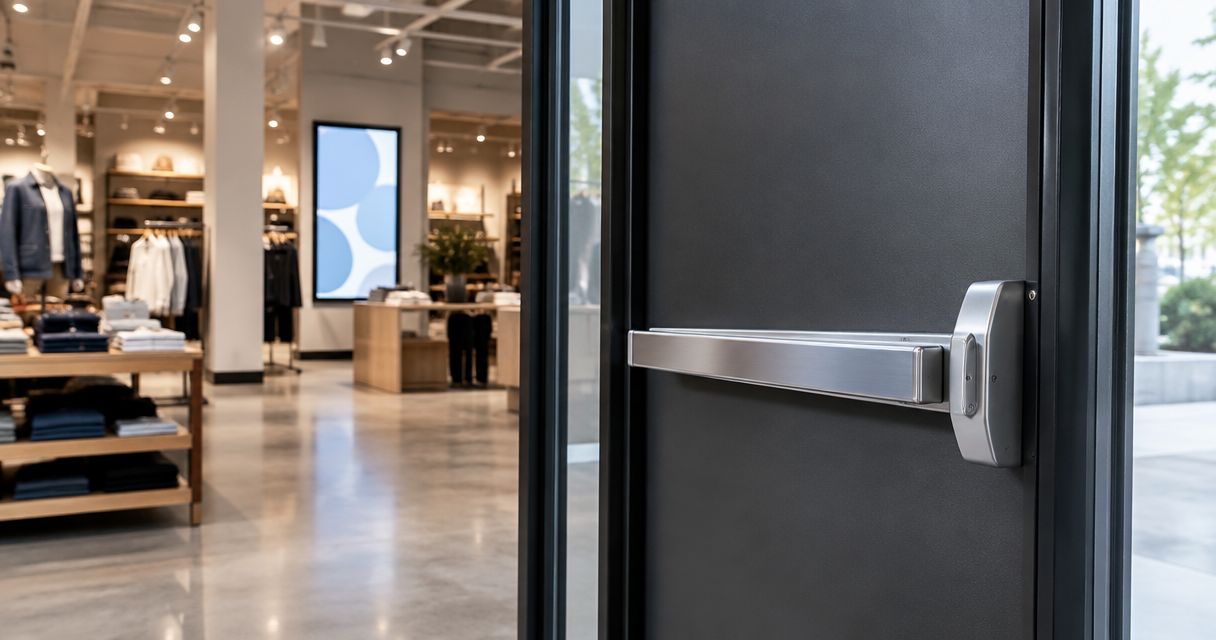
Best overall: Von Duprin 98/99 Series. Best for alarmed stockroom exits: Detex Advantex. Best budget shortlist: Falcon 25 Series. This 2026 guide compares the best panic bar exit devices for retail stores and explains when each brand fits; Apex Lock N Key serves retail stores and boutiques across Middlesex County, Massachusetts.
- Von Duprin 98/99 Series is the best overall panic bar exit device for busy retail entrances in 2026.
- Detex Advantex is best for alarmed stockroom and exit-only doors where unauthorized use needs an immediate alert.
- Adams Rite 8000 Series fits narrow-stile aluminum storefront doors that cannot accept standard wide-stile hardware.
- SARGENT 80 Series is best when the exit device must connect to access control or monitored door hardware.
- Falcon 25 Series is the budget shortlist for straightforward retail doors without specialized alarm or integration requirements.
Why this matters
Retail exit hardware has to do two jobs that pull in opposite directions. It must keep the door latched during normal business, yet release immediately when someone pushes from the egress side. A device that sticks, requires a key, or needs several motions can obstruct the exit even if the storefront otherwise looks secure.
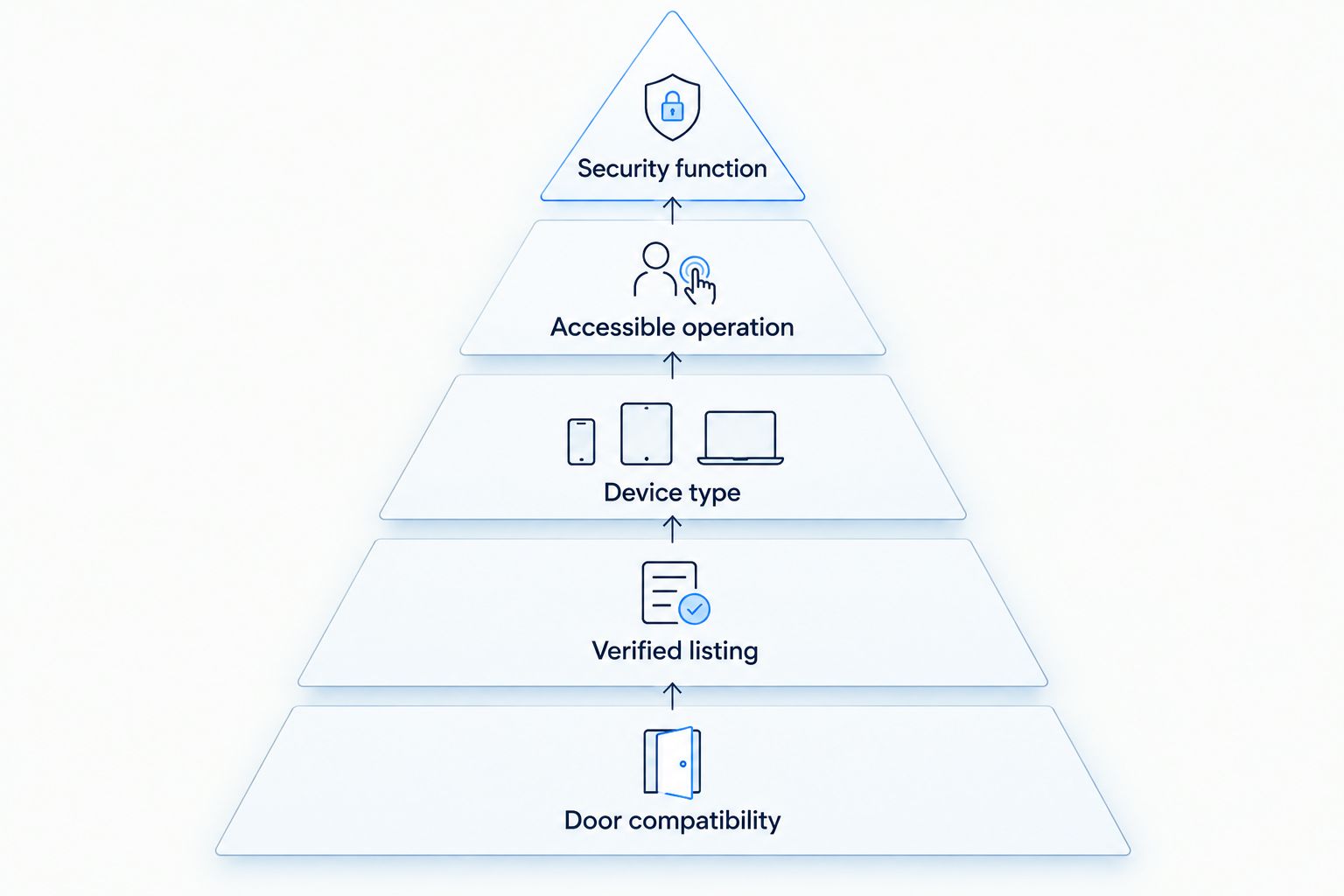
Panic hardware requirements depend on occupancy classification, occupant load, door function, fire rating, and the code adopted by the local authority. Do not choose a device from brand reputation alone. In 2026, the correct sequence is to identify the door, confirm the required listing, choose the device type, and then select the brand.
Apex Lock N Key is a licensed, 24/7 mobile locksmith service that installs commercial locks and access-control hardware in Middlesex County. That service context matters because the best panic bar exit device is the one that matches the existing door, frame, closer, trim, and electronic system without compromising egress.
What makes the best panic bar exit device for retail stores
- Correct device type: Rim devices latch to a surface-mounted strike. Mortise devices operate a lock case inside the door. Vertical-rod devices secure the top, bottom, or both edges.
- Verified listing: UL 305 covers panic hardware. A door in a fire-rated assembly requires fire exit hardware and the appropriate fire-door listing, not ordinary panic hardware with mechanical dogging.
- Commercial-duty grade: ANSI/BHMA A156.3 Grade 1 includes a 500,000-cycle test benchmark. That rating fits busy public entrances better than lighter hardware.
- Accessible operation: Operable door hardware commonly sits 34–48 inches above the finished floor. Model-code provisions also limit the force required to release latches to 15 pounds.
- Door compatibility: Stile width, door material, swing, frame condition, existing holes, and exterior trim determine whether a model can be installed correctly.
- Security function: A public entrance, alarmed stockroom exit, fire-rated stair door, and card-controlled employee door require different configurations.
These criteria separate a compliant installation from a brand-name box attached to the wrong door. The local fire or building official has final authority over code acceptance.
Best retail panic bar brands at a glance
| Rank | Device | Best for | Standout feature | Key limitation |
|---|---|---|---|---|
| 1 | Von Duprin 98/99 Series | Busy customer entrances | Broad range of mechanical and electrified configurations | More hardware than a light-traffic door may need |
| 2 | Detex Advantex | Alarmed stockroom exits | Exit-control and alarm configurations | Added electronics require testing and maintenance |
| 3 | Adams Rite 8000 Series | Narrow-stile aluminum doors | Designed around narrow storefront construction | Door preparation and model selection are less forgiving |
| 4 | SARGENT 80 Series | Access-controlled exits | Mechanical and electrified options in one product family | Integration must be coordinated with the access-control system |
| 5 | Falcon 25 Series | Straightforward retail retrofits | Grade 1 options for standard commercial openings | Fewer specialized loss-prevention choices than Detex |
1. Von Duprin 98/99 Series: best overall for busy entrances
Von Duprin 98/99 Series covers rim, mortise, and vertical-rod applications within a widely specified commercial family. That range lets a locksmith keep the same general platform while matching different openings across one store.
The 98 and 99 versions use different push mechanisms, but both belong to the same established exit-device family. Available configurations include mechanical and electrified functions, so the exact suffixes and trim matter as much as the series name.
Von Duprin 98/99 Series pros:
- Grade 1 commercial configurations are available.
- Rim, mortise, and vertical-rod formats cover common retail openings.
- Electrified options support monitored and access-controlled doors.
- Replaceable components support repair instead of automatic full replacement.
Von Duprin 98/99 Series cons:
- The product family includes many functions, trims, and suffixes that are easy to order incorrectly.
- A basic boutique entrance may not need the series' full configuration range.
- Existing door preparation can limit which replacement model fits without reinforcement.
Best for: Busy front entrances, multi-door stores, and retailers that want one adaptable hardware family. Verdict: Buy after the exact door and function are documented.
2. Detex Advantex: best for alarmed exit-only doors
Detex Advantex is the strongest fit when loss prevention matters alongside emergency egress. Detex offers exit-control and alarm functions intended to signal unauthorized door use while preserving release from the egress side.
That makes the line relevant to stockrooms, receiving areas, and rear exits that customers should not use during normal operations. Alarm behavior, authorized bypass, monitoring, and power arrangements must be defined before installation.
Detex Advantex pros:
- Alarmed configurations address unauthorized exit use.
- Mechanical and electronic functions can be selected around the opening.
- The device suits rear doors where an audible local warning is useful.
- Grade 1 configurations are available for commercial applications.
Detex Advantex cons:
- Batteries, wiring, switches, or connected controls create additional maintenance points.
- A local alarm does not replace a monitored security or fire-alarm system.
- Incorrect bypass procedures can cause nuisance alarms for employees.
Best for: Stockrooms, receiving doors, and exit-only openings where unauthorized use needs a prompt alert. Verdict: Buy for a defined loss-prevention requirement; Skip for a front entrance that only needs mechanical egress.
3. Adams Rite 8000 Series: best for narrow-stile storefronts
Adams Rite 8000 Series is designed for narrow-stile aluminum door applications commonly found in glass storefront systems. These doors provide less mounting surface than wide-stile hollow-metal or wood doors, so a standard device can be the wrong physical fit.
The exact Adams Rite configuration must match the door construction and latching method. Concealed rods, glass panels, existing cutouts, and frame strikes make narrow-stile work less tolerant of ordering or drilling errors.
Adams Rite 8000 Series pros:
- Narrow-stile design fits aluminum storefront construction.
- The low-profile format preserves usable glass and stile space.
- Configurations are available for common commercial egress functions.
- It solves openings where wide-stile devices are physically unsuitable.
Adams Rite 8000 Series cons:
- Installation requires precise alignment on aluminum framing.
- Existing storefront preparation can restrict replacement choices.
- Concealed components are harder to inspect than a simple surface rim device.
Best for: Aluminum-and-glass storefront doors with narrow vertical stiles. Verdict: Buy when measurements and door preparation confirm the specific 8000 Series model.
4. SARGENT 80 Series: best for access-controlled exits
SARGENT 80 Series combines conventional exit-device formats with electrified functions used on controlled commercial doors. It belongs on the shortlist when a retailer needs card access from the exterior, latch monitoring, electric retraction, or another coordinated door-control function.
Access control must never block required egress from inside. The lock, reader, power supply, fire-alarm interface, door position switch, closer, and exit device need to operate as one opening rather than separate components.
SARGENT 80 Series pros:
- Mechanical and electrified configurations support varied retail openings.
- The series can fit a documented access-control hardware schedule.
- Grade 1 options address high-use commercial doors.
- Multiple device formats support standard and more complex openings.
SARGENT 80 Series cons:
- Electronic functions require coordination beyond ordinary locksmith work.
- Power or control problems can be mistaken for mechanical device failure.
- Mixing incompatible existing components can increase retrofit work.
Best for: Employee entrances and monitored retail exits connected to access control. Verdict: Buy as part of a complete opening specification; Hold if the electronic requirements are still undefined.
5. Falcon 25 Series: best budget shortlist
Falcon 25 Series is the practical shortlist for a conventional commercial door that needs Grade 1 exit hardware without a specialized loss-prevention or access-control brief. It covers standard applications while keeping the selection process focused on essential door functions.
Budget selection must still start with compatibility and listing requirements. A less complex device becomes expensive if installers must patch old holes, reinforce a damaged stile, move the strike, or replace incompatible exterior trim.
Falcon 25 Series pros:
- Grade 1 configurations are available.
- The series addresses common rim and vertical-rod applications.
- Straightforward mechanical functions suit ordinary retail openings.
- It is a focused alternative when advanced alarm functions are unnecessary.
Falcon 25 Series cons:
- Detex provides a clearer path for dedicated exit-alarm requirements.
- Complex access-control projects may call for another product family or configuration.
- Final value depends on whether the device fits the existing door preparation.
Best for: Single-store retailers replacing hardware on a standard commercial opening. Verdict: Buy when a door survey confirms a direct or low-modification fit; Wait if the frame or door needs repair first.
How we ranked the brands
The 2026 ranking starts with door fit and life-safety requirements, not brand familiarity. Each recommendation is judged on available device formats, Grade 1 options, panic or fire-exit listing pathways, accessible operation, alarm capability, and access-control compatibility.
Apex Lock N Key does not treat every retail door as the same opening. A front aluminum storefront, hollow-metal stockroom door, fire-rated corridor door, and card-controlled employee entrance need separate hardware decisions even when they sit inside one store.
The list does not rank appearance, unpublished service life, or changing prices. Manufacturer documentation and the label on the exact device determine what a model is approved to do. The authority having jurisdiction determines whether the complete opening complies in 2026.
Which panic bar exit device should you choose?
Choose Von Duprin 98/99 Series by default for a busy retail entrance when you need a flexible commercial platform. Choose Detex Advantex for an alarmed exit-only door, Adams Rite 8000 Series for a narrow-stile aluminum storefront, SARGENT 80 Series for an access-controlled opening, and Falcon 25 Series for a straightforward mechanical retrofit.
Do not buy from the series name alone. Record the door material, stile width, swing, handing, frame, latch type, fire label, exterior trim, closer, and electronic function first. Those details decide the model and suffixes.
Apex Lock N Key can assess retail panic bar exit devices and related commercial door hardware in Middlesex County. The service is mobile and available 24/7, but planned inspection is the better route for hardware replacement because it allows the complete opening to be documented before parts are selected.
Schedule a retail door assessment
Confirm the door, listing, trim, and electronic requirements before selecting hardware.
FAQ
What is the best panic bar exit device for retail stores in 2026?
Von Duprin 98/99 Series is the best overall choice for busy retail entrances in 2026 because its product family covers several common device types and electrified functions. The correct choice still depends on the door, required listing, trim, and security function.
Is Detex Advantex better than Von Duprin 98/99 Series?
Detex Advantex is better for alarmed exit-only doors, while Von Duprin 98/99 Series is the stronger general-purpose choice for busy retail entrances. Choose based on whether loss-prevention alarm functions or broad opening compatibility matters more.
What panic bar works on a narrow aluminum storefront door?
Adams Rite 8000 Series belongs on the shortlist for narrow-stile aluminum storefront doors. The installer must confirm stile dimensions, existing preparation, latching method, and frame compatibility before selecting a model.
Does a retail store need panic hardware?
A retail store needs panic hardware when the adopted code requires it for that occupancy, occupant load, door, or egress condition. The local building or fire official decides applicability, so store owners should confirm requirements before replacing exit hardware.
Can a panic bar connect to retail access control?
Yes, an electrified exit device such as a suitable SARGENT 80 Series or Von Duprin 98/99 Series configuration can connect to access control. Egress from inside must remain code-compliant, and the device must be coordinated with power, monitoring, readers, and fire-alarm functions.
How much does a retail panic bar cost in 2026?
There is no reliable single installed cost for retail panic hardware in 2026. Device type, fire rating, trim, alarms, access-control wiring, door repairs, and existing preparation determine the final scope.
What is the difference between panic hardware and fire exit hardware?
Panic hardware releases an egress door when its push surface is operated, while fire exit hardware is listed for use on a fire-rated door assembly. Fire exit hardware cannot use mechanical dogging that holds the latch retracted.
How do I know whether an exit device is Grade 1?
Check the exact model's manufacturer documentation and the device label for its ANSI/BHMA A156.3 grade. Do not assume every product sold under a familiar brand or series carries the same grade and listing.
One last thing
A failing panic bar is not always a failed panic bar. A sagging door, loose hinge, misaligned strike, weak closer, or damaged frame can stop a sound device from latching and releasing correctly. In 2026, Apex Lock N Key recommends inspecting the entire opening before replacing the exit device; otherwise, the new hardware inherits the old alignment problem.


