
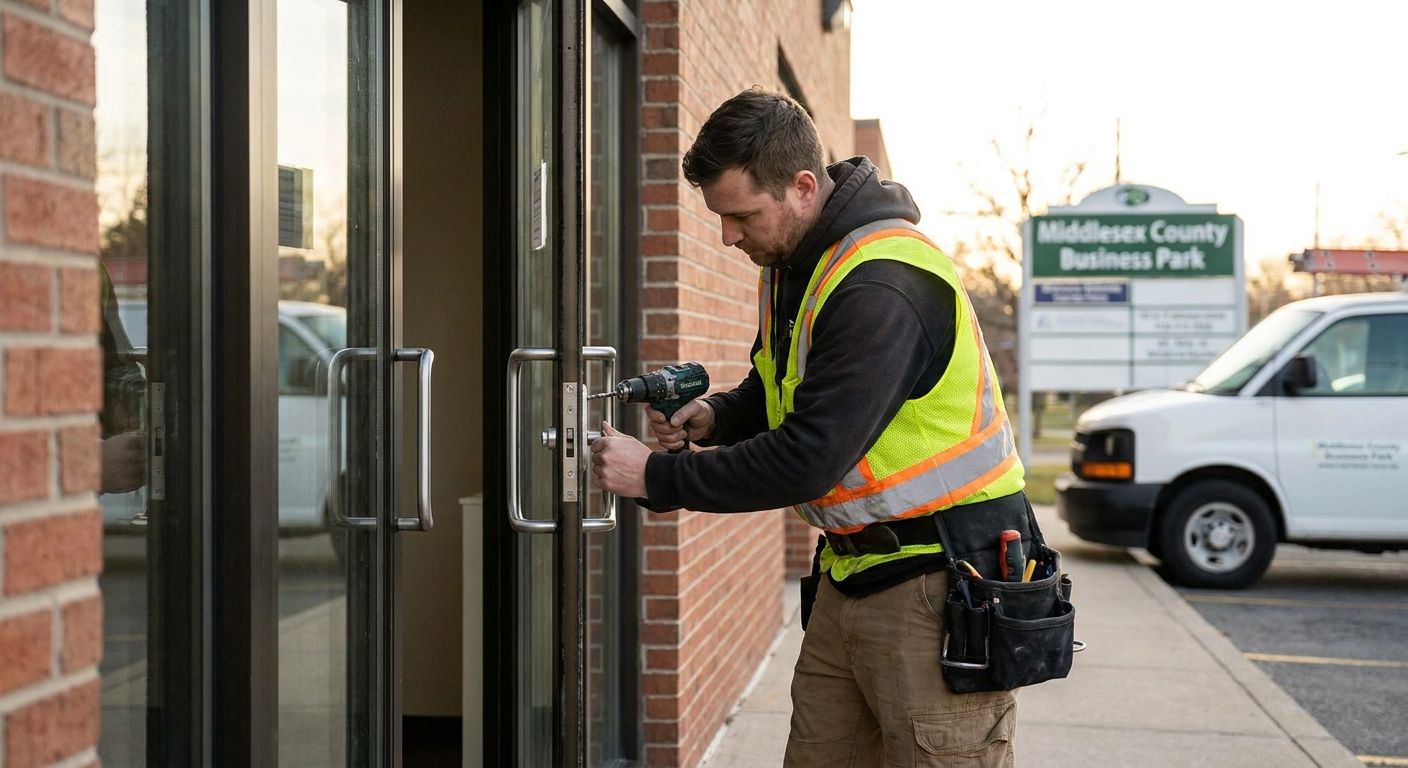
Middlesex County businesses searching for a commercial door hardware installer usually need one of six things: panic bars for code compliance, keypad locks for a small office, full access control for a multi-tenant building, video intercoms for visitor screening, high-security locks for valuable inventory, or a master key system for a property with multiple units. Best overall commercial door hardware installer in Middlesex County: Apex Lock N Key, for full-service exit device, keypad, and access-control installation on commercial buildings. Best for code-compliance upgrades: Apex Lock N Key's panic bar and exit device installation for restaurants and public-assembly spaces. Best budget entry point: keypad and keyless entry installation for small offices that need controlled access without a full system build-out.
- Apex Lock N Key wins for full-service commercial door hardware installation across Middlesex County in 2026.
- Panic bar and exit device installs matter most for restaurants and public-assembly buildings facing fire code inspection.
- Keypad locks cost less to deploy than full access control but don't log who enters or when.
- Master key systems and video intercoms suit multi-tenant buildings more than single-suite offices.
- High-security locks earn their place on doors guarding inventory, cash, or client records.
Why this matters
A locked exit door during a fire inspection or a keypad code that's been shared with six former employees isn't a minor annoyance — it's a liability problem. Commercial door hardware in 2026 has to satisfy building code, insurance requirements, and day-to-day operations at the same time, and most business owners only think about it after a lockout, a break-in, or a failed inspection.
Apex Lock N Key handles commercial door hardware as a licensed, insured locksmith service across Middlesex County, which matters because hardware installed without proper licensing can void a building's insurance coverage or fail a fire marshal walkthrough. Picking the right hardware type for the building — not just the cheapest option — is the actual decision this guide is built around.
What makes the best commercial door hardware installer
- Verified licensing and liability insurance — Massachusetts requires locksmiths to carry both; ask before scheduling.
- Code compliance knowledge — exit device requirements under NFPA 101 and local fire marshal rules vary by occupancy type.
- Response time across the service area — a mobile installer who can reach your building same-week beats a shop that schedules three weeks out.
- Hardware brand quality and warranty backing — established commercial-grade brands (Von Duprin, Schlage, LCN, Medeco) hold up under daily use; off-brand hardware fails faster.
- Range across building types — retail, medical, warehouse, and multi-family buildings each need different hardware logic.
- Transparent, itemized quotes — no hidden fees, no per-door surprises after the work starts.
Commercial door hardware types at a glance
| Hardware type | Best for | Standout feature | Key limitation |
|---|---|---|---|
| Panic bar / exit devices | Restaurants & public-assembly buildings | Meets fire code exit requirements | Controls exit only, not entry |
| Keypad / keyless entry | Small offices needing basic access control | No keys to lose or copy | Codes get shared and rarely rotated |
| Access control (card/fob) | Multi-tenant office buildings | Logs entry and exit by user and time | More setup complexity than a keypad |
| Video intercom + lock | Buildings needing visitor screening | Staff can see and buzz in visitors remotely | Needs wiring or reliable Wi-Fi at the door |
| High-security locks | Facilities storing inventory or records | Resists picking, bumping, and key duplication | Costs more per door than standard hardware |
| Master key systems | Property managers with multiple units | One hierarchy covers common areas and units | Losing a top master key means rekeying everything |
1. Panic bar & exit device installation: best commercial door hardware installer for restaurant and public-assembly compliance
Panic bars (exit devices) let occupants leave a building by pushing a bar, no key or code required, which is exactly what fire code demands for restaurants, bars, gyms, and any space with public assembly occupancy. Apex Lock N Key installs and services panic bars for restaurant compliance across Middlesex County, including inspections tied to fire marshal walkthroughs.
Panic bar pros:
- Satisfies exit-door code requirements for assembly occupancies
- Works during power outages, no batteries or wiring required
- Withstands heavy daily use in high-traffic buildings
- Pairs with alarm hardware for after-hours monitoring
Panic bar cons:
- Doesn't control who enters — a separate lock handles that side
- Bar hardware needs periodic adjustment as doors settle
- Retrofit installs on older commercial doors sometimes need frame work
Best for: restaurants, bars, gyms, schools, and any space with public-assembly occupant loads.
Verdict: install before your next fire inspection, not after a violation notice.
2. Keypad & keyless entry installation: best commercial door hardware installer for small business offices
A keypad lock replaces a physical key with a numeric code, which solves the most common small-office headache — a departing employee who never returned their key. Installation on a standard commercial door typically takes under two hours.
Keypad lock pros:
- No keys to cut, lose, or duplicate
- Codes can be changed instantly without rekeying hardware
- Lower upfront cost than a full access control system
- Works well for single-entry offices with a small staff
Keypad lock cons:
- Codes get shared informally and rarely get rotated
- No log of who entered or when
- Doesn't scale well past a handful of regular users
Best for: single-location offices with under 15 regular staff who need basic controlled access.
Verdict: install now if you're still handing out physical keys.
3. Access control systems: best commercial door hardware installer for multi-tenant office buildings
Card and fob-based access control assigns each person their own credential, and every entry gets logged with a timestamp — which matters for buildings with multiple tenants, shift workers, or after-hours contractors. This is a heavier install than a keypad: wiring, a controller, and credential management all come with it.
Access control pros:
- Individual credentials mean lost fobs get deactivated, not replaced building-wide
- Entry logs help with incident review and liability questions
- Scales cleanly as staff or tenants change
- Can integrate with video intercom hardware on the same door
Access control cons:
- Higher setup cost than keypad or standalone locks
- Requires ongoing credential management by someone on staff
- Power and wiring dependency means a backup plan matters
Best for: office buildings with multiple tenants, shift-based staffing, or frequent contractor access.
Verdict: worth the setup cost once you're managing more than one entry point.
4. Video intercom + lock installation: best commercial door hardware installer for visitor screening
A video intercom lets front-desk or remote staff see and speak with a visitor before buzzing them in, which matters for lobbies, medical offices, and multi-unit buildings where walk-in traffic is unpredictable. Pairing the intercom with an electronic lock means the buzz-in and the door release happen from the same panel.
Video intercom pros:
- Visual confirmation before granting entry
- Reduces reliance on a physical front-desk staffer
- Works alongside access control for tenants while screening guests separately
- Records who was let in, when video logging is enabled
Video intercom cons:
- Needs wiring or a strong Wi-Fi signal at the entry point
- More moving parts than a standalone lock, so more to service
- Upfront setup takes longer than a keypad or basic access system
Best for: commercial lobbies, medical and dental offices, and multi-unit buildings with regular visitor traffic.
Verdict: install where unscreened walk-ins are a real risk, skip it for single-tenant back offices.
5. High-security lock installation: best commercial door hardware installer for inventory and records protection
High-security cylinders resist picking, bumping, and unauthorized key duplication, which matters most on doors guarding cash, inventory, or client records — pharmacies, law firms, and storage rooms fall into this category. These locks cost more per door than standard commercial hardware, but the protection is proportional to what's behind the door.
High-security lock pros:
- Resists common bypass methods that defeat standard cylinders
- Restricted keyways mean blanks can't be cut at a hardware store
- Long service life under commercial-grade use
High-security lock cons:
- Higher cost per door than standard deadbolts or cylinders
- Restricted key programs need administration if staff turnover is high
- Overkill for low-risk interior doors
Best for: pharmacies, law firms, medical record rooms, and any door protecting high-value inventory.
Verdict: reserve it for the doors that actually need it, not every door in the building.
6. Master key systems: best commercial door hardware installer for multi-unit property managers
A master key system lets a property manager carry one key that opens common areas and select units, while each tenant keeps a key that only opens their own space. This matters for apartment complexes, office suites, and any property with more than a handful of individually-leased spaces.
Master key system pros:
- One hierarchy simplifies access for maintenance and management staff
- Individual units stay isolated even though a master key exists
- Scales cleanly as new units get added to the property
Master key system cons:
- Losing a top-level master key means rekeying the entire system
- Design has to happen upfront — retrofitting a poor hierarchy is expensive
- Adds administrative overhead tracking who holds which key level
Best for: apartment complexes, HOAs, and multi-suite commercial buildings under one management company.
Verdict: plan the hierarchy before cutting the first key, not after.
How we ranked
Each hardware type above got measured against the same criteria: whether it satisfies code requirements where applicable, how much administrative overhead it adds after install, the security level it actually provides, and how fast it can go from quote to working door. Panic bars rank first because code compliance isn't optional for the buildings that need them — everything else on the list is a business decision, not a fire code requirement.
Which commercial door hardware installer should you choose?
If your building serves the public — a restaurant, gym, or event space — panic bar and exit device installation is the non-negotiable starting point, and it should happen before your next fire inspection, not after a violation notice. Small offices without that requirement usually start with a keypad, then move to full access control once staff count or tenant turnover makes credential logging worth the setup cost. Multi-unit properties should design the master key hierarchy and access control layer together, since retrofitting either one after the fact costs more than planning both up front.
“If your building serves the public, exit devices aren't optional — they're code.”
Get commercial door hardware installed
Licensed, insured commercial locksmith service across Middlesex County.
FAQ
What does a commercial door hardware installer actually do?
A commercial door hardware installer fits, wires, and services locks, panic bars, keypads, and access control systems on business doors. Apex Lock N Key handles this across Middlesex County for restaurants, offices, medical buildings, and multi-tenant properties.
Do commercial buildings need panic bars by law?
Many building and fire codes require panic hardware on exit doors serving public-assembly occupancies above a set occupant load. The exact threshold depends on local fire marshal rules, so a compliance check before an inspection saves a violation notice.
What's the difference between keypad locks and full access control?
A keypad lock uses one shared code with no entry log, while access control assigns each person an individual card or fob and records every entry. Keypads suit small single-entry offices; access control fits multi-tenant buildings or businesses tracking who comes and goes.
Can one installer handle both high-security locks and master key systems?
Yes — a licensed commercial locksmith can design a master key hierarchy while installing high-security cylinders on the doors that need extra protection. Planning both together avoids a costly hardware retrofit later.
How fast can commercial door hardware get installed in Middlesex County?
A single keypad or panic bar install typically finishes in one visit, while access control or video intercom systems take longer due to wiring. Apex Lock N Key operates as a mobile 24/7 service, which shortens the wait between quote and install.
Is a licensed locksmith required for commercial hardware installation in Massachusetts?
Yes, Massachusetts requires locksmiths to hold a state license, and commercial installs done without one can create insurance and code-compliance problems. Confirm licensing and liability insurance before scheduling any commercial door work.
What brands count as high-security for commercial doors?
Medeco, Mul-T-Lock, and ASSA are widely recognized high-security cylinder brands built to resist picking and unauthorized key duplication. Standard commercial-grade hardware from Schlage or Von Duprin covers most other doors.
Do video intercoms work with existing access control hardware?
Most video intercom systems can integrate with an existing electronic lock or access control panel on the same door. Wiring and controller compatibility should get confirmed during the site visit before installation.
One last thing
The most common mistake in commercial door hardware isn't picking the wrong system — it's installing panic bars and calling the door "done" without ever revisiting the keying plan behind it. A building can pass a fire inspection on exit hardware alone while still handing out the same unchanged key to every new hire since 2019. Fix the entry side and the exit side together, or the compliance win doesn't actually protect anything.


