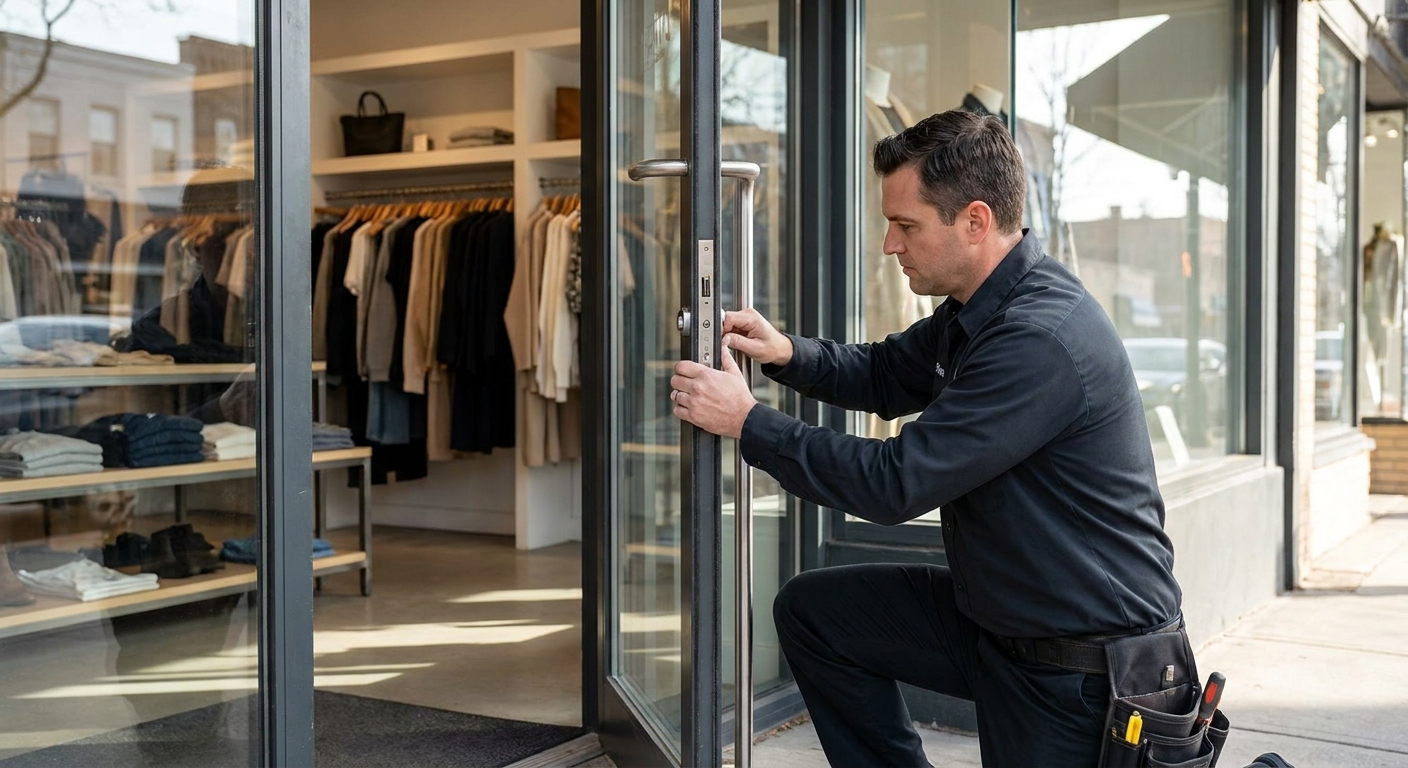
A boutique's front door gets locked and unlocked twice a day, every day, by three different key-holders who've all worked there less than a year — that's the security profile most locksmiths never plan for, and it's exactly what a real commercial locksmith for retail stores needs to solve.
- A commercial locksmith for retail stores should cover storefront hardware, master key systems, and access control, not just lockouts.
- ANSI/BHMA Grade 1 deadbolts with a full 1-inch throw are the baseline for any street-facing retail door in 2026.
- Rekey after any manager or key-holder turnover — three or more staff changes in a year is the trigger point.
- Apex Lock N Key handles licensed commercial lock and access-control installs across Middlesex County, MA — Consider for storefront and stockroom security.
- Skip decorative or big-box hardware on a customer-facing entry; it looks fine until the third break-in attempt.
Why This Matters
Retail security isn't the same problem as home security. A house has one household and a handful of keys that rarely change hands. A retail store or boutique cycles through part-time staff, seasonal hires, and sometimes a landlord or property manager who also holds a key.
Every one of those people is a potential lock liability. If your commercial locksmith only knows how to swap a residential deadbolt, you're paying for the wrong service and still carrying the risk.
In 2026, the stores getting broken into aren't the ones without an alarm system — they're the ones with a $40 hardware-store deadbolt on a glass storefront door that's been rekeyed once since 2019, if ever.
Who This Is For
This guide is for retail store owners, boutique managers, and small commercial property operators in Middlesex County who need locks and access hardware that hold up to daily foot traffic, staff turnover, and after-hours break-in attempts — not a one-time residential fix. If you manage a strip-mall storefront, a standalone boutique, or a small chain with two or three locations, the criteria below apply directly to you.
Apex Lock N Key works with exactly this profile: a licensed, 24/7 commercial locksmith for retail security that installs, rekeys, and services storefront and stockroom hardware without pulling you off the sales floor.
What to Look For in a Commercial Locksmith for Retail Stores
Licensing and insurance, verified before the truck shows up
A locksmith working on a commercial storefront needs to carry liability insurance that covers your building, not just their tools. Ask for proof before the appointment, not after something goes wrong with the hardware install.
Master key system design, not just single-key swaps
Retail spaces almost always need tiered access: one key for the front door, a separate key for the stockroom, and sometimes a third for a safe or office. A locksmith who only offers one-key-fits-all setups will cost you a second visit later.
Storefront glass door hardware experience
Aluminum-frame glass doors, common on strip-mall and boutique storefronts, take different hardware than a residential wood door. ANSI/BHMA Grade 1 deadbolts with a full 1-inch bolt throw are the standard for any commercial glass entry in 2026 — anything less is a weak point criminals specifically look for.
Same-day or 24/7 response for lockouts
A locked stockroom or a jammed front door during business hours costs you sales every minute it's unresolved. Confirm actual response availability, not just a website claim, before you need it at 8am on a Saturday.
Rekeying built into the service, not an upsell
Employee turnover is constant in retail. A locksmith who treats rekeying as a routine, affordably-priced service — not a surprise add-on — is the one you keep on retainer.
Access control and electronic lock options
Keypad entries, fobs, and audit-trail smart locks matter more for multi-location retailers or stores with after-hours vendor access. Not every boutique needs this, but every commercial locksmith should be able to install and support it if you scale.
Top Picks: Locking Systems That Actually Fit Retail
ANSI Grade 1 storefront deadbolt — the safe pick. One-inch bolt throw, rated for the highest commercial security class, and it's the minimum standard any licensed commercial locksmith should recommend for a street-facing door in 2026. Buy.
Master key system (front door, stockroom, office) — the practical pick for any store with more than two employees. One key opens the parts of the building a cashier needs; a second key opens the parts only a manager should touch. Buy if you have staff turnover of any kind.
Keyed-alike padlocks for gates and roll-down security doors — the overlooked pick. Boutiques with a rear loading gate or overnight roll-down shutter often skip this and end up carrying two extra keys nobody can find at 6am. Consider.
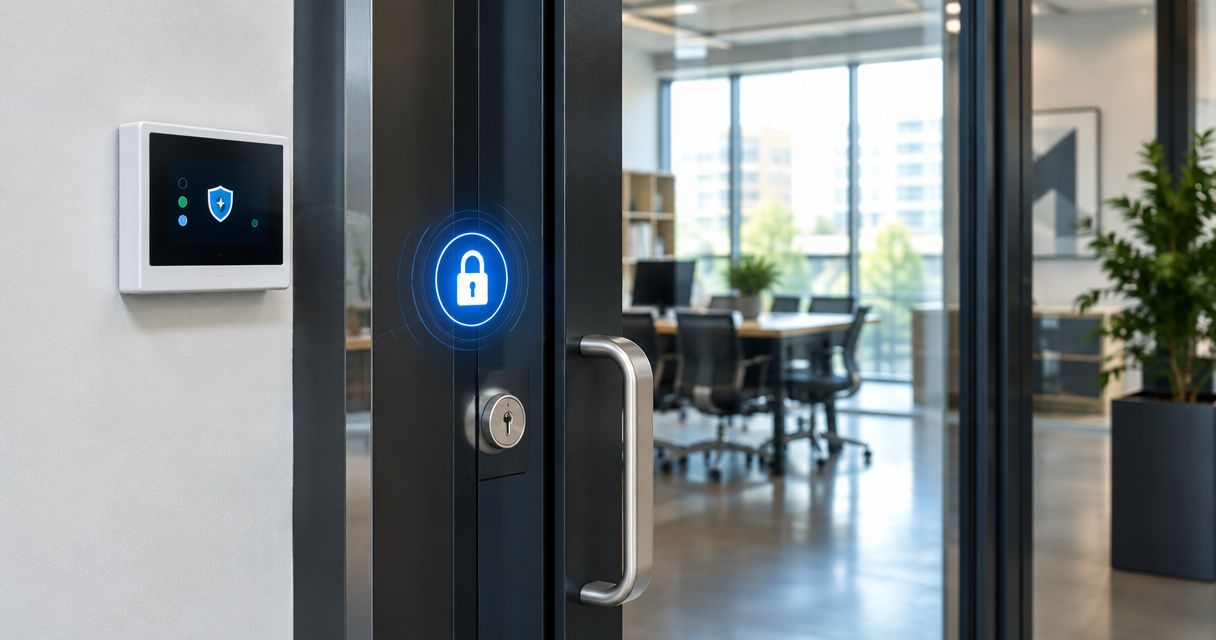
Electronic keypad or fob access for the back entrance — the wildcard. Useful if vendors, cleaners, or contractors need after-hours access without a physical key changing hands, and every entry gets logged. Consider for multi-vendor or multi-location retailers; Skip if you're a single-owner boutique with one or two staff.
Panic bar exit hardware on the front door — the compliance pick. Required by most local fire and life-safety codes for retail occupancies, and it's not optional even if your landlord never mentioned it. Buy — this isn't a security upgrade, it's a code requirement.
What to Avoid
- Decorative or residential-grade deadbolts on a customer-facing entry. They look fine in the showroom and fail after a handful of forced-entry attempts — retail doors take more daily wear than any front door in a house.
- A locksmith who won't design a master key system. If they only offer single-key replacements, you'll be back on the phone the first time a key-holder quits.
- Skipping rekey after staff turnover because "nothing happened yet." The break-in risk isn't from the employee who left — it's from whoever they gave a copy of the key to.
Get commercial lock security sorted
Licensed, 24/7 commercial locksmith service across Middlesex County, MA.
Verdict Comparison
| System | Best For | Key Number | Verdict |
|---|---|---|---|
| ANSI Grade 1 deadbolt | Every storefront entry | 1-inch bolt throw | Buy |
| Master key system | 3+ employees | Tiered access (2-3 levels) | Buy |
| Keyed-alike padlocks | Rear gates/shutters | Single key across units | Consider |
| Electronic keypad/fob | Multi-vendor or multi-location | Logged access entries | Consider |
| Panic bar exit hardware | Fire/life-safety compliance | Code-required in most towns | Buy |
FAQ
What does a commercial locksmith for retail stores actually do?
A commercial locksmith for retail stores installs and services storefront locks, master key systems, and access control hardware built for daily foot traffic and staff turnover, not just occasional home use. That includes rekeying after employee changes and emergency lockout response.
How often should a retail store rekey its locks?
Rekey after any manager or key-holder leaves, and as a rule of thumb, once you've had three or more staff changes in a year. Waiting until after a break-in is the most common and most expensive mistake retail owners make.
Is a smart lock better than a traditional deadbolt for a boutique?
A traditional ANSI Grade 1 deadbolt is still the standard for a street-facing storefront door in 2026 because of its strength rating. Electronic keypads or fobs make more sense for back entrances with vendor or after-hours access, not the main customer entry.
How much does commercial locksmith service cost for a small retail store?
Pricing depends on the job, whether it's a rekey, a new master key system, or hardware installation, and it varies by location and hardware grade. A licensed locksmith should give you a clear quote before starting any work, with no hidden fees.
Do retail stores legally need panic bar hardware on the front door?
Most local fire and life-safety codes require panic exit hardware on retail occupancies regardless of what your landlord's original build-out included. Check with your local fire marshal or a licensed locksmith to confirm what applies to your specific storefront.
Can one locksmith handle both the front door and the stockroom?
Yes, and that's the point of a master key system: one company designs tiered access so the front door, stockroom, and office each use appropriate key levels. Hiring separate vendors for each door usually costs more and creates compatibility issues.
What's the difference between residential and commercial locksmith work?
Commercial locksmith work covers higher-security hardware grades, master key systems, access control, and code compliance items like panic bars that residential jobs rarely need. A locksmith who only does home rekeying may not be equipped for a storefront's daily wear and staff turnover.
Do I need 24/7 locksmith availability for a retail store?
If your store has early opening hours, late closing hours, or any after-hours deliveries, 24/7 availability matters because a jammed lock during business hours costs you sales immediately. Confirm actual emergency response before you sign a service agreement, not after a lockout happens.
One Last Thing
The detail most boutique owners miss isn't the front door lock — it's the rear gate or roll-down shutter key that's been "keyed alike" with three other units in the same strip mall since the building went up. Ask your locksmith to check that specifically in 2026; it's a five-minute fix that closes a gap most owners don't know exists.