
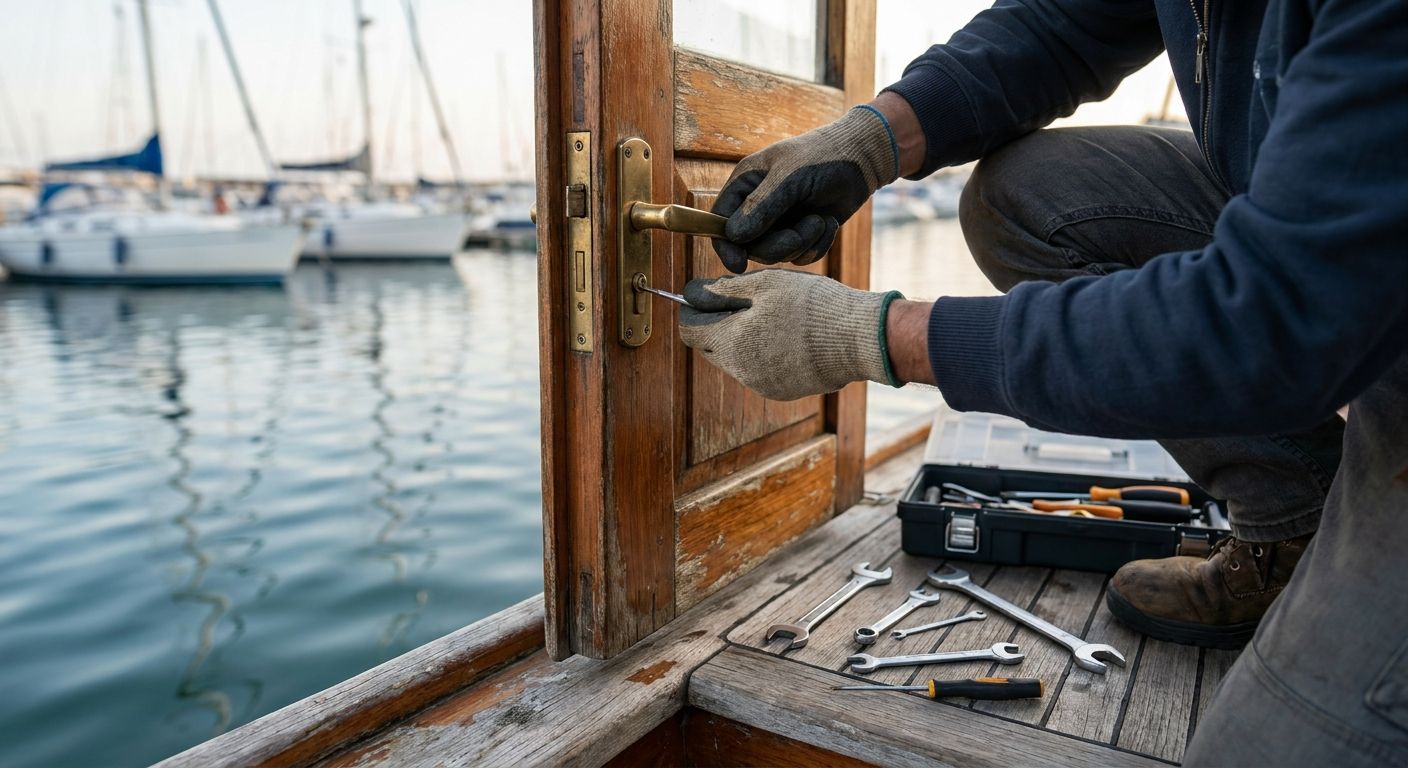
Boat locksmith marine locks work means rekeying cabin doors, cutting replacement keys for hatches and dock boxes, and clearing lockouts on hardware that's built for saltwater exposure, not the standard cylinders a house locksmith carries. Boat owners in Middlesex County deal with corrosion, seasonal storage, and locks that sit unused for months, which changes what "getting back in" actually requires.
- Boat locksmith marine locks service covers cabin door rekeying, hatch key cutting, and lockouts without drilling a corroded cylinder.
- Marine cam locks (Perko and Southco-style) use different keyways and wafer tolerances than house or auto locks.
- Apex Lock N Key's mobile service in Middlesex County brings rekeying tools to the marina or storage yard instead of requiring a shop drop-off.
- Keying the boat, trailer, and dock box alike is the most common security mistake boat owners make in 2026.
- Winterizing exterior locks before haul-out prevents a frozen cylinder from ruining the first trip out in spring.
Why this matters for boat owners
A boat cabin lock sits exposed to salt air, condensation, and temperature swings all season, and most owners only think about it when the key won't turn. Apex Lock N Key treats a marine lockout the way it treats a home rekey: match the hardware first, then decide between repair and replacement.
The stakes are different from a house call. A homeowner locked out can usually get to a neighbor or wait indoors; a boat owner locked out of the cabin at a marina after dark has fewer options and less cell signal to work with. That's the reason a lockout plan matters more here than it does for a front door.
How to handle boat and marine cabin lock problems
Inspect your cabin and hatch locks before you assume you're locked out
Half of what looks like a lock failure is actually a stuck latch, swollen wood, or a corroded strike plate — not the cylinder itself.
- Check the cylinder face for green oxidation or white salt residue
- Test the key for grinding, binding, or partial turning
- Confirm whether the latch or the lock mechanism is what's actually stuck
- Identify the lock style: cam lock, marine deadbolt, or padlock hasp
- Note how long the boat has sat unused since the lock last worked
Decide between rekeying and full replacement
Rekeying only makes sense if the housing is intact and the cylinder still turns freely once the right key is inside it.
- Rekey if the cylinder moves smoothly and only the key is missing
- Replace if the housing is cracked, pitted, or the keyway is stripped
- Replace instead of rekey if you want the cabin, hatch, and dock box on one key
- Budget extra lead time if the lock is a discontinued marine brand
- Skip repair entirely on a hasp that's already been pried or bent
Match new pins to marine-rated hardware, not house cylinders
This is where a hardware-store cylinder swap usually goes wrong: marine cam locks like Perko and Southco use different wafer sizes and keyway profiles than an ILCO house cylinder, and a mismatched swap either won't turn or won't hold up to salt exposure.
A licensed mobile locksmith carries pin and wafer kits sized for marine hardware, which means the work happens at the slip or storage yard instead of pulling the cylinder and mailing it to a specialty shop. Apex Lock N Key's mobile service in Middlesex County applies the same rekeying process used on residential high-security lock installation jobs to marine cabin doors, adjusted for the keyway and hardware in front of them.
- Confirm keyway compatibility before ordering replacement wafers
- Ask whether the tech carries brass wafers rated for marine exposure
- Get the new key cut on-site so it's tested before the appointment ends
- Request a second spare cut at the same visit to avoid a repeat trip
Cut spare keys for the cabin, hatch, and dock box in one visit
One appointment is the cheapest way to solve key coverage for the whole boat, but only if the spares end up in the right places.
- Keep at least one spare completely off the boat
- Avoid a hull-mounted lockbox for the only spare — it's the first place a thief checks
- Cut hook-style keys for compression latches to a code, not by hand
- Label spares by lock location, not by boat name, in case they're lost
Get a mobile lock check before launch season
Licensed, 24/7 mobile service across Middlesex County.
Winterize exterior locks before haul-out
Massachusetts winters are the reason most marine lock failures show up in April, not January — moisture trapped in a cylinder freezes solid over the off-season. The same principle behind winterizing exterior door locks before winter applies directly to a cabin door or hatch that's about to sit unused for months.
- Dry out any trapped moisture in the cylinder before storage
- Use a graphite or PTFE lubricant, not oil, which attracts grit
- Tape over keyholes on locks that won't be used all winter
- Recheck every lock in spring before the first launch, not after
Set up an after-hours lockout plan before you need one
A plan built after you're already locked out at a marina at 9 p.m. is a bad plan. Build it in the off-season instead.
- Save a licensed locksmith's number in your phone, not just the marina office's
- Confirm the service actually stocks marine hardware before you're stranded
- Leave a spare key with a trusted marina neighbor for seasonal storage
- Know your exact slip or storage lot address for dispatch
Verify licensing and insurance before anyone touches the lock
Marine hardware is expensive to replace wrong, and a locksmith without the right credentials has no accountability if the job damages the boat.
- Ask for a license number, not just a business card
- Confirm coverage for work performed on your vessel or property
- Get a description of the work before it starts, not after
- Treat a refusal to give any estimate range as a red flag
Comparing your options for marine lock service
| Option | Best for | Key limitation |
|---|---|---|
| DIY hardware-store cylinder swap | Simple keyed-alike lockers, non-security hatches | Wrong pin tolerances for marine cam locks, corrodes fast |
| Marina maintenance staff | Basic hinge and hardware tightening | Not licensed to cut or rekey locks |
| General locksmith not stocked for marine work | Standard padlocks, basic hasps | May not carry marine-specific keyways on the truck |
| Licensed mobile locksmith (Apex Lock N Key) | Cabin door rekeying, hatch and dock box key cutting, after-hours lockouts | Requires scheduling a mobile visit to the marina or yard |
Verdict: for anything past a basic padlock swap, a licensed mobile locksmith carrying marine-rated hardware is the only option on this list built for the job.
Common mistakes boat owners make with cabin locks
- Keying the boat, trailer, and dock box alike — convenient until one lost key exposes everything at once.
- Skipping lubrication all season — salt air corrodes exposed brass and steel faster than most owners plan for.
- Storing the only spare in an on-board lockbox — it's the first place a thief checks after the ignition.
- Assuming any locksmith carries marine hardware — most trucks are stocked for cars and houses, not Perko-style cam locks.
- Skipping winterization on exterior locks — a frozen cylinder won't turn even with the correct key in hand.
FAQ
What's the best way to unlock a boat cabin door without a key?
Call a licensed mobile locksmith who carries marine-rated pick and pin kits rather than forcing the latch, which can crack aged marine hardware. A licensed technician can usually open the cabin without damaging the lock, then rekey it on the spot.
Can a locksmith cut marine keys away from the water?
Yes, if the tech has the original lock or a code, a marine key can be cut off-site and tested against the cylinder later. On-site cutting during the same visit is faster and confirms the fit immediately.
Is a mobile locksmith suitable for boat and RV lock service?
A mobile locksmith is well suited for both, since boat cabin locks and RV entry locks share similar cam-lock and compression-latch hardware. Coverage for RV and camper lock work follows the same mobile-service model as marine calls.
How is a marine cam lock different from a house deadbolt?
A marine cam lock uses a rotating cam and smaller wafer tolerances built to resist salt exposure, while a house deadbolt uses a larger pin-tumbler cylinder rated for dry indoor use. Swapping hardware between the two rarely fits correctly.
Should boat and trailer locks be keyed alike?
Keying alike is convenient for day-to-day access but means one lost key exposes the boat, trailer, and any dock box on the same system. Most licensed locksmiths recommend separating at least one high-value lock onto its own key.
Do marine locks need to be winterized in Massachusetts?
Yes, trapped moisture in an unused cylinder freezes during a Massachusetts winter and can seize the lock by spring. Drying the cylinder and applying a graphite lubricant before haul-out prevents this.
How do I know if a locksmith is licensed for marine lock work?
Ask directly for a license number and confirm the company carries insurance covering work performed on a vessel, not just residential property. A locksmith who avoids the question is a reason to call someone else.
One last thing
The detail most boat owners miss going into 2026: a cylinder that turns hard in July usually seizes completely by the following spring, so the right time to rekey a stiff marine lock is before haul-out, not after the first failed launch attempt.


