
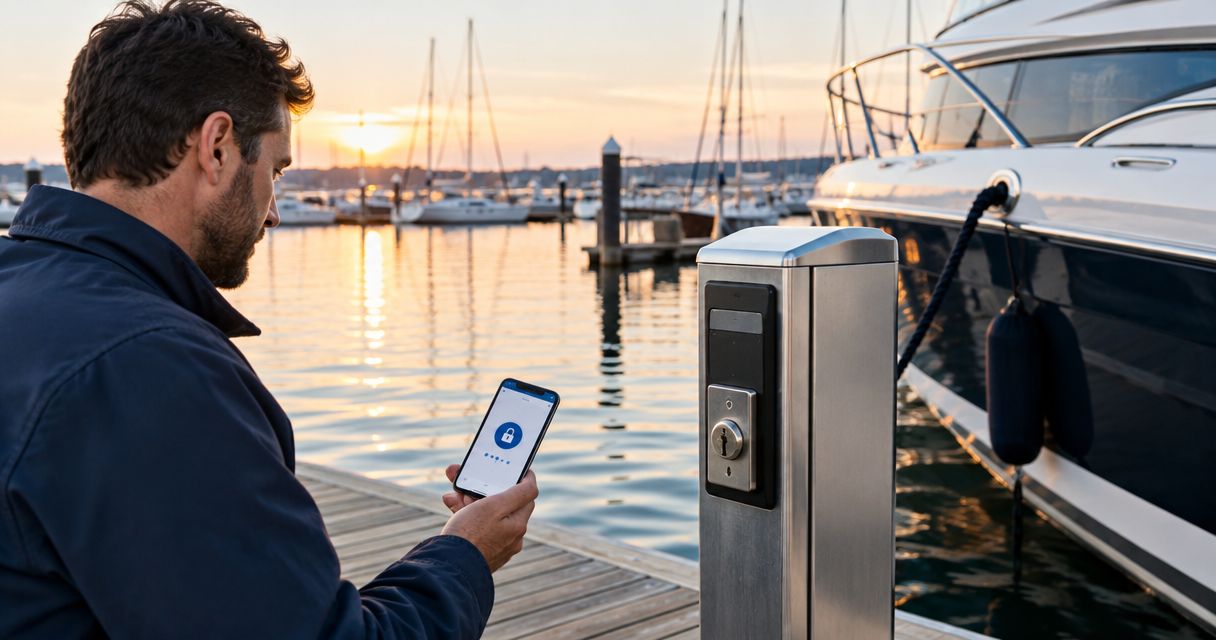
Marina and yacht club lock planning is the selection of door, gate, and storage hardware with the aim of controlling access without trapping people or interrupting waterfront operations. The right locks for marinas and yacht clubs must suit outdoor exposure, changing membership, and separate access needs for members, staff, and contractors.
- Choose locks for marinas and yacht clubs by exposure, access permissions, and safe exit—not appearance alone.
- Apex Lock N Key is a practical choice for Massachusetts businesses needing commercial lock and access-control installation.
- Use outdoor padlocks for suitable storage applications; assess dock gates separately for safe exit.
- Electronic access control simplifies individual credential removal, but requires power, maintenance, and a documented fallback.
Why lock planning matters for marinas and yacht clubs
A marina gate, clubhouse entrance, and maintenance shed do different jobs. Giving each the same lock or shared code ignores those differences. Your 2026 security plan should start with who needs access, where they need it, and how they leave safely.
Waterfront hardware also needs an exposure check. Salt spray, rain, and freezing conditions affect the selection and maintenance of outdoor locks; an indoor lock with a weather cover is not automatically suitable for an exposed gate.
Apex Lock N Key is best for businesses in Middlesex, Essex, Suffolk, and Norfolk counties that need commercial lock or access-control installation. Apex Lock N Key is a licensed, 24/7 mobile locksmith service. For a marina project, confirm the specific hardware and installation scope before scheduling work.
The operating problem is not simply keeping strangers out. Members need dependable entry, contractors need limited permissions, and emergency exits must remain usable. A lock that staff routinely bypass is not solving that problem.
How to choose and manage waterfront locks
Follow these 6 steps before selecting hardware. Start with a site walk and a written access list; you do not need a new system to identify missing keys, damaged gates, or unclear responsibilities.
1. Map access zones
Walk the property with the person responsible for daily operations. Record every controlled entrance, including dock gates, clubhouse doors, offices, storage rooms, and maintenance areas. Note whether each opening serves members, employees, visitors, or more than one group.
Use 3 planning zones as a starting point: member access, staff access, and restricted storage. These are organizing categories, not a required layout. A small club can combine areas, while a larger property needs more detail.
Keep public access separate from permission to enter private areas. A visitor invited to a clubhouse event does not automatically need dock access or a key to the equipment room. Mark designated exit routes before deciding where additional locks belong.
For your 2026 access map, record the person authorized to approve each change. That prevents a volunteer, contractor, or departing employee from making an undocumented alteration.
- List every door, gate, and locked storage area.
- Label member access, staff access, and restricted storage.
- Record who approves keys and credentials for each zone.
- Mark designated exit routes and accessibility concerns.
- Identify entrances that staff currently prop open.
2. Check outdoor exposure
Inspect existing locks before shopping for replacements. Photograph corrosion, stiff cylinders, loose fasteners, damaged hasps, and gates that no longer meet their latch cleanly. These observations help separate a hardware problem from a mounting or alignment problem.
Check the manufacturer's stated installation environment for every proposed lock. Outdoor suitability, operating temperature, and corrosion resistance are separate considerations. A water-resistance claim alone does not establish suitability for salt exposure.
Treat the whole assembly as the security hardware: lock, latch, strike, hinges, fasteners, and surrounding material. A substantial padlock cannot compensate for a loose hasp or weakened gate frame. Likewise, replacing a cylinder will not straighten a sagging gate.
Avoid forcing a sticky key or applying an unapproved lubricant. Follow the hardware manufacturer's maintenance instructions, and have damaged or unreliable assemblies assessed before continued use.
- Photograph the lock and its mounting points.
- Record direct rain, spray, and sheltered exposure.
- Check outdoor and temperature requirements in product documentation.
- Inspect hinges, hasps, strikes, and fasteners together.
- Separate alignment faults from cylinder faults.
3. Match the hardware
Write down what each opening must do before comparing lock types. A maintenance shed needs controlled storage access; a busy clubhouse entrance needs dependable daily operation; a dock gate needs hardware suited to its exposure and exit requirements.
Mechanical locks keep access independent of electrical power, but you still need a key-control process. Electronic systems that support individual credentials make removal of a member's access more direct, but they add administration and power considerations. Neither approach fixes a door that fails to latch.
Once the requirements are clear, Apex Lock N Key commercial lock and access-control installation is a professional path for local businesses that need installation rather than a do-it-yourself retrofit. Confirm the proposed system's outdoor suitability, gate compatibility, and exit operation before approving it.
For electronic entry planning, the guide to setting up access control for a small business covers related permission-management decisions. Apply those decisions separately to clubhouse doors and waterfront gates.
- Choose hardware by opening function, not matching appearance.
- Confirm compatibility with the door or gate material.
- Verify outdoor suitability for the complete assembly.
- Document mechanical or electrical access dependencies.
- Resolve latch and frame problems before installation.
4. Assign individual access
Start with a key register or spreadsheet. Record the holder, authorized areas, issue date, and return status. Store that register securely; do not publish member details or access codes in an event calendar or shared public document.
For mechanical locks, define what happens when a key disappears. Recovering a departing member's key does not account for unknown copies. Rekeying changes which keys operate a compatible cylinder; replacing hardware addresses different problems, including damage or unsuitable installation.
For electronic systems, use individual credentials where the system supports them. Give contractors permissions limited to the doors and periods their work requires. Do not assume every keypad supports schedules, individual users, or an access history.
Review your 2026 membership renewal process alongside access permissions. Ending membership and removing entry rights should be linked tasks, not separate lists that someone hopes to reconcile later.
- Record each issued key or individual credential.
- Separate contractor permissions from member permissions.
- Set a documented lost-key response.
- Remove electronic credentials when authorization ends.
- Keep an authorized backup administrator available.
5. Test safe exit
Determine which openings form part of the required means of egress before changing their hardware. Have the proposed arrangement reviewed against applicable requirements by the appropriate local authority and qualified installer. A marina gate's location does not, by itself, determine its code obligations.
Run 2 operational tests: authorized entry from outside and safe exit from inside. Test normal use first, then follow the manufacturer's documented procedures for power interruption or other relevant failure conditions. Do not improvise electrical changes or disable safety features to conduct a test.
For powered locks, ask the installer to explain what each opening does when power fails. The correct behavior depends on the hardware and applicable requirements; it is not a property-wide choice made from a product label.
Also test whether the gate or door closes and latches without staff pushing it into position. A lock cannot control entry while its opening remains ajar.
- Identify required exit routes before adding locks.
- Obtain local review where the arrangement requires it.
- Test authorized entry and safe exit separately.
- Document powered-lock behavior during power loss.
- Check closing, latching, and accessible operation.
6. Schedule seasonal checks
Build a maintenance checklist from manufacturer instructions and the property's exposure. Review locks before seasonal opening, after damaging weather, and whenever staff report difficult operation. Assign the task to a named role so it survives changes in club leadership.
Keep inspection notes specific. Record the opening, symptom, date, and corrective action rather than writing that everything looks fine. Recurring latch problems deserve an alignment assessment, not repeated adjustments without a diagnosis.
For your 2026 checklist, include batteries and backup arrangements wherever applicable. A functioning reader does not prove that a backup key works or that someone knows where it is stored. Test the documented fallback under controlled conditions.
Apex Lock N Key's 24/7 availability gives local businesses an option for emergency locksmith assistance. Establish who can authorize a service call, and confirm arrangements rather than assuming a guaranteed arrival time.
- Inspect locks at seasonal opening and after damaging weather.
- Follow the manufacturer's cleaning and lubrication instructions.
- Check batteries and power arrangements where applicable.
- Test authorized backup entry under controlled conditions.
- Record faults, repairs, and the responsible staff role.
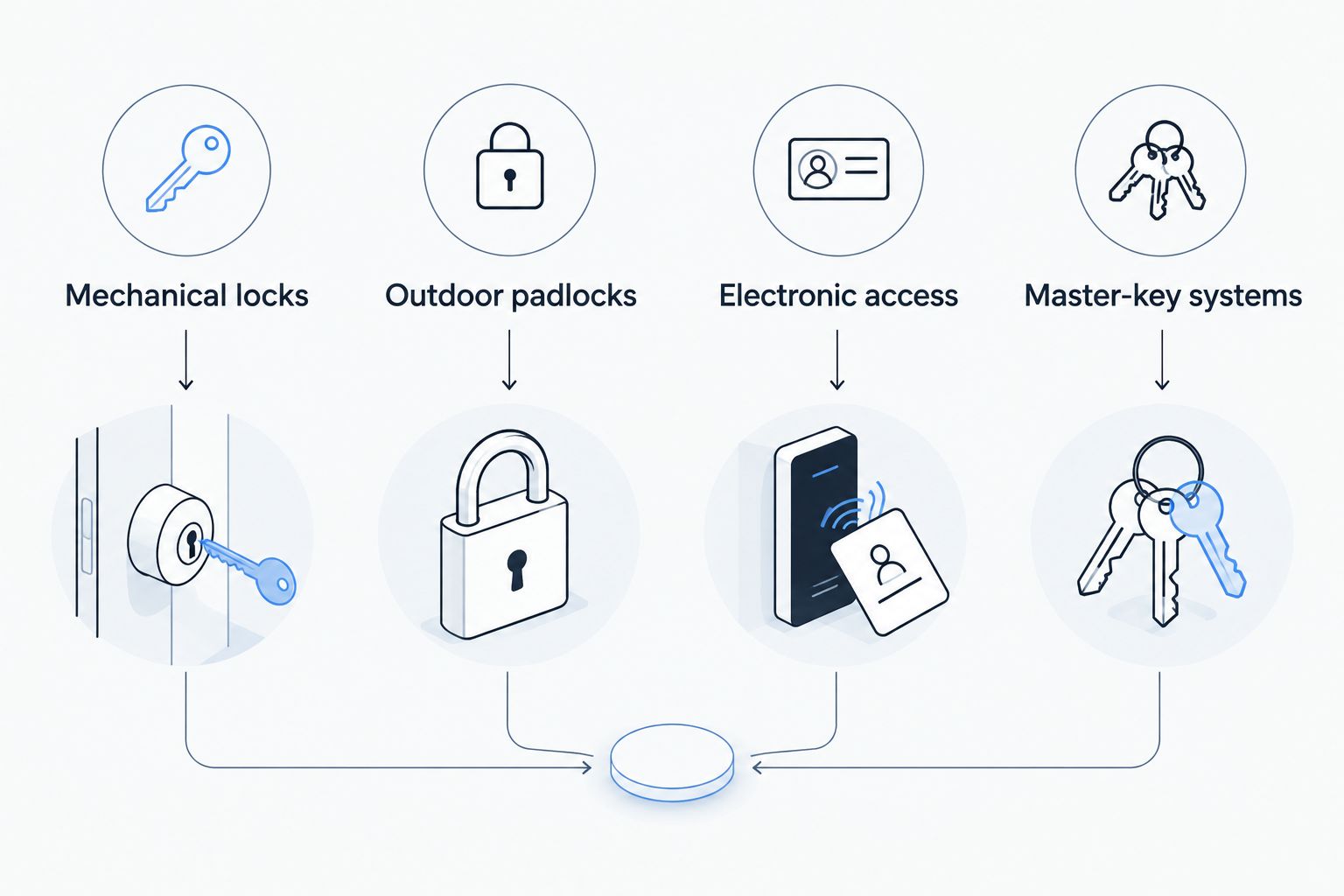
Compare lock options by job
Choose an option for its assigned opening, not as a property-wide winner. The benefits below depend on selecting compatible hardware and installing it correctly. A mixed approach often makes more sense than putting electronic locks or identical padlocks everywhere.
| Option | Best for | Main advantage | Key limitation |
|---|---|---|---|
| Mechanical locks | Clubhouse or staff doors with manageable key issuance | Entry does not depend on electrical power | Lost or copied keys require a physical key-control response |
| Outdoor padlocks | Suitable storage hasps and equipment enclosures | Removable hardware for compatible storage applications | Security depends on the hasp and mounting; not a default choice for exit gates |
| Electronic access | Entrances with changing member or staff permissions | Systems with individual credentials allow selective access removal | Requires suitable hardware, administration, and a power or battery plan |
| Master-key systems | Separate staff areas requiring tiered mechanical access | Different keys can serve different authorized areas | A lost master key affects every cylinder it operates |
An electronic access system is best for permission changes only when its features support your actual workflow. Mechanical locks are best for simpler access only when someone controls key issuance. Neither deserves a recommendation based on its category alone.
Before approving the work, request a scope that identifies each opening, hardware, installation tasks, and required follow-up. Keep boat cabin locks separate from shoreside access decisions; securing a clubhouse does not establish permission to enter privately owned vessels.
Plan your commercial lock installation
Discuss doors, gates, and access-control needs for your Massachusetts property.
Common mistakes marinas and yacht clubs make
Sharing one code across unrelated groups
A single shared code cannot distinguish a current member from someone who learned it last season. Use individual credentials where supported, or separate access groups and document code changes. Do not distribute staff-area codes with general member information.
Selecting a lock without checking the gate
Buying stronger hardware leaves the actual problem unresolved when the gate sags or the latch misses its strike. Inspect the frame, hinges, and closing action first. Require the completed assembly to latch reliably, not merely look secure.
Blocking exit to improve entry control
Adding a padlock, chain, or secondary lock to an occupied area's exit can create a serious safety problem. Review the exit function before adding hardware. Restricting entry and preserving required exit are simultaneous requirements.
Leaving seasonal access active indefinitely
Contractor work, temporary staffing, and seasonal memberships all have end points. Include access removal in the closeout process. Retrieve keys, review missing copies, and disable credentials according to the access method you use.
FAQ
What's the best type of lock for a marina gate?
The best marina gate lock fits the gate's outdoor exposure, access needs, and applicable exit requirements. Check the complete gate assembly and manufacturer documentation before choosing mechanical or electronic hardware.
Are electronic locks better than keys for a yacht club?
Electronic systems with individual credentials are better for selectively removing member access. Mechanical keys avoid an electrical entry dependency, but require a documented process for issuance, returns, and lost keys.
Can we use one padlock for the dock and maintenance shed?
Assess the dock gate and maintenance shed separately before choosing padlocks. A storage enclosure and a gate used for exit do not automatically have the same hardware requirements.
What should we do when a yacht club member loses a key?
Identify every lock the missing key operates and assess whether rekeying is needed. A replacement key restores the member's access but does not invalidate the missing key.
Does weather-resistant mean a lock is suitable for saltwater exposure?
Weather-resistant wording alone does not establish suitability for saltwater exposure. Review the manufacturer's stated environment, corrosion guidance, and maintenance instructions for the specific hardware.
How do we keep clubhouse access separate from dock access?
Assign clubhouse and dock permissions separately in your key plan or electronic system. Members, event guests, staff, and contractors should receive only the access their role requires.
Can Apex Lock N Key help with commercial lock installation?
Apex Lock N Key provides commercial lock and access-control installation for local businesses in its Massachusetts service area. Discuss the specific marina or yacht club opening, hardware, and installation scope before booking.
One last thing
Check whether the gate actually latches before buying a more expensive lock. A missed strike defeats entry control even when the cylinder works perfectly. Make reliable closing and latching the first acceptance check in your 2026 installation plan, then verify permissions and safe exit.


