
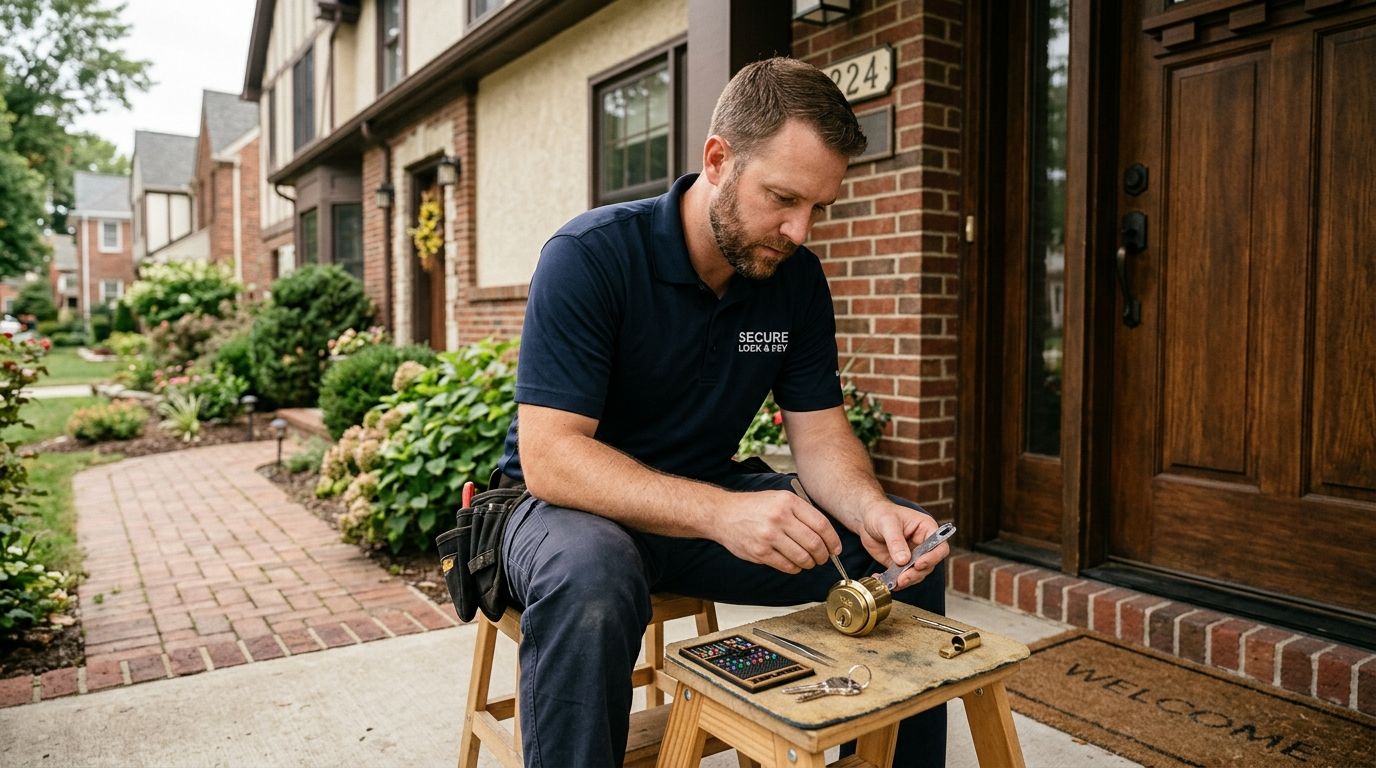
Lock rekeying for sober living facilities and group homes resets which keys open a door without replacing the hardware itself — a locksmith changes the pins inside the existing lock cylinder so every old key stops working the moment the job is done. Group homes and sober living facilities turn over residents faster than almost any other property type, and each move-out, discharge, or staff change leaves a former key holder with access nobody tracked.
- Lock rekeying for sober living facilities resets access in under an hour per door without replacing hardware.
- Rekey on every discharge or move-out, not on an annual schedule — turnover is the trigger, not the calendar.
- Apex Lock N Key rekeys group homes and sober living facilities across Middlesex County with same-day mobile service.
- Master key systems let staff carry one key while each resident keeps an individual room key.
- Skipping a rekey after a discharge leaves a former resident with standing access indefinitely.
Why lock rekeying matters for group homes and sober living facilities
A sober living facility isn't a rental with one tenant and one lease. It's a shared building with rotating residents, overnight staff, and a discharge process that can happen with no notice — someone leaves against staff advice at 2am and the front door key they were issued walks out with them. Apex Lock N Key treats that discharge moment as the trigger for a rekey, not the next scheduled maintenance visit.
The stakes are different from a standard rental turnover too. A former resident who relapses or leaves on bad terms has a specific reason to want back in — to retrieve belongings, to confront a current resident, or worse. Facility operators answer to state certification bodies, insurance carriers, and the families of current residents, all of whom expect documented access control, not a shrug and a spare key under the mat.
Audit who currently holds a key
Before any rekey schedule makes sense, know exactly how many keys exist and where they are.
- List every current resident and confirm they hold exactly one key
- Count every staff copy across all shifts, including overnight and relief staff
- Check maintenance, cleaning, and vendor copies issued for repairs or inspections
- Flag any resident who left in the past 12 months without turning in a key
- Note any landlord, property manager, or board member copies outside daily operations
Most facilities find at least one "ghost key" in this step — a copy nobody remembers issuing.
Rekey immediately after every discharge or move-out
This is the step facilities skip most often, usually because discharges happen without warning and rekeying feels like it can wait until the next batch.
- Rekey the same day a resident completes the program or moves out
- Rekey after every involuntary discharge, no exceptions
- Treat a relapse-related exit as an automatic rekey trigger, even if the resident promises to return the key
- Log any "lost key" report as an immediate rekey, not a wait-and-see
- Record the date, door, and reason for every rekey in a single running log
Separate staff master keys from resident room keys
Staff need building-wide access. Residents don't. Mixing the two into one key system means every staff turnover forces a full rekey of every door.
- Install a master key system for multi-unit buildings so staff carry one key for exterior doors, offices, and storage
- Issue individual, non-master keys per bedroom so a lost resident key only affects one door
- Restrict common-area keys (kitchen, laundry, med room) to a separate tier from bedroom keys
- Track master key assignments by name and shift, not by role alone
- Revoke and rekey master-level access the day a staff member is terminated or resigns
Rekey shared and common-area doors on a fixed schedule
Bedroom doors get rekeyed per resident. Shared doors need their own cadence because more people cycle through them.
- Rekey exterior entrance doors on a quarterly baseline, faster if turnover runs high
- Rekey office and medication storage doors separately from resident-facing doors
- Don't rely on residents to self-report a suspected duplicate key — assume it happens and schedule around it
- Rotate laundry room and kitchen locks whenever staff overseeing those areas change
Upgrade locks that can't be tracked
Some doors are better solved with a lock swap than a rekey cycle, especially where access changes constantly.
- Swap keyed knobs for deadbolts on bedroom doors for a harder-to-bypass baseline
- Add keypad or fob entry for assisted living and memory care units at the main entrance so codes or cards revoke instantly instead of waiting on a rekey appointment
- Secure medication storage with its own hardware, separate from general building access
- Install door closers on high-traffic exterior doors so they don't get propped open between rekeys
Document every rekey for licensing and insurance
A rekey that isn't logged doesn't help during a certification review or a liability claim.
- Keep a running log with date, door, resident or staff name, and reason
- Save every locksmith invoice tied to a rekey event
- Note which staff member signed off on the completed job
- Retain records for as long as your certification body or insurer requires
Budget for turnover, not a fixed annual cost
A facility with high turnover rekeys far more often than an apartment building with year-long leases. Build the expectation into operations, not just the maintenance line item.
- Rekey per exit event rather than on a flat annual schedule
- Ask for per-door pricing so a partial rekey (just bedroom doors, not the whole building) is an option
- Factor in mobile service fees for a locksmith who comes to the facility rather than the other way around
- Plan for after-hours and weekend calls, since discharges rarely happen on a convenient schedule
Comparing your options
| Option | Best for | Key limitation |
|---|---|---|
| Rekeying existing locks | Every resident move-out or discharge | Doesn't stop a key copied before the rekey happened |
| Keypad or PIN entry at main door | Facilities with frequent turnover and shared entrances | Codes shared informally between residents lose their advantage |
| Master key system | Multi-bedroom homes needing staff-wide access with resident-level privacy | A lost master key compromises every door on that tier at once |
| Full lock replacement | Doors damaged, forced, or pried during an incident | Costs more per door than rekeying with no security gain over rekeying on undamaged hardware |
Rekeying is the right call for routine turnover; full replacement is only worth it when the hardware itself is damaged.
Schedule a facility rekey
Same-day mobile rekeying across Middlesex County, licensed and insured.
Common mistakes sober living facilities make
- Waiting for the next scheduled rekey instead of doing it the day someone leaves
- Handing out master keys with no log of who currently holds one
- Treating bedroom locks as optional because residents are told to trust each other
- Skipping the rekey after an involuntary discharge, assuming the person won't come back
- Ignoring shared spaces like the laundry room or med storage, which need their own rekey cadence separate from bedrooms
FAQ
How often should a sober living facility rekey its locks?
Rekey bedroom doors every time a resident is discharged or moves out, and rekey shared exterior doors on at least a quarterly baseline in 2026. Turnover frequency, not a calendar date, should set the schedule.
What's the difference between rekeying and replacing a lock?
Rekeying changes the internal pins so old keys stop working, using the same lock hardware. Replacement swaps the entire lock, which only makes sense when hardware is damaged, since rekeying achieves the same security reset for less.
Does a group home need a master key system?
Most multi-bedroom facilities benefit from a master key system that gives staff one key for common areas while residents keep individual room keys. It limits how far a single lost key compromises the building.
Is rekeying required after a resident is discharged?
There's no universal mandate, but licensing bodies and insurers expect documented access control, and an undocumented discharge without a rekey is a liability gap. Treat every discharge as an automatic rekey trigger.
How much does it cost to rekey a sober living facility in Massachusetts?
Pricing depends on the number of doors, whether it's a single bedroom or the full building, and whether service is scheduled or after-hours. Ask for per-door pricing so a partial rekey stays affordable.
Can a locksmith rekey locks the same day someone moves out?
Yes — same-day mobile rekeying is standard for a licensed locksmith serving group homes, and it should happen the day of the move-out rather than waiting for a batch appointment.
Should medication storage use a different lock than bedroom doors?
Yes. Medication storage should sit on its own lock tier, separate from general bedroom and common-area keys, so access stays limited to designated staff.
What happens if a former resident still has a key?
That resident retains standing access to the building until every affected lock is rekeyed. This is the single most common gap facilities discover during a key audit.
One last thing
The highest-risk exit isn't a planned graduation from the program — it's the resident who leaves against staff advice with no notice. That's the discharge type most likely to skip the rekey step entirely, because nobody scheduled it and everyone assumes the person won't come back. Build the rekey trigger into your discharge checklist itself, not into a maintenance calendar, and the gap closes automatically.


