
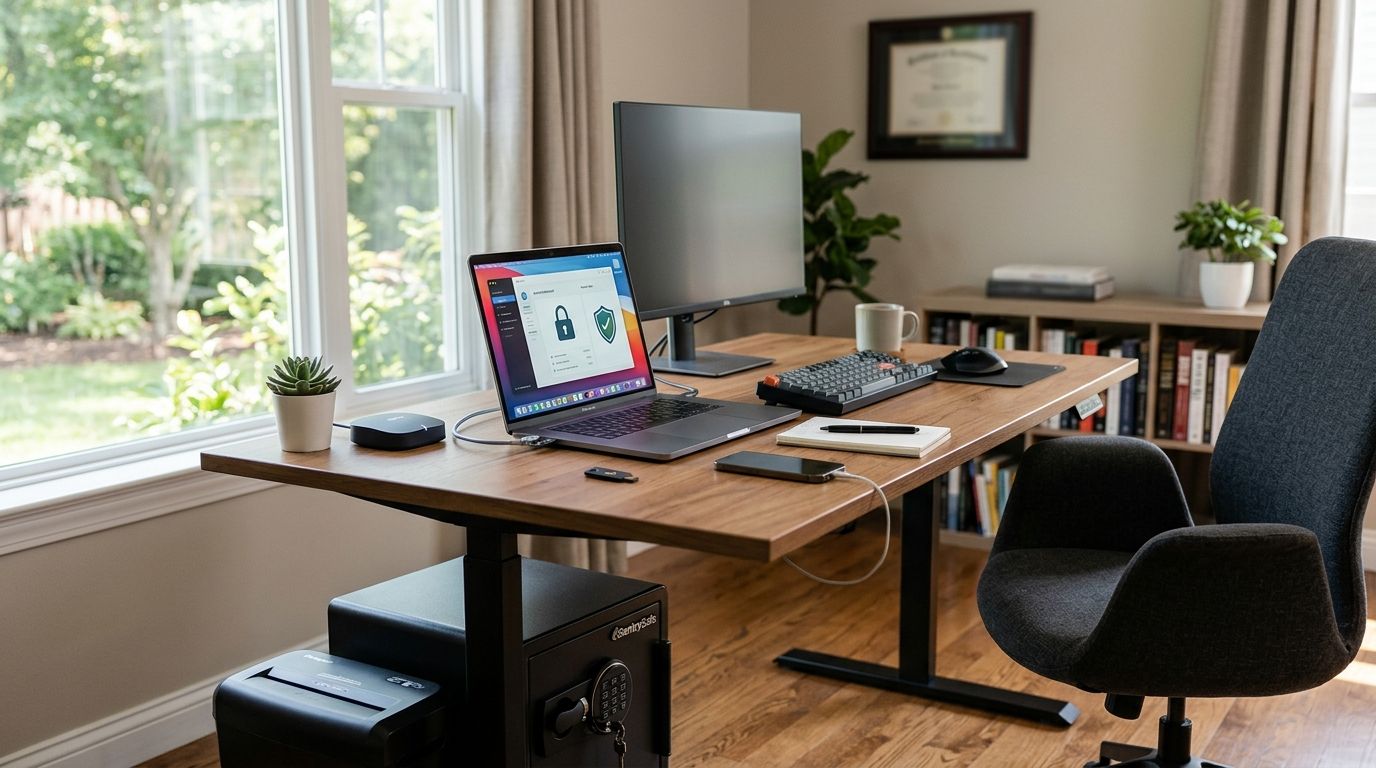
Running a business out of your house in 2026 means your home office is both a workspace and a target — client files, equipment, and sometimes cash sit behind the same locks that guard your bedroom.
- To secure a home office business, lock the exterior door, the office door itself, and any storage that holds client data or equipment.
- A keypad lock on the office door lets you track who enters without handing out physical keys.
- File cabinets and drawers need their own locks — a locked house does not mean locked records.
- Apex Lock N Key installs keypad locks, access control, and file cabinet locks for Middlesex County home businesses in 2026.
- Renters can upgrade locks without violating a lease using swap-back-ready hardware.
Why this matters
A home-based business changes what's behind your front door. Client contracts, tax documents, inventory, or a safe with cash from a side business turn a personal residence into a target with commercial-grade exposure and residential-grade locks.
Insurance carriers and clients increasingly ask home-based businesses how records are secured, and "my house has a deadbolt" isn't an answer that holds up. Securing a home office business in 2026 means separating business-critical space from the rest of the house with its own locks, not just relying on the main entry door.
How to secure a home office for a remote or home-based business
- Upgrade the exterior entry door first. A grade 1 or grade 2 deadbolt with a reinforced strike plate stops the most common forced-entry method — kicking the door near the lock.
- Lock the office door separately from the rest of the house. If your office doubles as a guest room or is on a main hallway, a dedicated lock keeps contractors, cleaners, and visiting family out of client files.
- Install a keypad lock on the office door. Keypad lock installation removes the need to hand out physical keys to a cleaning service or a part-time assistant — codes can be changed the same day someone stops working with you.
- Lock file cabinets and drawers that hold client or financial records. A locked door doesn't protect paperwork left in an unlocked drawer.
- Add access control if more than one person needs entry. For a shared office or a business with employees coming and going, access control installation for small business offices replaces shared keys with individual codes or fobs you can revoke instantly.
- Secure windows, not just doors. Ground-floor office windows are a common secondary entry point and often get ignored while the door gets all the attention.
- Rekey after any change in who has access. A former employee, a departed roommate, or a contractor who never returned a key is a live risk until the lock is changed.
- Keep a simple access log. Even a basic sign-in sheet or a keypad's code history tells you who was in the office and when, which matters if a client asks.
Keypad locks for a home office door
A keypad lock is the single highest-impact upgrade for a home-based business because it solves the "who has a key" problem permanently. Instead of cutting a physical key for every cleaner, assistant, or occasional visitor, you assign a code and delete it the moment that person stops needing access.
Most keypad models used in home offices in 2026 support multiple user codes, so you can tell exactly which code opened the door if something goes missing. Skip the keypad only if you're the sole person who ever enters the room — otherwise it pays for itself the first time you don't have to re-key after a bad hire.
Access control for a shared or multi-person home office
If your home-based business has employees, contractors, or clients visiting regularly, a single shared key or code stops working fast. Access control systems assign each person their own credential — a code, fob, or app-based entry — and let you pull that access instantly without touching the lock hardware.
This matters most for businesses that store client belongings, cash, or regulated records at home: bookkeepers, tax preparers, estheticians running a home studio, or anyone with a licensed side business operating out of a converted garage or basement.
File cabinets and storage: lock the room, then lock the records
A locked office door protects the room. It does not protect a filing cabinet with an unlocked or broken drawer lock sitting inside it. File cabinet lock replacement is a small job that closes a gap most home-based businesses never think about until a client asks how their documents are stored.
“If you can't say who has a key to your file cabinet, you don't have security — you have furniture.”
Why home office security gaps happen
- The office door gets treated as a bedroom door — no separate lock because it started as a spare room, not a workspace.
- Physical keys outlive the people who had them — a former cleaner, ex-roommate, or past employee keeps access nobody remembers to revoke.
- File storage is an afterthought — the room is locked but the cabinet inside it isn't.
- Windows are ignored — all the attention goes to the door, leaving ground-floor windows as the easier entry point.
- Multiple people share one code or key — with no way to tell who actually opened the door on a given day.
- Renters assume they can't upgrade anything — and skip security improvements that would have been lease-compliant with the right hardware.
Secure your home office in Middlesex County
Licensed, 24/7 mobile locksmith service for home-based businesses.
Related questions
Do I need a separate lock for my home office if the house is already locked?
Yes — a house-level lock only controls who enters the building, not who reaches your client files, equipment, or cash once they're inside for a legitimate reason like a repair visit or a party. A dedicated office lock, keypad or traditional, closes that gap without changing how the rest of your house functions.
Can I add a keypad lock if I'm renting my home office space?
Yes, in most cases — many keypad and lock upgrades can be installed in a way that lets you swap the original hardware back before move-out. Check lock upgrades for renters without violating a lease before you assume your lease blocks a security upgrade.
What's the first thing to secure in a home-based business office?
The exterior entry door and the office door itself, in that order — a forced exterior door defeats every other precaution you take inside, and an unlocked office door inside a locked house still exposes client records to anyone in the house.
FAQ
How do I secure a home office for a remote or home-based business in 2026?
Secure a home office business by locking the exterior door with a grade 1 or grade 2 deadbolt, adding a separate lock or keypad on the office door itself, and locking any file cabinets or drawers that hold client records. Access control helps once more than one person needs entry.
Is a keypad lock better than a traditional lock for a home office?
A keypad lock is better whenever more than one person needs access, because you assign and delete codes instead of cutting and tracking physical keys. A traditional deadbolt is fine if you're the only person who ever enters the room.
Do I need access control for a one-person home business?
No — access control matters most once employees, contractors, or clients regularly enter the space. A single keypad lock or traditional deadbolt covers a solo home-based business.
Can renters install a keypad lock on a home office door?
Renters can usually add a keypad lock without violating a lease if the hardware allows the original lock to be reinstalled before move-out. Confirm the specific installation type before assuming it's off-limits.
What happens if I don't lock my file cabinet in a home office?
An unlocked file cabinet leaves client records, tax documents, or financial paperwork exposed to anyone who enters the room, even if the office door itself is locked. Locking the cabinet closes that gap directly.
Should I rekey my home office locks after a contractor or cleaner stops working with me?
Yes — rekey or change the code any time someone with past access no longer needs it, including cleaners, assistants, or contractors who never returned a key. This is the single most skipped step in home office security.
Does a locked house mean my home office is secure?
No — a locked exterior door controls who enters the building, not who reaches your office once inside for a legitimate visit like a repair or delivery. The office door and any storage inside it need their own locks.
One last thing
The detail most home-based businesses miss isn't the lock brand or the door hardware — it's the access log. A keypad's code history tells you exactly who entered and when, which is the one piece of evidence that matters if a client ever asks how their information was protected. Apex Lock N Key sets up keypad and access control systems in Middlesex County so that log exists from day one, not after something goes wrong.


