
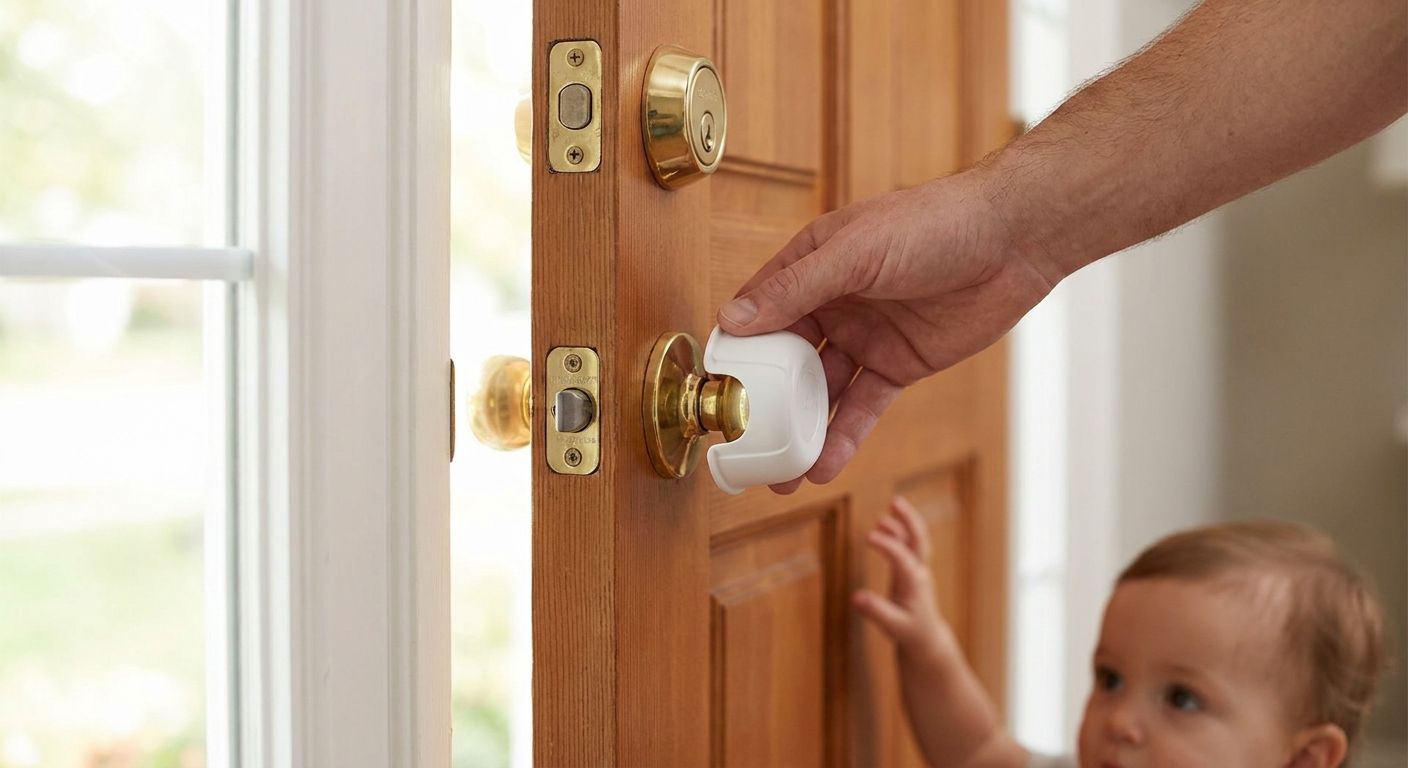
Toddlers figure out doorknobs faster than most parents expect, and a locked door isn't automatically a safe door if the lock itself becomes a hazard. This guide walks through childproofing locks and doors in a Middlesex County home for 2026, covering hardware choices, install steps, and the mistakes that trap adults instead of kids.
- Childproof door locks combine a standard deadbolt with a secondary device like a lever lock or sliding bolt placed above a child's reach.
- Install exterior deadbolts 42-48 inches from the floor, well above what most toddlers under age 4 can reach.
- Skip cheap adhesive doorknob covers on exit doors used daily by adults during a fire or other emergency.
- Electronic deadbolt installation gives parents keypad control without extra hardware cluttering the door.
- A licensed locksmith can rekey or upgrade hardware in under an hour for most single-family entry doors.
Why this matters
A locked front door does two jobs at once: keep intruders out and keep small kids from wandering off. Those two goals sometimes conflict. A deadbolt low enough for a five-year-old to reach in an emergency is also low enough for a toddler to unlock and walk into a driveway or pool area unsupervised.
Apex Lock N Key sees this most often with sliding glass doors, garage entry doors, and basement stairwell doors — the ones parents forget because they're not the main entrance. Getting childproof door locks right means picking hardware that fails safe for adults during an emergency exit but stays out of reach or out of function for a toddler the rest of the time.
What you'll need
- A Phillips screwdriver and a drill with a 1-inch spade bit (for new hardware)
- Tape measure to check mounting height
- Childproof lock hardware: sliding chain guards, lever door lock covers, or a keypad deadbolt
- Painter's tape to mark hole locations before drilling
- 15-30 minutes per door for basic add-on hardware; longer for a full electronic deadbolt installation
The steps
1. Audit every exterior and hazard door first
Walk the house and list every door a toddler could reach: front door, back door, garage entry, basement stairs, and any door leading to a pool or driveway. Most parents only childproof the front door and miss two or three others.
Check each door's current lock height with a tape measure. Anything under 40 inches from the floor is within reach of a climbing 3-year-old standing on a nearby chair or toy box. Note which doors need new hardware versus a simple add-on device.
Common mistake: skipping interior doors to basements, garages, or laundry rooms with exterior access. These are frequently the actual point of exit for a wandering toddler.
2. Install a secondary lock above reach on exterior doors
Mount a sliding chain guard or slide bolt 6-8 inches above the existing deadbolt, ideally 54 inches or higher from the floor. This puts it out of reach for children under age 5 while staying reachable for any adult in the home.
Use the painter's tape to mark screw holes before drilling — a slide bolt only needs two to four screws and a pilot hole, but a crooked install weakens the strike over time. Tighten screws fully; a loose slide bolt defeats the purpose within a few months of daily use.
Expected outcome: a functioning secondary lock that requires an adult reach or a step stool to operate, adding a real barrier above the primary deadbolt.
3. Add lever door lock covers on interior doors
Lever handles are easier for toddlers to open than round doorknobs, which is why lever covers matter more in newer homes. A lever lock cover clips over the handle and requires a squeeze-and-turn motion most kids under 3 can't manage.
Install takes under two minutes per door — no drilling, no screws. Check the fit against your specific lever style before buying in bulk; sizes vary by manufacturer and a loose cover slides off within days.
Common mistake: using knob covers on doors that double as fire exits from a bedroom. Kids should be able to open their own bedroom door in an emergency — reserve covers for hazard rooms like laundry, garage, and basement access.
4. Upgrade to a keypad or smart deadbolt for full control
A keypad deadbolt removes the physical key problem entirely and lets parents set a code kids can't guess or copy from a hidden spare. Most residential keypad deadbolts run on a 4-8 digit code and include an auto-lock feature that re-engages 30 seconds after the door closes.
This is where a professional electronic deadbolt installation pays off — a poorly mounted keypad deadbolt can jam or fail to latch, which is worse than the mechanical lock it replaced. Apex Lock N Key handles this install in under an hour on a standard exterior door and checks strike plate alignment before leaving.
Common mistake: reusing an old, worn strike plate with a new deadbolt. Mismatched strike plates cause bolts to bind, and a binding bolt gets forced open by a determined toddler faster than a properly seated one.
5. Secure sliding glass doors and windows separately
Sliding doors need a dedicated approach: a charley bar or track-mounted pin lock stops the door from sliding open even if a child manages to flip the primary latch. Install the pin lock at the top track, roughly 48 inches up, so it's outside a young child's vertical reach.
Check that the bar or pin doesn't block a fast manual exit — test opening the door with the device engaged before calling it done. A device that takes more than 5-10 seconds to disengage under stress isn't the right choice for a room adults use as an emergency exit.
Expected outcome: a sliding door that resists a toddler's push-and-pull attempts but still opens for an adult within seconds.
6. Rekey after any hardware change involving new occupants
If a nanny, babysitter, or contractor had keys during a renovation and you're now childproofing for a new baby, this is the moment to rekey. Old spare keys floating around defeat every childproofing step above if an unsupervised entry is still possible from outside.
Rekeying runs cheaper than full lock replacement in most cases — see the breakdown on how to choose between rekeying and replacing a lock if you're unsure which applies to your situation.
7. Test every lock monthly with the child present (not alone)
Have your child attempt to open each secured door while you supervise. This isn't about scaring them — it's the only real test of whether a lock height or device still holds as they grow, climb, and problem-solve. Kids gain reach and dexterity fast between ages 2 and 5.
Common mistake: testing locks once at install and never again. A device that stopped a 2-year-old often fails against the same child at 4.
Troubleshooting
- Slide bolt keeps loosening within weeks — screws are likely biting into softwood door trim without a pilot hole. Redrill a proper pilot hole and use longer screws that reach the door's structural core.
- Keypad deadbolt won't accept the new code — most units require holding a program button for 5 seconds before entering a new code; check the manual for the exact sequence rather than repeating failed attempts, which can lock out the keypad temporarily.
- Lever cover keeps sliding off — wrong size for the lever profile. Measure the lever's diameter and shape before reordering.
- Child figured out the slide bolt anyway — move it higher, or switch to a keyed slide bolt that requires a key even for adults.
- Sliding door pin lock jams — track debris is the usual cause. Clean the top track with a vacuum attachment before assuming the hardware failed.
- Deadbolt sticks after new install — strike plate misalignment. This is a five-minute fix for a locksmith but frustrating to diagnose without the right tools.
Get childproof locks installed right
Licensed, 24/7 mobile locksmith service across Middlesex County.
Tools and resources
- Screwdriver set, drill, tape measure, painter's tape
- Slide bolts, lever lock covers, sliding door pin locks (hardware store or online)
- A keypad or smart deadbolt for full-control locking — see electronic deadbolt installation for homeowners
- If you're moving locks or hardware during a renovation, prep notes here: how to prepare for a locksmith visit to save time and money
- Households running a home daycare should check commercial-grade requirements at commercial locksmith for daycare centers and schools
What to do next
If your locks are original to the house and you don't know who else has keys, rekeying comes before any childproofing hardware goes on. Start with residential rekeying for new homeowners after closing if you closed on the house within the last year — it covers what to check before adding a single childproof device.
FAQ
What are the best childproof door locks for a front door?
A keypad or electronic deadbolt paired with a slide bolt mounted 54 inches or higher works best for front doors in 2026. The deadbolt handles daily security while the slide bolt stops a toddler from following the exact same unlock motion as an adult.
How high should I install a childproof lock?
Mount secondary locks 42-54 inches from the floor, above the reach of most children under age 5. Standard deadbolts already sit around 36-48 inches, so a secondary device should go noticeably higher.
Are doorknob covers enough to childproof a house?
No, doorknob covers alone aren't reliable past age 3 and shouldn't be the only lock on exterior or hazard doors. Combine them with a slide bolt or keypad deadbolt for doors leading outside, to garages, or to stairwells.
Can a toddler open a keypad deadbolt?
A toddler can't reliably enter a 4-8 digit code, which makes keypad deadbolts one of the more effective childproof door locks available in 2026. Set the code, avoid obvious sequences like 1234, and change it if a curious child watches you enter it repeatedly.
Do childproof locks work on sliding glass doors?
Yes, a charley bar or track-mounted pin lock installed near the top of the frame stops a sliding door from opening even if the primary latch gets flipped. Test that it still allows a fast adult exit before relying on it daily.
Should I childproof interior doors too?
Childproof any interior door leading to a basement, garage, or laundry room with chemicals, using a lever lock cover or slide bolt. Skip covers on a child's own bedroom door so they can exit on their own if needed.
How much does it cost to install childproof locks in 2026?
Basic add-on hardware like slide bolts and lever covers runs under $20 per door, while a professional electronic deadbolt installation costs more depending on the unit and door prep needed. A licensed locksmith visit typically takes under an hour per door.
When should I rekey instead of just adding childproof locks?
Rekey first if you've had contractors, a nanny, or previous owners with keys to the house, since old keys bypass any childproofing hardware added afterward. Rekeying is usually cheaper than full lock replacement for a standard entry door.
One last thing
The device that actually stops a curious toddler is rarely the one marketed loudest — a plain slide bolt mounted 6 inches above your existing deadbolt does more work than most all-in-one childproofing kits, because height beats mechanism complexity every time a kid is testing a new door. Check that height first before buying anything.


