
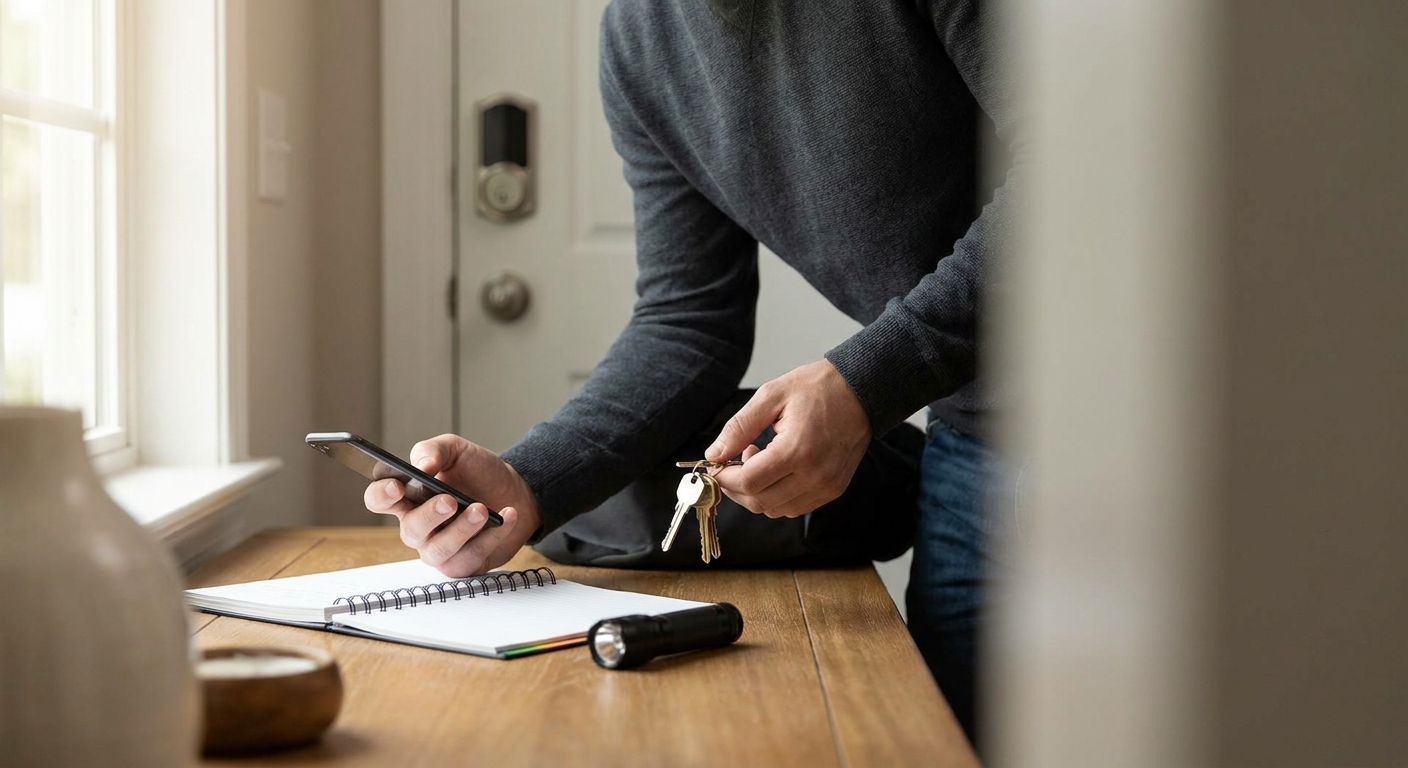
Getting a locksmith to your door fast is only half the job — what you do in the ten minutes before they knock decides whether the visit takes 20 minutes or 90. Here's exactly what to do before locksmith arrives so you're not paying for time spent hunting for keys or ID.
- Photo ID and proof of address cut a locksmith visit short in 2026 — Apex Lock N Key verifies ownership before touching a lock.
- State the exact problem (lockout, rekey, broken key extraction) on the phone call; vague requests add time on-site.
- Clear a path to the door or car and turn on outdoor lighting so work can start the moment the technician arrives.
- Confirm licensing and a phone quote before the visit — skipping this step is how locksmith scams add hidden fees.
Why this matters
A locksmith who spends the first 15 minutes of a service call waiting for you to find your ID, locate a spare key, or move a car out of the driveway is still on the clock. Most of that time is avoidable.
Apex Lock N Key runs mobile locksmith calls across Middlesex County, Massachusetts, and the difference between a fast visit and a slow one almost always comes down to prep, not the lock itself. A rekey that should take 20 minutes turns into 45 when nobody can confirm which doors need new keys. In 2026, with hourly rates climbing across the trades, that extra 25 minutes shows up on the invoice.
Knowing how to find a reliable 24-hour locksmith is step one. Prepping properly for the visit is step two, and it's the one most homeowners and drivers skip.
What you'll need before the locksmith arrives
- Photo ID — a driver's license or state ID matching the address or vehicle registration
- Proof of address or ownership — a utility bill, lease, mortgage statement, or vehicle title if it's a car
- Any working keys or fobs you still have, even broken ones
- The vehicle's make, model, and year if this is an automotive call
- A phone number you can answer in case the technician needs to confirm access
- A payment method — most licensed locksmiths in Massachusetts take card on-site, but confirm when you book
The steps to prep for a locksmith visit
1. Confirm the exact service on the phone
Don't just say "I'm locked out." Tell the dispatcher whether it's a residential lockout, a car lockout, a rekey, or a broken key stuck in the lock. Each service needs different tools and, often, a different technician load-out. Getting this wrong means the locksmith shows up without the right blank or extraction kit and has to make a second trip.
Common mistake: describing the problem as "my lock is broken" when it's actually a key snapped off inside the cylinder — that's a different job entirely, covered in detail in how to handle a broken key stuck in a door lock.
2. Gather ID and proof of address or ownership
A licensed locksmith will ask for identification before opening a locked home, business, or vehicle — this protects you as much as it protects them. Have a photo ID and one document showing your name at that address (or your name on the vehicle title) sitting on the counter or in your glovebox before the call comes in.
Skipping this step is the single biggest cause of delayed visits. Expected outcome: the technician verifies ownership in under two minutes and moves straight to the lock.
3. Locate every key, fob, or remnant you still have
Even a broken key or a fob with a dead battery tells a locksmith something useful about the lock or ignition system. Set these on a table by the door or in the car's cupholder so they're visible immediately.
For vehicle calls, this matters even more — a locksmith cutting a replacement transponder key for a Honda, Nissan, or Subaru needs to confirm the exact key type first, and having the old fob in hand speeds that up.
4. Clear a path to the lock or the vehicle
Move trash cans, bikes, or parked cars blocking the front door or driveway. A locksmith working a commercial panic-bar or a residential deadbolt needs roughly a 3-foot clear stance in front of the door to work safely and quickly.
Common mistake: leaving a car parked directly behind the vehicle that's locked out, forcing the technician to work in a cramped space or reposition equipment.
5. Turn on exterior lighting if it's after dark
A huge share of emergency lockout calls happen at night. If your porch light is out or the driveway is dark, the locksmith loses minutes just locating the correct lock or ignition in low light. Flip on every outdoor light you have before the van pulls up.
6. Secure pets and kids away from the work area
A locksmith drilling a lock, running a key cutter, or working under a car dash needs an unobstructed, distraction-free space. Put dogs in another room and keep young kids clear of tools and the doorway.
7. Verify licensing and get the quote confirmed before work starts
Ask for a license number on the phone and again in person if you didn't catch it. A legitimate technician gives you a price range before touching your lock, not after. This single question is how you spot a locksmith scam before it costs you.
Skip the guesswork, call now
Licensed 24/7 mobile locksmith service across Middlesex County, MA.
“If a locksmith won't give you a price range over the phone, hang up and call someone else.”
Troubleshooting common locksmith visit problems
The technician is running late. Traffic and back-to-back emergency calls happen, especially during Massachusetts winters when frozen locks spike demand. Call the dispatcher directly instead of waiting — a licensed shop will give you a real-time update, not silence.
The quoted price changes on arrival. This is a red flag. A fair locksmith adjusts price only for things they couldn't see on the phone — a high-security cylinder, a double rekey, or extra hardware. Ask for the reason in writing before agreeing.
You can't find your ID before the call. If it's a true emergency and ID is genuinely unavailable, tell the dispatcher up front. Some services can still proceed with alternate verification, but expect the process to take longer.
The landlord or property manager isn't home for a rental lockout. Landlords handling tenant lockouts need a documented process — Apex Lock N Key's guide on emergency locksmith service for landlords managing tenant lockouts covers what to have ready before the technician arrives.
The car's alarm won't stop after entry. This is common on older Chevrolet, Jeep, and Chrysler models with aftermarket alarms — the locksmith needs the key fob or a jump to the battery to reset it, so don't panic if it takes a few extra minutes.
Payment doesn't go through on-site. Confirm accepted payment methods when you book, not when the invoice is handed to you. Card-only policies are standard for most licensed mobile locksmiths in 2026.
Tools and resources
- Photo ID and a document proving address or vehicle ownership
- Any spare, broken, or old keys and fobs
- A flashlight or working exterior light, especially for night calls
- The license number of the company you called, confirmed before the visit
- A clear, lit path to the door, gate, or vehicle
What to do next
Once you know what to do before locksmith arrives, the next question is usually price. Rekeys, lockouts, and emergency calls all price differently — see how much a locksmith costs to rekey a house before you book, so the quote you get on the phone matches what you expect on the invoice.
FAQ
What should I do before a locksmith arrives?
Have a photo ID, proof of address or vehicle ownership, and any working or broken keys ready before the technician arrives. Clear a path to the door or car and confirm the exact service on the phone so the visit starts without delay.
Do I need ID for a locksmith to open my door?
Yes, a licensed locksmith asks for photo ID and proof you live at or own the property before unlocking it in 2026. This step protects you from unauthorized entry and is standard practice for any reputable service.
How long does a locksmith visit take?
A straightforward lockout or rekey usually takes 20 to 45 minutes once the technician arrives, depending on the lock type and how prepared you are. Broken key extraction or commercial panic-bar work can run longer.
Should I unlock other doors before the locksmith gets there?
Only if it's safe and doesn't create a security risk while you wait. For a single locked door, leave it as is and focus on clearing the path and gathering ID instead.
What if the locksmith's price doesn't match the phone quote?
Ask for the specific reason before agreeing to pay more — a legitimate change usually involves hardware the technician couldn't see over the phone. If the explanation doesn't add up, that's a sign of a locksmith scam.
Can a locksmith rekey a house without proof of ownership?
No, a licensed locksmith requires proof of ownership or a lease before rekeying a home in 2026. This protects both the homeowner and the locksmith from liability.
Is it safe to have kids or pets around during a locksmith visit?
It's better to keep pets in another room and kids away from tools and the work area. Drilling, key cutting, and dashboard work all involve equipment that needs a clear space.
Do I need to be present for a commercial locksmith service call?
Yes, someone with authority to approve the work, such as an owner or manager, should be on-site or reachable by phone. This is especially true for access control or panic-bar compliance work at restaurants and offices.
One last thing
The fastest locksmith visits in Middlesex County aren't the ones with the shortest drive time — they're the ones where the customer had ID, keys, and a clear answer to "what exactly is the problem" ready before the van door opened. Apex Lock N Key technicians can usually tell within the first 60 seconds whether a call is going to run long, and it almost always comes down to prep, not the lock.


