
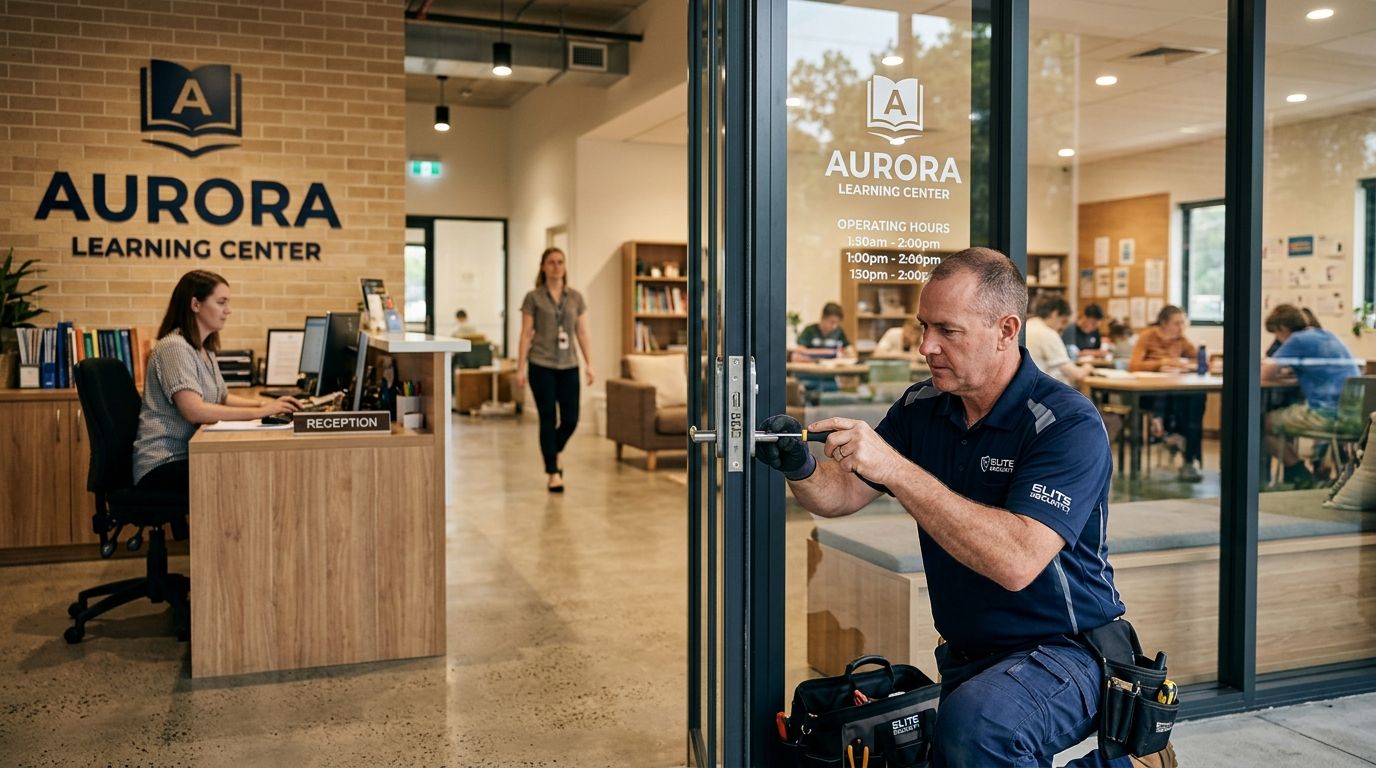
A private tutoring center or learning center runs on different rules than a typical office because it hands out keys to instructors who work part-time, evening, or seasonal hours, and it keeps laptops, tablets, and testing materials behind interior doors that see dozens of different adults every week. A commercial locksmith for tutoring centers has to build access around that turnover, not around a nine-to-five staff roster, and every lock decision has to account for parents doing evening pickups after the front desk has closed.
Security in this segment isn't about a single front door. It's about controlling who can get into a specific classroom, who can open the supply closet with the answer keys, and how fast Apex Lock N Key can respond when an instructor is standing outside a locked building with six kids waiting for a ride.
- Rekeying beats full lock replacement for most tutoring centers with instructor turnover — it resets who holds a working key without swapping hardware.
- Keypad locks remove the need to collect keys from part-time tutors at the end of a semester.
- A master key system lets a director open every classroom while individual tutors only access their assigned room.
- Panic hardware becomes a code requirement once occupancy crosses local thresholds — check before an inspection catches it.
- A commercial locksmith for tutoring centers should quote same-day rekeying and same-week keypad installs in Middlesex County in 2026.
Why commercial locksmith work matters for private tutoring centers
Most tutoring centers hire and lose part-time staff every semester. Every instructor who leaves without turning in a key is a liability sitting on someone's keyring, and most centers don't track it until something goes missing.
Add in the evening schedule — many centers run sessions until 8 or 9 PM, well after nearby businesses close — and a broken lock or a locked-out instructor isn't a next-day problem. It's a room full of students and a parent standing in a parking lot. Access control decisions at a tutoring center need to hold up under staff churn and after-hours pickup, not just look secure on paper.
In 2026, the practical baseline for a learning center is simple: every door has a known key holder list, every electronic lock has a mechanical override, and someone answers the phone at 9 PM.
Audit who holds a key right now
Before anything gets installed or rekeyed, find out exactly how many working keys exist and who has them. Most centers lose track of this within a year of opening.
- List every current and former employee who was issued a key
- Check whether any keys were cut at a hardware store instead of by the original locksmith
- Note which doors share the same key (front door, classroom, supply closet)
- Flag any lock that has never been rekeyed since the space was leased
- Confirm whether a landlord or property manager also holds a master key
Rekey between semesters and after staff turnover
Rekeying changes the internal pins so old keys stop working, without replacing the lock hardware itself. It is the fastest way to reset security after a tutor leaves, and it costs less than swapping the whole lock.
- Rekey at the end of every semester if turnover is regular
- Rekey immediately after any termination, not on a fixed schedule
- Use restricted keyways so duplicates cannot be cut at a hardware store
- Keep a written log of who receives a key and when it is returned
- Call a licensed locksmith for same-day rekeying when a key is not returned on exit
Install keypad or code-based entry for classrooms
Once a center has more than two or three part-time instructors, physical keys stop scaling. A keypad lock lets a director assign and revoke codes instead of chasing down metal keys.
- Set a unique code per instructor instead of one shared room code
- Change the code the same day an instructor leaves
- Avoid keypads that develop a visible wear pattern on frequently used numbers
- Pick a keypad rated for that door's exterior or interior exposure
- Plan the rollout with keypad lock installation for offices and small businesses as the spec reference
Set up a master key system across multiple rooms
A center with several classrooms, a front office, and a supply closet needs layered access: a director opens everything, a tutor opens only their assigned room. That is a master key system, not one universal key.
- Assign each classroom its own change key
- Give directors and owners the master key that opens every door
- Never issue the master key to part-time staff
- Rekey the entire system, not one door, if the master key goes missing
- Document the key hierarchy in writing so a new director inherits it cleanly
Verify panic hardware and exit compliance
Massachusetts fire and building codes require panic hardware on exit doors once a space crosses certain occupancy thresholds — a detail many learning centers miss until an inspection flags it.
- Confirm your center's occupancy load with local code before assuming you are exempt
- Check that exit doors open from the inside without a key or code, even when locked from outside
- Test panic bars monthly, not only at inspection time
- Keep exit paths clear of storage carts and stacked furniture
- Have a licensed locksmith verify hardware against code before an inspector does
Secure high-value equipment separately
Laptop carts, tablets, and testing materials are worth more per square foot than almost anything else in a tutoring center, and they usually sit behind the same lock as the rest of the room.
- Store devices in a lockable cabinet inside the classroom, not just behind the classroom door
- Use a different key or code for equipment storage than for general room access
- Bolt or cable-lock carts holding multiple devices
- Rotate equipment-closet access based on who is actually teaching that day
Plan for after-hours access and lockouts
Evening sessions mean instructors open and close the building when most locksmiths and hardware stores are shut. A center without an after-hours plan loses class time every time a key sticks or a code fails.
- Keep a mechanical override on every electronic lock
- Post an emergency contact number at the front desk, not only in a manager's phone
- Confirm your locksmith answers calls at 9 PM on a Tuesday, not just during business hours
- Test every entry point monthly, especially doors used only in the evening
Get classroom access locked down
Same-day rekeying and keypad installs for tutoring centers in Middlesex County.
Comparing access options for tutoring centers in 2026
| Option | Best for | Key limitation |
|---|---|---|
| Rekey existing locks | Centers with instructor turnover but working hardware | Does not solve multi-room access control |
| Keypad lock | Small centers with 2-6 instructors sharing a few rooms | Codes go stale without active management |
| Master key system | Multi-classroom centers with a director and several tutors | Needs upfront planning or the whole system gets rekeyed later |
| Card or fob access control | Larger centers with several entry points and heavy foot traffic | More moving parts to maintain than a keypad |
For most private tutoring centers in Middlesex County, the right 2026 setup is a master key system for classrooms plus a keypad on the main entrance — directors keep full access, tutors keep room-level access, and no one has to collect a key at the end of a semester.
Before committing to one system, read how to set up access control for a small business.
Common mistakes tutoring centers make
- Reusing one shared key or code for every room. It erases any ability to tell who accessed what, and one lost key compromises the entire center.
- Skipping the rekey after a tutor is terminated. A center that rekeys "eventually" is running on trust with someone who no longer works there.
- Treating panic hardware as optional until an inspector arrives. Retrofitting under a compliance deadline costs more time and stress than doing it proactively.
- Leaving laptop carts behind the same lock as the classroom door. A stolen set of tablets is a larger loss than most centers plan for.
- Never testing after-hours locks before the session that needs them. The first time a keypad fails is a bad moment to discover it, with a parent waiting outside.
“If you cannot name every person holding a working key to your classrooms, you do not have access control — you have a habit.”
FAQ
What's the best lock system for a tutoring center with multiple classrooms?
A master key system is the best fit for most multi-classroom tutoring centers in 2026. Directors get a master key that opens every room, while individual tutors only access their assigned classroom.
Is a keypad lock better than a traditional key for a tutoring center?
Keypad locks work better for centers with frequent instructor turnover because codes can be changed the same day someone leaves. Traditional keys are fine for centers with stable, long-term staff.
How much does it cost to rekey a tutoring center after staff turnover?
Rekeying costs less than replacing lock hardware and can usually be completed the same day. Get an exact quote from a licensed locksmith based on the number of doors and lock types on site.
Do tutoring centers need panic hardware on exit doors?
Panic hardware becomes a Massachusetts code requirement once a facility crosses certain occupancy thresholds. Check your occupancy load rather than assuming you are exempt, and have a licensed locksmith verify existing hardware.
Who should have master key access at a learning center?
Only owners and directors should hold the master key that opens every room. Part-time tutors should have access to their assigned classroom only.
How fast can a locksmith respond to a lockout during evening classes?
A 24/7 mobile locksmith should respond the same evening for an active lockout, not the next business day. Confirm after-hours response before you need it.
Can a tutoring center use the same lock system across multiple locations?
Yes. A master key hierarchy can span multiple sites so an owner accesses every location while local staff access only their own. This has to be planned at setup rather than retrofitted.
One last thing
The most common gap at a tutoring center is not a broken lock — it is a rekey that never happened after the last instructor left. If your center has had any staff turnover in the past year and has not rekeyed since, that is the first 2026 call to make, not the last.


