
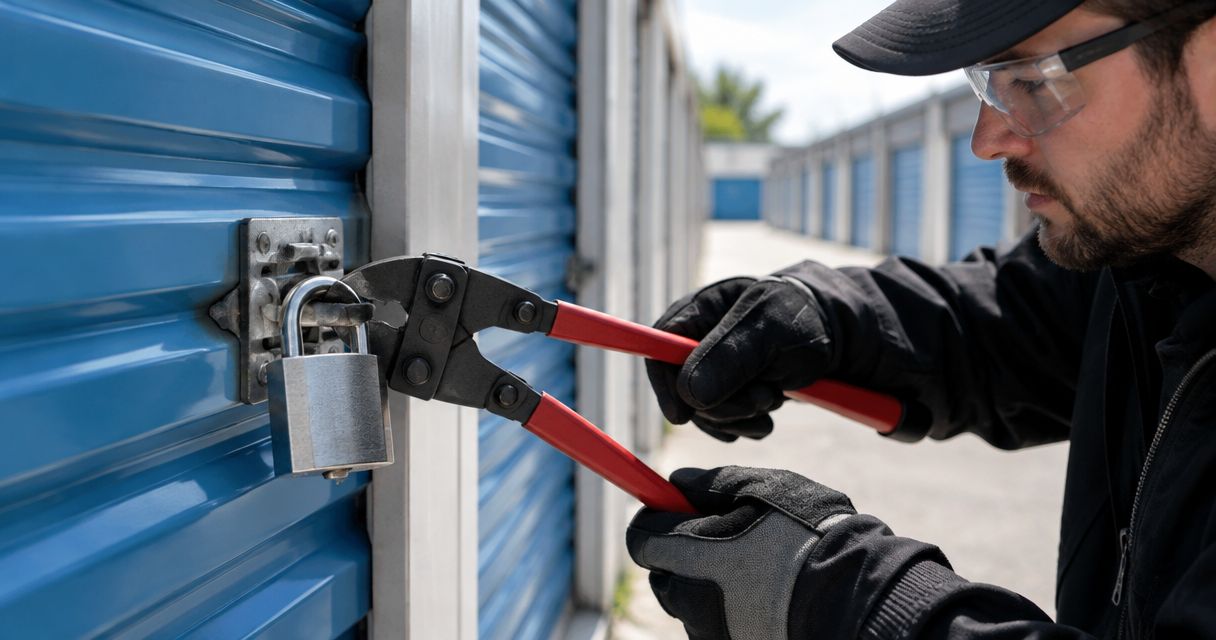
Best overall for a compatible covered hasp: a puck lock. Best for a standard roll-up latch: a disc lock. Best for an exposed swing-door hasp: a shrouded-shackle padlock. The best storage unit lock in 2026 is the one that fits the door and leaves the least shackle accessible to cutters.
- For the best storage unit locks cut resistant to hand cutters, choose a puck lock with a compatible covered hasp.
- A disc lock is the practical pick for a roll-up latch that accepts one; check the fit before buying.
- A shrouded-shackle padlock suits an exposed hasp, but its protective shoulders must clear the door hardware.
- No padlock makes a weak hasp secure. Inspect the latch and ask the facility which locks it permits.
Why this matters
A strong-looking lock can leave enough shackle exposed for a cutting tool. A less imposing lock that sits close to a sound hasp can present a harder target. Judge the lock and door hardware together, not by the lock body alone.
If your existing lock is damaged or the key is missing, do not force the storage door or cut facility hardware. Confirm your right to access the unit and follow the operator’s removal procedure. For help with the lock itself, see storage unit lock removal and replacement. Apex Lock N Key is a licensed mobile locksmith service serving Middlesex County, Massachusetts.
This 2026 ranking compares lock designs, not laboratory-tested models. Cut resistance depends on the exposed metal, the room around it for a tool, and whether the hasp remains sound. None of these designs is cut-proof.
What makes the best cut-resistant storage unit lock?
- Shackle exposure: A cutter needs access to the metal joining the lock to the door. Less accessible shackle is the main reason enclosed and guarded designs rank ahead of an open padlock.
- Hasp fit: The lock must pass through the latch and close fully without binding. A thick body or guarded shackle is no advantage if it will not seat correctly.
- Tool access: Look at the space around the closed lock, not just the size of the shackle. A wide opening gives a tool more room to reach it.
- Door hardware: Check the hasp, latch and mounting points. A strong padlock does not repair loose or damaged hardware.
- Facility rules: Ask which lock styles the operator accepts and whether the facility supplies or requires a particular lock. Do this before changing the hardware.
The ranking assumes each lock is installed on compatible, sound hardware. If that condition fails, move down the list to the design that closes properly on your actual door. In 2026, a good fit beats a higher-ranked lock that cannot be secured.
Storage unit locks at a glance
| Rank and lock type | Best for | Cut-resistance advantage | Key limitation |
|---|---|---|---|
| 1. Puck lock with covered hasp | A door equipped for that combination | The matched hasp covers the locking point | Needs compatible hasp hardware |
| 2. Disc lock | A roll-up door with a suitable latch | Rounded body leaves little exposed shackle when fitted correctly | Body or shackle can clash with the latch |
| 3. Shrouded-shackle padlock | An exposed swing-door hasp with clearance | Shoulders restrict access to the shackle | Guarded body needs room to close |
| 4. Short-shackle padlock | A narrow hasp that rejects bulkier locks | Shorter exposed span than a long-shackle design | Shackle remains more accessible |
These are design rankings, not measured cutting-time rankings. A facility latch that only accepts a short-shackle padlock does not become safer when you leave it unsecured while looking for a puck lock. Match the available hardware first, then minimize exposed metal.
1. Puck lock: best for a compatible covered hasp
A puck lock is a round lock intended to pair with suitable hasp hardware. With a compatible covered hasp, its locking point sits behind the surrounding metal rather than hanging openly below the door. That combination earns the top spot for limiting direct access to the shackle.
The covered hasp is part of the recommendation. A puck lock alone does not create the same protected arrangement, and a renter should not install or alter facility hardware without permission. Check the closed position: the lock needs to seat fully, and the door must still latch as intended.
Puck lock pros:
- A matched covered hasp limits direct access to the locking point.
- The low-profile shape avoids the long exposed loop of a conventional padlock.
- It gives a clear choice when the door is already equipped for this lock-and-hasp combination.
Puck lock cons:
- It is not a drop-in choice for every storage-unit latch.
- The protection depends on the condition and fit of the hasp.
- Changing facility hardware requires the operator’s approval.
Best for: A unit that already has a sound, compatible covered hasp, or one where the operator authorizes that hardware. Verdict: Buy for a matched hasp; skip if fitting it requires an unapproved door modification.
2. Disc lock: best for a standard roll-up latch
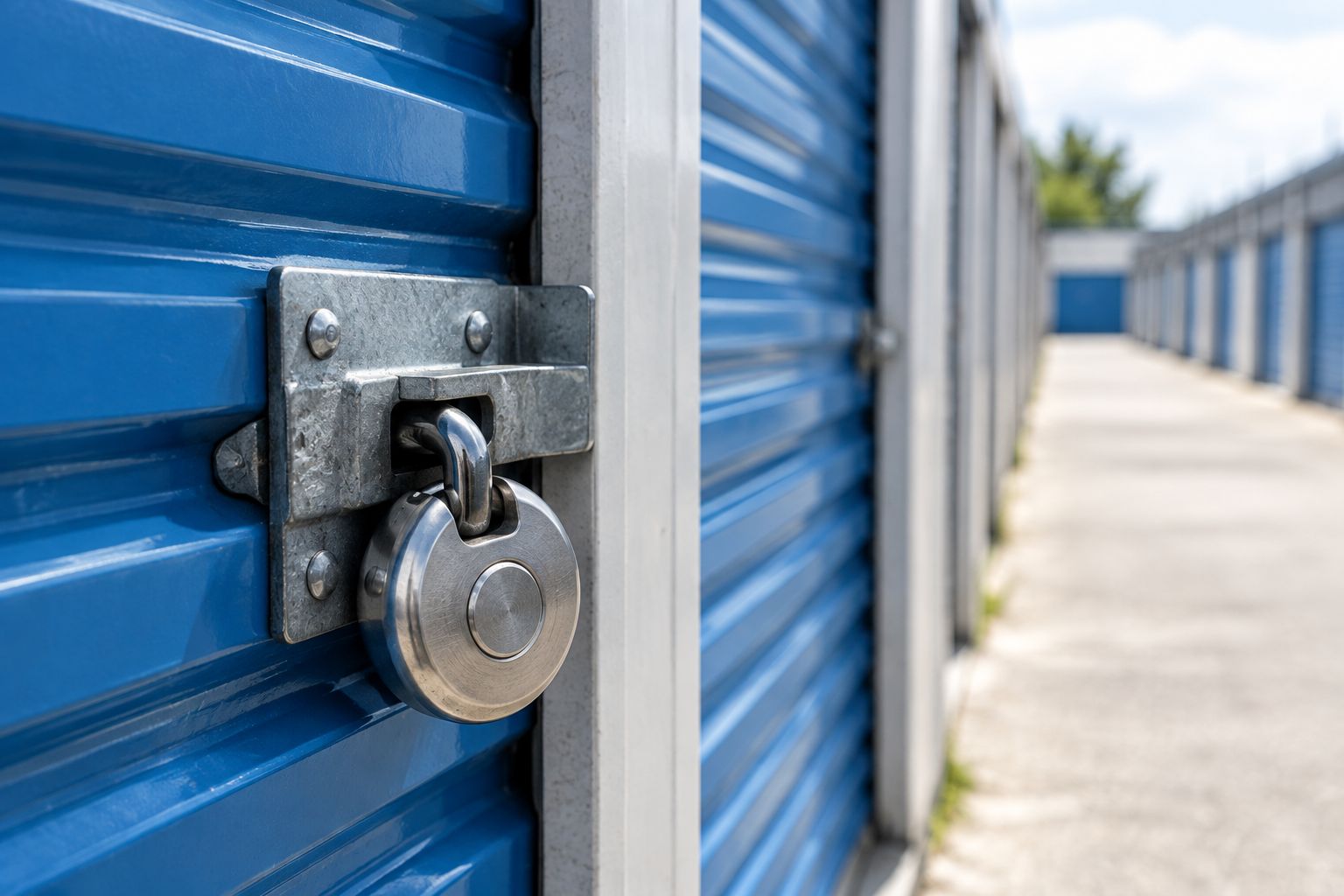
A disc lock has a rounded body with a relatively small exposed shackle opening. It is a practical choice when a roll-up door’s latch accepts its shape and closes without interference. You get less reachable shackle than you would from a long-shackle padlock on the same suitable latch.
Fit is the deciding check. Some latch openings or surrounding metal leave too little room for the disc body, while others prevent the shackle from closing cleanly. Do not leave a lock partly closed to make it fit.
Disc lock pros:
- Its rounded body limits the length of exposed shackle on a compatible latch.
- It is a straightforward option for a roll-up door that accepts it.
- It does not depend on adding a separate covered hasp.
Disc lock cons:
- The body can interfere with a tight or recessed latch.
- The exposed portion of the shackle is still a possible attack point.
- It does not strengthen a loose or damaged latch.
Best for: A roll-up storage door whose existing latch accepts a fully closed disc lock. Verdict: Buy after checking fit; skip if the body prevents full closure. For many renters comparing locks in 2026, this fit check matters more than a claim printed on a package.
3. Shrouded-shackle padlock: best for an exposed swing-door hasp
A shrouded-shackle padlock has raised shoulders around its shackle. Those shoulders make the shackle harder to approach from the sides than the open loop of a conventional padlock. The design is useful when an exposed hasp accepts a padlock but does not suit a disc or puck lock.
The shoulders also make the lock less forgiving of cramped hardware. Close the door, then check whether the hasp fits between the shoulders and the shackle locks completely. A guarded lock that jams against the door is the wrong choice, even if it looks more substantial.
Shrouded-shackle padlock pros:
- Raised shoulders reduce access to part of the shackle.
- It works with suitable exposed hasps without requiring a covered puck-lock setup.
- It offers a guarded alternative when a disc body will not fit.
Shrouded-shackle padlock cons:
- The shoulders can obstruct closure on a wide or awkwardly placed hasp.
- Some shackle may remain exposed, depending on the hardware.
- It cannot compensate for a weak hasp or mounting point.
Best for: An exposed swing-door hasp with enough clearance for the guarded body. Verdict: Buy when it closes cleanly; skip when the shoulders press against the hardware. In 2026, inspect the installed position rather than relying on the word shrouded alone.
4. Short-shackle padlock: best for a narrow hasp
A conventional padlock with a short shackle belongs on this list because some latches will not accept a bulkier design. The short shackle reduces the open span compared with a long-shackle version, provided both fit the same hasp. It remains the fallback, not the strongest cut-resistance choice.
Choose a shackle that lets the lock close without forcing the latch. Do not move up to a long shackle just because it is easier to feed through the opening: the added clearance also gives a tool more room. Inspect the latch itself before deciding that changing the padlock will solve a security problem.
Short-shackle padlock pros:
- It can fit narrow hardware that rejects larger lock bodies.
- A properly fitted short shackle avoids unnecessary open space.
- It provides a usable option when the facility’s hardware limits your choices.
Short-shackle padlock cons:
- More of the shackle remains reachable than with a well-fitted covered design.
- A longer version can leave avoidable tool access around the hasp.
- Its performance still depends on the latch and mounting hardware.
Best for: A narrow hasp where a disc, shrouded or covered-hardware option cannot close correctly. Verdict: Hold as the practical fallback; skip a long shackle when a short one fits.
How the locks were ranked
This 2026 order prioritizes access to the shackle on compatible hardware. It then accounts for whether the lock can close fully on the door type named in each recommendation. It is not a claim that every puck lock outperforms every disc lock, or that any lock has a verified cutting-time advantage.
Use the comparison table as a decision tree. First identify the latch you have permission to use. Next rule out locks that cannot close completely. Among the locks that remain, choose the design that leaves the least reachable shackle and check that the hasp is sound.
For a facility owner, the decision extends beyond one tenant’s padlock. Door hardware and authorized access procedures also matter across units. The guide to master key systems for self-storage facility owners covers that separate access question; a tenant should not change facility hardware independently.
Which storage unit lock should you choose?
Choose a puck lock with a compatible covered hasp if the facility’s existing hardware supports it. For a roll-up latch that accepts a disc lock, choose the disc lock instead of forcing a puck-lock setup. On an exposed swing-door hasp, try a shrouded-shackle padlock that closes fully. If the latch is too narrow for those designs, use a properly fitted short-shackle padlock.
If the latch is bent, loose or damaged, stop treating this as a padlock-shopping decision. Ask the facility operator to address the door hardware. Apex Lock N Key is a service option for authorized lock removal and replacement in Middlesex County, not a storage-lock brand in this ranking. That distinction keeps the 2026 recommendation focused on the lock that fits your door.
Need help with a storage lock?
Ask about authorized lock removal and replacement in Middlesex County.
FAQ
What is the best storage unit lock for cut resistance?
A puck lock paired with a compatible covered hasp is the best choice in this 2026 design ranking. The covered hardware limits direct access to the locking point, but the lock and hasp must fit correctly.
Is a puck lock better than a disc lock for a storage unit?
A puck lock ranks higher when the door has a compatible covered hasp. A disc lock is the better choice when it closes fully on an existing roll-up latch and a covered hasp is not available.
Are disc locks cut-proof?
No, disc locks are not cut-proof. Their rounded shape can limit exposed shackle on a suitable latch, but the lock and door hardware still need inspection.
Will a shrouded padlock fit every storage-unit hasp?
No, a shrouded padlock needs room for its raised shoulders and must close completely. Check the hasp and surrounding clearance before choosing one.
Can I replace the hasp on a rented storage unit?
Ask the facility operator before changing a rented unit’s hasp. The operator controls what hardware and lock styles the door permits.
What should I do if I lose my storage-unit key?
Contact the facility and confirm its procedure for proving access and removing the lock. Do not force the door or cut facility hardware; Apex Lock N Key has a page covering storage-unit lock removal and replacement.
Does a thicker shackle make a storage lock the best choice?
No, shackle thickness alone does not settle the choice. Check how much shackle a tool can reach, whether the lock closes fully and whether the hasp is sound.
One last thing
The part you do not buy can decide the result. A covered, sound hasp is why the puck-lock combination leads this 2026 list; without compatible hardware, its top ranking does not apply. Before buying any lock, close the door and inspect the exact latch you will secure. If you need authorized help with an existing lock in Middlesex County, Apex Lock N Key offers 24/7 mobile locksmith service.


