
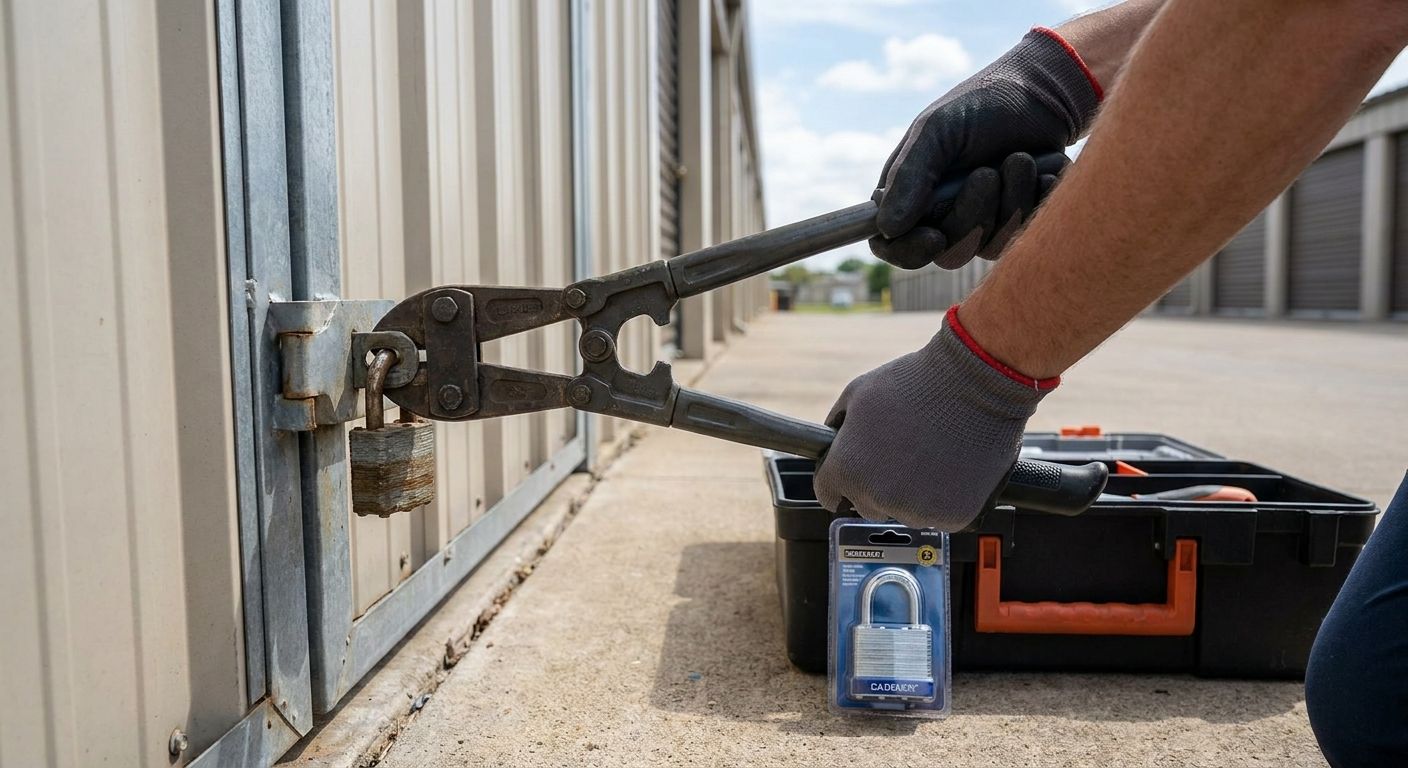
Renting a storage unit and finding a lock you didn't put there — or losing the only key to one you did — is more common than most facilities admit. Storage unit lock removal in 2026 usually means one of three jobs: cutting off an old disc lock, drilling a cylinder lock that's seized, or removing a lock left behind by a previous renter whose account lapsed.
- Disc-style padlocks are the easiest storage unit lock removal job and take under 15 minutes for a licensed locksmith in 2026.
- Bolt cutters fail on hardened-steel disc locks; a cordless grinder or bolt-cutter-rated tool is the right call, not brute force.
- Cylinder locks that won't turn usually need drilling, not cutting — a mismatch here damages the storage unit door track.
- Replace a removed lock with a disc detainer padlock rated for outdoor use, not a standard keyed padlock.
- Auction-unit buyers and lapsed-renter lockouts both need proof of ownership before a locksmith will remove the lock on site.
Why this matters
A storage facility isn't going to send someone out to cut your lock — most leases make that your problem, and the on-site staff at a self-storage location rarely carry the tools for a clean job. Get it wrong with a hacksaw or a cheap bolt cutter set and you risk bending the hasp, which turns a $20 lock problem into a $150 door-hardware repair.
Apex Lock N Key handles storage unit lock removal and replacement as a mobile call across Middlesex County, which matters because most self-storage facilities don't let you tow a locked unit's contents to a shop. The locksmith comes to the unit, on the facility's schedule, with the tools that match the lock type already on the door.
Who this is for
This guide is for three groups: renters who lost the key to their own storage unit lock, buyers who won a storage auction and inherited someone else's lock, and facility managers dealing with a lapsed account that needs the unit cleared. If you're locked out at 9pm and the facility office closed at 6, you're also in the right place — a reliable 24-hour locksmith doesn't wait for business hours to handle a storage unit call.
What to look for in a storage unit lock removal service
Non-destructive removal first
A locksmith who tries picking or bypassing the lock before cutting saves you the cost of a new lock entirely. Disc locks and cylinder locks both have non-destructive entry options in a lot of cases, and a technician who skips straight to cutting is optimizing for speed, not your wallet.
The right tool for the lock type
Disc-style padlocks (the round, flat-faced locks most storage facilities sell) need a bolt-cutter-rated tool or angle grinder — standard bolt cutters bounce right off the hardened shackle. Cylinder and hasp locks usually need drilling. A locksmith showing up with only one tool type is guessing, not diagnosing.
Proof-of-ownership handling
Legitimate locksmiths ask for ID and unit paperwork, or confirmation from facility management, before removing a lock on someone else's unit. If a technician skips this step entirely, that's a red flag worth remembering — spotting a locksmith scam before you get overcharged starts with noticing who doesn't ask questions.
Mobile response and facility access hours
Most self-storage sites in Middlesex County lock their gates on a timer, some as early as 9pm or 10pm. A locksmith who can confirm gate-code access and facility hours before dispatch saves you a wasted trip in 2026's shorter daylight months.
Replacement lock quality, not just price
A $12 padlock from a hardware store gets defeated by the same bolt-cutter-resistant grinder used to remove the old one. Storage-rated locks need hardened shackles and weatherproof housings — this is not the place to save $10.
Damage assessment on the hasp and door track
A rushed cut job can bend the hasp or crack the door track, especially on older roll-up storage doors. A technician who checks the hardware before and after the cut prevents a second service call.
Top picks: lock removal and replacement options
The standard swap — disc detainer padlock. Hook: the most common storage-unit lock on the market, and the easiest to remove cleanly. A round, flat-faced padlock with a shrouded shackle resists bolt cutters and typically runs $25 to $50 for a facility-grade version. Removal takes a cordless grinder and roughly 10 to 15 minutes on site. Buy — it's the industry default for a reason, and most facilities require this style anyway.
The stubborn one — cylinder padlock or built-in cam lock. Hook: looks simple, seizes constantly. These show up on older units and on lock boxes bolted to the door. When the key won't turn or the cylinder has rusted, drilling is the only reliable non-destructive-adjacent method — cutting isn't an option since there's no exposed shackle. Consider if you're already dealing with an older facility; otherwise this lock type isn't worth choosing for a new unit.
The leftover from a previous renter — unknown combination or keyed lock. Hook: you didn't put it there, you can't call the person who did. This needs proof of your current rental agreement plus the facility's confirmation before a locksmith will touch it. Removal timing runs the same as a standard disc lock, but the paperwork step adds 10 to 20 minutes. Consider — plan the visit during facility office hours if possible, even though the removal itself doesn't require staff presence.
The upgrade — hardened shackle padlock with a shrouded design. Hook: this is what you put back on the door after removal. A shrouded shackle blocks bolt cutters from getting purchase at all, and weatherproof housings hold up through a Massachusetts winter without seizing. Expect to pay more than a bargain padlock, but this is the high-security lock category worth the difference for anything stored long-term. Buy — replacing a cut lock with the same low-grade style you started with defeats the point.
The DIY hardware-store special. Hook: cheap, available everywhere, and the reason storage units get broken into. A basic keyed padlock without a shrouded shackle takes bolt cutters in under 30 seconds. Skip — it costs less up front and costs you your stored property later.
Locked out of your storage unit?
Licensed, 24/7 mobile locksmith service across Middlesex County, MA.
What to avoid
- Bolt cutters from a hardware store. They're rated for chain and cheap padlocks, not the hardened shackles on storage-grade disc locks. Most people give up after a few minutes and call a locksmith anyway — now with a scratched-up lock face making the job harder.
- Hacksawing the hasp instead of the lock. This damages the door hardware permanently and often voids whatever facility agreement covers unit repairs. The lock is replaceable; the hasp and door track are not a quick fix.
- Replacing with the same low-grade lock. If the old lock got cut off in under a minute by a professional tool, a matching cheap replacement falls to the same tool in the hands of someone with less patience.
Verdict comparison table
| Lock type | Removal method | Typical replacement cost | Verdict |
|---|---|---|---|
| Disc detainer padlock | Grinder/bolt-cutter tool, ~10-15 min | $25-$50 | Buy |
| Cylinder/cam lock | Drilling | $30-$60 | Consider |
| Unknown leftover lock | Grinder + proof of ownership | Varies | Consider |
| Shrouded high-security padlock | N/A (this is the replacement) | $50-$120 | Buy |
| Basic hardware-store padlock | N/A | $10-$20 | Skip |
If you're already deciding whether to fix the old lock or start fresh, the same logic applies here as it does for rekeying versus replacing a lock at home: a lock that's been cut off is done, and a replacement built for the job beats patching the old one.
FAQ
How much does storage unit lock removal cost in 2026?
Storage unit lock removal typically runs as a standard mobile locksmith service call, with the total depending on lock type and whether replacement is needed. Disc locks are the fastest and least expensive to remove; cylinder locks that require drilling take longer.
Can a locksmith remove a storage unit lock without the key?
Yes, a licensed locksmith can remove most storage unit locks without the original key using cutting or drilling tools matched to the lock type. Bring proof of your rental agreement, since legitimate locksmiths ask for it before working on a unit that isn't clearly yours.
What kind of lock do storage facilities require?
Most self-storage facilities in 2026 require or recommend a disc-style padlock with a shrouded shackle because it resists bolt cutters. Check your facility's lease terms, since some sites sell an approved lock on site.
Is it legal to cut a lock off a storage unit I rented?
Yes, if it's your active unit and you have the rental agreement or ID matching the account. Facility staff or a locksmith may still confirm details with management before proceeding, especially on units transferred through auction.
What happens if I lose my storage unit key and can't reach the facility office?
A 24/7 mobile locksmith can remove the lock on site without waiting for the facility office to open, as long as gate access allows entry during their hours. This is common for units in facilities with after-hours keypad gates.
Should I use bolt cutters myself before calling a locksmith?
No — standard bolt cutters usually fail on hardened storage-lock shackles and can damage the hasp if forced. A locksmith with the correct grinder or drill tool removes the lock cleanly in about 10 to 15 minutes.
What's the best replacement lock for a storage unit?
A disc detainer padlock with a shrouded shackle is the standard choice for 2026, balancing cost and bolt-cutter resistance. Higher-security padlock options exist for units storing higher-value items long-term.
Do storage facilities remove locks themselves?
Most facility staff don't carry locksmith-grade cutting tools and won't remove a renter's lock directly. Facilities typically refer lockouts to a licensed locksmith or require the renter to arrange removal.
One last thing
The detail most renters miss: a shrouded shackle doesn't just resist bolt cutters, it also blocks a thief from getting a grinder blade flush against the metal — which is why facility-approved disc locks look almost identical across brands. If your unit still has a plain hardware-store padlock on it going into 2026, that's the one upgrade worth making before you ever need a removal call.


