
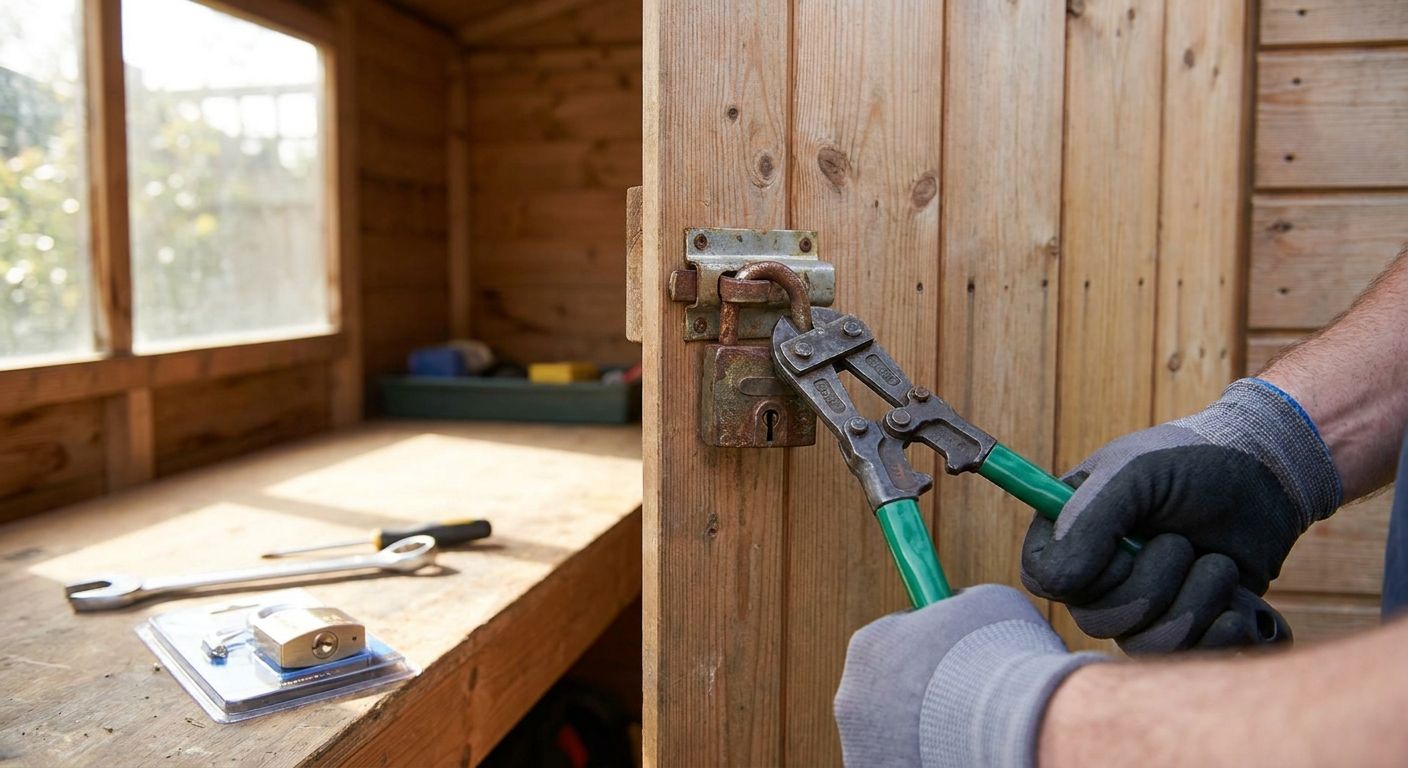
A broken or key-less padlock comes off fastest with bolt cutters or an angle grinder, since picking a mass-market padlock without a key takes tools and practice most people don't have on hand. The method that works depends entirely on the shackle: standard steel gives way to bolt cutters in seconds, hardened steel needs a grinder, and a shim only beats cheap laminated locks with a straight shackle.
- Bolt cutters remove standard steel-shackle padlocks fastest; hardened shackles and disc locks resist the blades.
- A cordless angle grinder with a metal cutoff wheel cuts through hardened shackles bolt cutters can't handle.
- Shimming only works on cheap laminated padlocks with a straight, unhardened shackle.
- Drilling the shackle or body destroys the internal pins and works on nearly any padlock, but the lock is unusable after.
- Apex Lock N Key removes locked-out padlocks on gates, lockers, and storage units without wrecking the hasp when cutting isn't practical.
Why this matters
A padlock with no working key isn't just an inconvenience — it's blocking a storage unit, a gate, a locker, or a shed you actually need to get into today. Cutting or grinding the wrong way can gouge a door frame, weld the shackle shut, or leave metal shards where hands and kids reach. Knowing which method matches the lock in front of you in 2026 saves a trip back to the hardware store and keeps the hasp or fence intact. Apex Lock N Key handles this exact call across Middlesex County when the hasp needs to stay usable afterward.
How do you remove a padlock without a key?
- Check the shackle material. Hardened steel is heavier and usually stamped "hardened" or "case-hardened" on the body; standard steel is lighter and cuts easier.
- Match the tool to the shackle. Bolt cutters for standard steel, an angle grinder for hardened steel or disc-style locks.
- Protect the area. Gloves, eye protection, and something to catch metal shavings if you're grinding.
- Cut one leg of the shackle close to the lock body rather than the middle — less resistance, cleaner break.
- Twist and pull the lock free once the shackle is severed.
- Replace the lock before leaving the door, gate, or unit unsecured.
| Method | Works best on | Tools needed | Damage to lock | Verdict |
|---|---|---|---|---|
| Bolt cutters | Standard steel shackle padlocks | 24-30 inch bolt cutters | Shackle severed | Buy — fastest option for most consumer padlocks |
| Angle grinder | Hardened steel shackles, disc locks | Angle grinder, metal cutoff wheel | Shackle ground through | Buy — the only real option once bolt cutters fail |
| Shimming | Cheap laminated padlocks, straight shackle | Shim tool or shaped can metal | None — lock stays reusable | Hold — works occasionally, unreliable on newer locks |
| Drilling | Almost any padlock body or shackle | Cordless drill, metal bit | Lock destroyed | Skip unless no cutting tool is available |
| Professional locksmith | Any padlock, gate, hasp, or disc lock | Pick set or lock-specific cutting tools | None to minimal | Buy — best when the hasp or gate must stay intact |
Bolt cutters: the fastest method for standard padlocks
A standard steel-shackle padlock — the kind sold on most hardware store pegs — gives way to bolt cutters faster than any other method. Position the jaws as close to the lock body as possible, since leverage drops the farther out on the shackle you cut. This method fails immediately on hardened steel; the blades slip or chip instead of biting.
Angle grinder: for hardened steel and disc-style locks
When bolt cutters bounce off, the shackle is hardened steel and a grinder with a metal cutoff wheel is the next move. Grind through one leg of the shackle in short passes rather than forcing the wheel through in one cut — the metal heats fast and a stalled wheel can kick back. Disc-style padlocks shield the shackle inside a rotating housing, which blocks most grinder angles entirely; those almost always need a locksmith with picking or specialty cutting tools.
Shimming: only works on cheap laminated locks
Shimming exploits a gap in cheap laminated padlocks with a straight, unhardened shackle — a thin piece of shaped metal slides in and pushes the locking mechanism aside. It leaves the lock fully reusable, which bolt cutters and grinders don't. It also fails on solid-body locks, disc locks, and most locks made after manufacturers started closing that gap.
Drilling: the last resort that ruins the lock
Drilling through the shackle or the lock body works on almost anything, including hardened steel and disc locks, because it destroys the pins or the locking bar directly rather than cutting metal. The tradeoff is total: the lock is scrap afterward, and a slipped bit can gouge whatever the padlock is mounted to. Reach for this only when no bolt cutters or grinder are available.
Why the removal method varies
- Shackle hardness — hardened steel needs a grinder; standard steel yields to bolt cutters
- Shackle diameter — thicker shackles need larger bolt cutters or more grinder passes
- Lock body design — laminated stacked-plate bodies, solid brass bodies, and shielded disc locks each resist different tools
- What the lock is protecting — a storage unit hasp or a fence gate that must stay usable changes which method is acceptable
- Whether the hasp or door needs to survive — cutting damages the shackle only; drilling and forcing can damage the mounting hardware too
- Tool access right now — a homeowner without a grinder is stuck with bolt cutters or a locksmith call regardless of shackle type
“If bolt cutters bounce off the shackle instead of biting, that padlock is hardened steel and needs a grinder or a locksmith, not more force.”
Can bolt cutters cut through a hardened padlock?
Bolt cutters usually can't cut a hardened steel shackle — the blades slip or chip against the surface instead of shearing through it. An angle grinder with a metal cutoff wheel handles hardened shackles that bolt cutters can't touch.
Is it legal to cut a lock off a storage unit?
Cutting a lock off your own storage unit is legal, but facility rules often require notifying management first or having them witness the removal. Renters who need a unit lock off without the original key can also check a storage unit lock removal guide before cutting anything, since some facilities charge for damaged hasps regardless of who cuts the lock.
Can you pick a padlock without a key?
Picking a padlock without a key is possible on many pin-tumbler models, but it takes a pick set and practice most homeowners don't have in 2026. A locksmith can usually pick or bypass a padlock non-destructively, which is the only method that leaves both the lock and the shackle reusable.
What size bolt cutters do I need for a padlock?
Most standard steel padlocks come off with 24 to 30-inch bolt cutters, since longer handles generate more leverage against the shackle. Thicker shackles or slightly hardened steel sometimes need the larger end of that range before the blades bite cleanly.
Locked out and the cutting tools aren't enough
A licensed locksmith opens padlocks, gates, and storage units without wrecking the hasp.
FAQ
What's the fastest way to remove a padlock without a key?
Bolt cutters remove a standard steel-shackle padlock fastest, usually in one cut close to the lock body. Hardened steel shackles need an angle grinder instead, since bolt cutters slip off them.
Can bolt cutters cut through any padlock?
Bolt cutters cut through standard steel shackles but not hardened steel or shielded disc-style locks. Those need an angle grinder or a locksmith with specialty cutting tools.
Is shimming a padlock still possible in 2026?
Shimming still works on cheap laminated padlocks with a straight, unhardened shackle in 2026, but most newer and solid-body locks close that gap. It fails entirely on disc locks and hardened shackles.
Will drilling a padlock damage the hasp or door?
Drilling destroys the padlock itself every time, and a slipped bit can also gouge the hasp, gate, or door it's mounted to. It works on almost any padlock but should be the last method tried.
Can a locksmith open a padlock without destroying it?
A licensed locksmith can often pick or bypass a padlock without damaging the shackle or the lock, unlike cutting or drilling. That's the only method that leaves the hardware and the hasp fully reusable.
What tools do I need to cut a padlock shackle?
Standard shackles need 24 to 30-inch bolt cutters; hardened shackles need an angle grinder with a metal cutoff wheel. Gloves and eye protection matter for both methods.
Is it safe to grind off a padlock at home?
Grinding a padlock at home is safe with gloves, eye protection, and short cutting passes rather than forcing the wheel through in one pass. A stalled wheel against hardened steel can kick back unexpectedly.
How do you remove a lock from a storage unit without a key?
Removing a storage unit lock without a key follows the same bolt cutter or grinder approach as any padlock, but most facilities want management notified first. Check the unit's rules before cutting to avoid a hasp-damage charge.
One last thing
Disc-style padlocks are the one common lock that resists nearly every DIY method above — the shielded housing blocks bolt cutter jaws and most grinder angles at once, which is exactly why they show up on gates, storage units, and lockers where owners want real resistance to cutting. If the padlock in front of you is disc-shaped rather than the classic U-shackle, skip the bolt cutters and call a locksmith before reaching for a grinder.


