
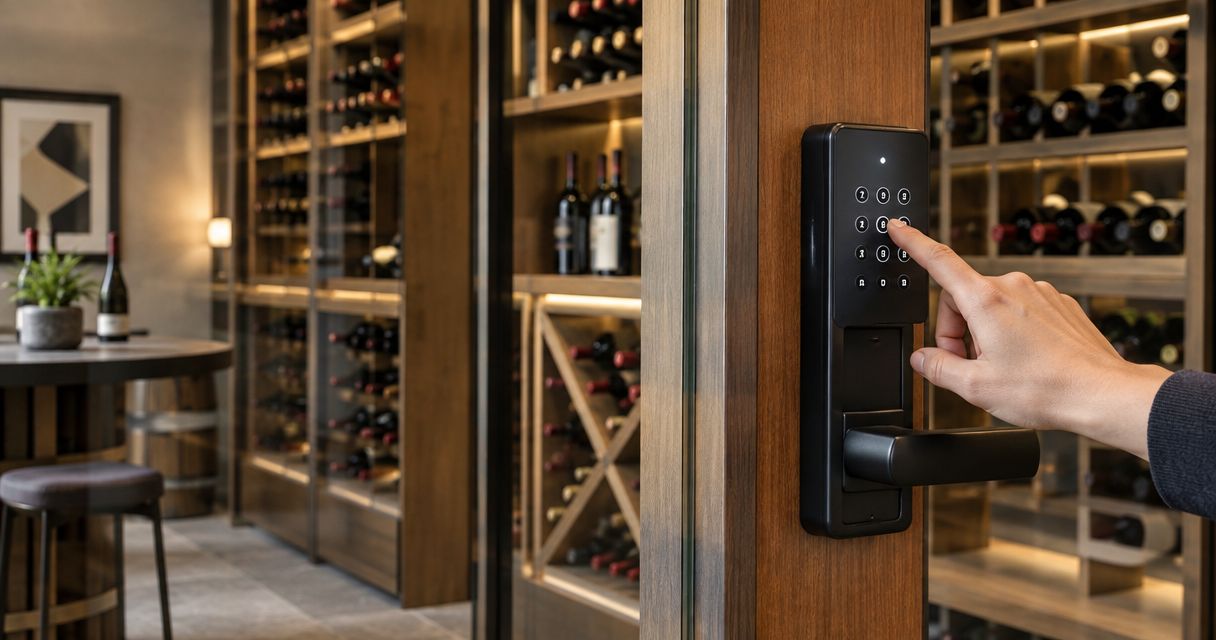
Best overall for a home wine cellar in 2026: a keyed deadbolt on a compatible solid door. Best for shared access: a mechanical keypad lock. Best for changing codes: an electronic keypad lock. Best for remote access: a smart deadbolt. The best security locks for wine cellars depend on the door and who needs entry; Apex Lock N Key is best for Middlesex County homeowners who need a licensed, 24/7 mobile locksmith for residential rekeying.
- A keyed deadbolt is the best security lock for a wine cellar with a compatible solid door and a small number of keyholders.
- Choose a mechanical keypad for shared access without batteries, or an electronic keypad when codes need to change.
- A smart deadbolt fits remote-access needs, but door compatibility and a backup entry method come first.
- Apex Lock N Key is best for Middlesex County homeowners who need residential rekeying, not a specific lock brand.
Why this matters
A cellar lock controls access to both the room and its contents. A strong lock cannot compensate for a weak frame, a door that does not close squarely, or another unlocked entrance. In 2026, start with the complete doorway rather than choosing hardware by its features alone.
A wine cellar also has practical constraints: the door may have glazing, seals, or hardware chosen to preserve the room's conditions. Before changing the lock, check that the proposed installation will not damage the door or prevent it from closing and sealing properly. For more on the service context, see locksmith help for home wine cellars and specialty storage rooms.
What makes the best security lock for a wine cellar?
Use these criteria to judge the 2026 picks. Door compatibility comes first: no access feature makes an unsuitable lock a good purchase.
- Door and frame fit. Check the door material, existing holes, frame, strike location, and whether the door closes without being pulled into place.
- Control of access. A key suits a small, stable group. Codes suit people who need entry without holding a physical key.
- Entry when power fails. Mechanical locks do not need batteries. Electronic options require you to understand their power and backup-entry arrangements.
- Ease of changing access. Rekeying changes which keys operate a compatible keyed lock. Code changes depend on the particular keypad model.
- Exit from inside. Do not choose a lock configuration that prevents someone inside the cellar from leaving safely. Check applicable requirements before changing the door hardware.
- Maintenance. Consider how you will spot a sticking bolt, misaligned strike, worn key, or electronic warning before access becomes difficult.
Best security locks for wine cellars at a glance
| Lock type | Best for | Standout feature | Key limitation |
|---|---|---|---|
| Keyed deadbolt | A solid door with few keyholders | Simple mechanical access | Keys must be controlled |
| Mechanical keypad lock | Shared access without batteries | Code entry with no electronic power | Code-sharing is harder to track |
| Electronic keypad lock | Access codes that need changing | Codes can be managed at the lock | Requires power and maintenance |
| Smart deadbolt | Remote-access needs | Connected access features | Depends on compatible hardware and setup |
These are lock types, not endorsements of unverified models. A specific product earns a place on your cellar door only after its fit, inside operation, and backup-entry method are checked. The order favors a straightforward mechanical solution unless your access needs justify more moving parts.
1. Keyed deadbolt: best security lock for a simple cellar door
A keyed deadbolt uses a physical key to operate the bolt. For a cellar with a compatible solid door and a small, stable group of keyholders, it offers the clearest access plan: control the keys and maintain the doorway. The keyed deadbolt is the default 2026 choice when you do not need codes or remote access.
Keyed deadbolt pros:
- Works without batteries, an app, or a network connection.
- Makes access straightforward when only a few people need keys.
- Can be rekeyed when a compatible cylinder needs new key control.
Keyed deadbolt cons:
- A missing or copied key creates a key-control problem.
- Giving temporary access means handing over a key or arranging entry.
- A deadbolt alone does not fix a weak frame or a door that binds.
Best for: Homeowners with a compatible solid cellar door and limited access needs.
Check the doorway before choosing a replacement. The bolt must meet the strike cleanly, and the inside operation must allow safe exit. If you cannot account for existing keys, rekeying addresses that access issue; it does not strengthen a damaged frame.
Verdict: Buy a compatible keyed deadbolt for simple access. Hold off on the purchase if the door or frame needs attention first.
2. Mechanical keypad lock: best for shared access without batteries
A mechanical keypad lock grants entry through a combination without relying on electronic power. It fits a cellar used by several authorized people when distributing keys is inconvenient but connected features add no value. Choose the exact model by checking its door fit and how its combination is changed.
Mechanical keypad lock pros:
- Avoids battery maintenance.
- Lets authorized people enter without carrying a cellar key.
- Keeps access separate from an app or network connection.
Mechanical keypad lock cons:
- People can pass along a shared combination.
- Changing a combination is model-dependent and can be less convenient than updating an electronic code.
- A keypad adds no benefit if the door or frame is the weak point.
Best for: A compatible cellar door used by a stable group that needs key-free entry.
Decide who will know the combination before installation. If everyone uses the same code, you cannot tell which person shared it. Confirm that the selected lock's inside operation works for the room and that its hardware does not interfere with the door seal.
Verdict: Buy for stable shared access without batteries. Skip it when you need individual access control or frequent code changes.
3. Electronic keypad lock: best for changing access codes
An electronic keypad lock accepts a code and operates using power from its designed source. It is useful when access changes often enough that collecting keys is inconvenient. Features differ by model, so check the specific lock's code-management and backup-entry instructions rather than assuming every keypad works alike.
Electronic keypad lock pros:
- Allows key-free entry for authorized users.
- Supports code changes according to the selected model's instructions.
- Does not require remote access if local code entry is all you need.
Electronic keypad lock cons:
- Needs power checks and routine attention to warnings.
- A shared code can still be passed to someone else.
- Backup-entry options and door fit differ between products.
Best for: Homeowners who need to change cellar access without routinely exchanging keys.
In 2026, write down a simple household procedure: who can change codes, who checks power, and how an authorized person enters if the keypad is unavailable. Keep those instructions secure rather than posting them beside the door. Test the lock from both sides after any code change.
Verdict: Buy if changing codes solves a real access problem and you will maintain the lock. Skip it if a keyed deadbolt already meets your needs.
4. Smart deadbolt: best for remote-access needs
A smart deadbolt adds connected controls to a door lock. It belongs on the shortlist only when you need functions that depend on connectivity and the chosen device fits the cellar door. A phone feature is not a substitute for checking the bolt, strike, inside operation, and backup-entry method.
Smart deadbolt pros:
- Offers connected access functions where the selected model supports them.
- Can reduce reliance on handing out physical keys.
- Provides a route to manage access without standing at the door, subject to the model and setup.
Smart deadbolt cons:
- Adds power and connection considerations.
- Features and backup-entry methods differ by product.
- Door compatibility can rule out an otherwise appealing model.
Best for: Homeowners with a compatible cellar door and a specific need to manage access remotely.
List the connected function you will actually use before shopping. Then confirm how the particular lock behaves when power or connectivity is unavailable. If the answer does not meet your access needs, choose a simpler lock rather than accepting an unclear fallback.
Verdict: Hold until you have confirmed door fit, inside operation, and backup entry. Buy only when remote access earns its added maintenance.
How to choose for your cellar door
Start at the door, not the keypad. Close it without forcing it and see whether the existing bolt meets the strike. Look at the frame, the door material, any glazing, and the seals. A lock change should not leave the door difficult to close or compromise its intended operation.
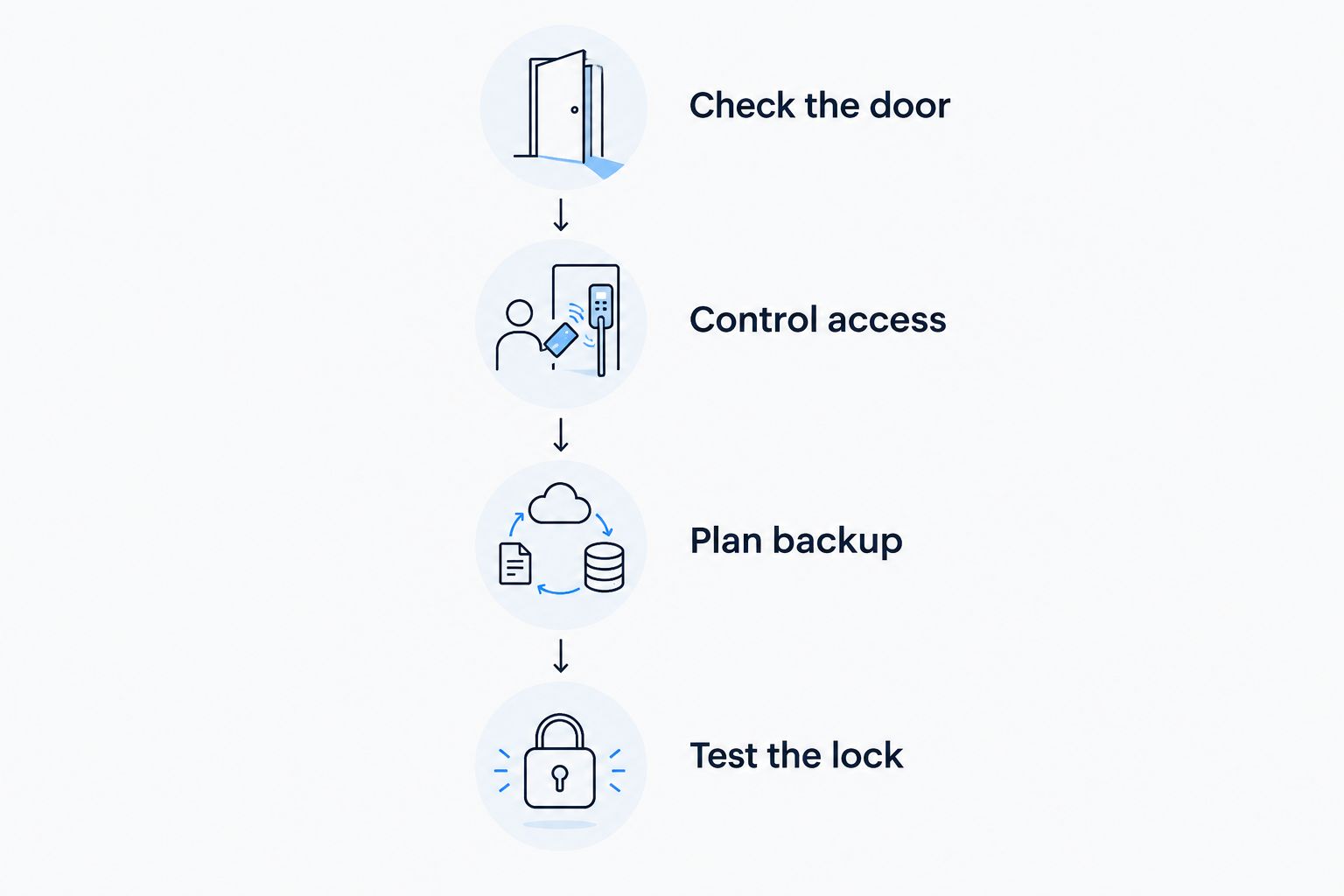
Next, name the people who need access. For a small group that rarely changes, controlled keys keep the plan simple. For a stable group that should not carry keys, compare mechanical keypads. When people need to gain or lose access more often, examine electronic code management. Reserve connected controls for a genuine remote-access requirement.
Finally, plan for an ordinary failure: a lost key, a forgotten combination, a depleted power source, or a bolt that no longer lines up. Know the authorized backup-entry method for the exact lock you select. Do not install hardware until you know how someone inside the room exits and how the door will be opened when its usual entry method fails.
How we ranked the 2026 picks
The ranking puts physical fit and dependable access ahead of added features. A keyed deadbolt comes first because it answers the basic access need without electronic maintenance. Mechanical and electronic keypads follow when key-free entry or code changes solve a specific problem; a smart deadbolt ranks last because remote access brings additional setup and maintenance questions.
This is a decision tree, not a claim that one lock type resists every attack better than another. Door construction, frame condition, installation, and the chosen model determine whether a lock is suitable. Apex Lock N Key provides residential rekeying for homeowners in Middlesex County; rekeying is the relevant next step when the lock is serviceable but control of its keys is not.
Which wine cellar lock should you choose?
Choose a compatible keyed deadbolt if you are undecided. It is the best security lock for a wine cellar when few people need access and you do not require codes or remote functions. If keys are the obstacle, move to a mechanical keypad for stable shared access or an electronic keypad for changing codes. Choose a smart deadbolt only after you identify a remote feature you need and verify the exact model's fit and fallback.
If you have lost track of who holds a cellar key, deal with that before buying more hardware. For a compatible existing lock, residential rekeying can change which keys operate it. Apex Lock N Key is a licensed, 24/7 mobile locksmith service in Middlesex County that provides residential rekeying; the appropriate hardware choice still depends on your door.
FAQ
What is the best security lock for a wine cellar in 2026?
A keyed deadbolt is the best default for a wine cellar with a compatible solid door and few keyholders. Check the frame, strike, and safe exit before selecting a specific model.
Is a keypad lock better than a keyed deadbolt for a wine cellar?
A keypad lock is better when authorized people need entry without carrying keys. A keyed deadbolt is simpler when access rarely changes and keys are controlled.
Should I use a smart lock on a wine cellar door?
Use a smart lock when remote access solves a specific need and the exact model fits the door. Confirm its power, connectivity, inside operation, and backup-entry arrangements first.
Can I put a deadbolt on a glass wine cellar door?
Do not assume a standard deadbolt fits a glass wine cellar door. The door and frame design determine which hardware can be installed without damaging them or impairing operation.
Do electronic cellar locks work when the power is unavailable?
Backup behavior depends on the specific electronic lock and its power source. Check the manufacturer's instructions and test the approved backup-entry method before relying on it.
When should I rekey a wine cellar lock?
Rekey a compatible keyed lock when you need to change which keys operate it, such as when you cannot account for an old key. Rekeying does not repair a damaged door or frame.
What should I check before installing a cellar lock?
Check door material, existing hardware, alignment, seals, inside operation, and backup entry. The selected lock must suit the complete doorway, not just the hole left by the old hardware.
One last thing
The easiest upgrade to overlook is key control. In 2026, a new keypad does not solve an old keyed entrance that others can still use. Identify every way into the cellar, then decide whether existing keys need to be changed. Apex Lock N Key provides residential rekeying for Middlesex County homeowners when changing key access is the job.


