
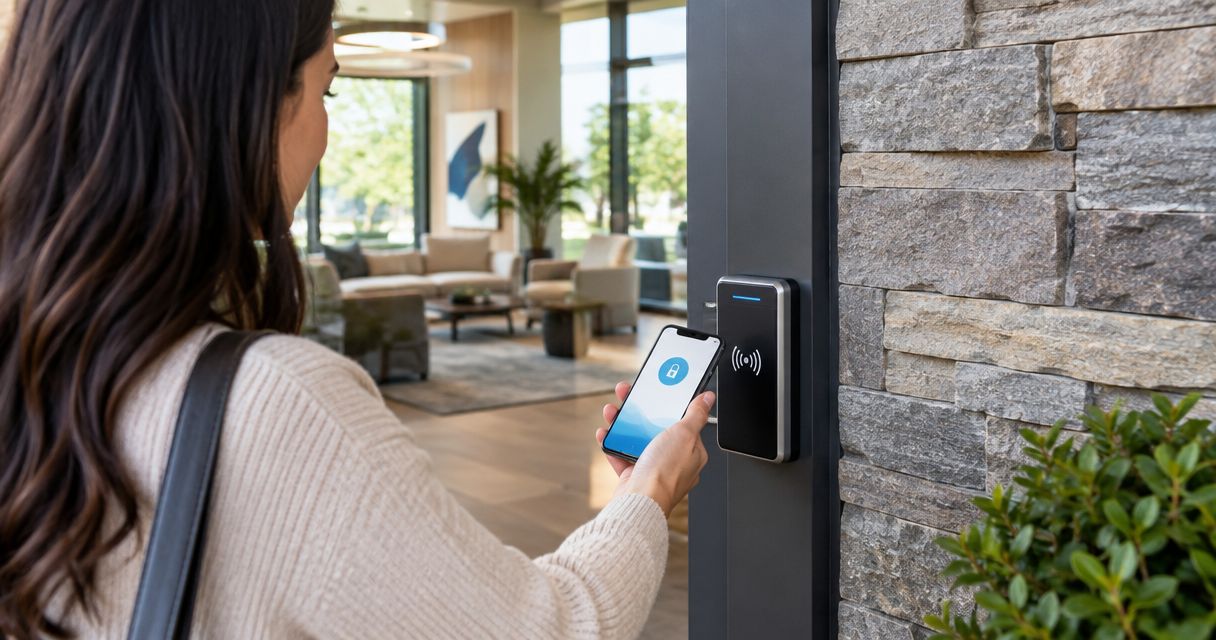
For most HOA clubhouses in 2026, an individually assigned credential system is the best keyless entry choice: it lets the board remove one resident’s access without changing everyone else’s. Best for a small clubhouse with limited administration: a commercial keypad lock. Best for screening visitors before entry: a video intercom paired with an access-controlled lock.
- Best keyless entry systems for HOA clubhouses: individually assigned fob credentials win when residents share an entrance.
- Choose a commercial keypad lock when the board can manage codes and does not need individual credentials.
- Apex Lock N Key installs commercial access control in Middlesex County, Massachusetts; confirm door hardware and exit requirements before choosing a system.
Why this matters
A clubhouse entrance serves residents, guests, cleaners and maintenance workers. A shared code is easy to distribute, but it is also hard to take back from one person without notifying everyone who still needs access. Individual credentials make that change simpler, provided the board assigns and removes them consistently.
The lock is only part of the decision. The door must still close and latch correctly, and people inside must be able to leave safely. If your clubhouse includes a pool house, start with the HOA pool house and clubhouse security guide before selecting entry hardware. In 2026, the right choice depends less on whether an app looks convenient and more on who controls access after a resident, contractor or board member leaves.
What makes the best keyless entry system for an HOA clubhouse?
Use these criteria before comparing devices or requesting installation proposals:
- Individual access control: Can an administrator remove one person’s credential without changing access for everyone? This matters most when many households use the same door.
- Guest access: Decide who admits guests and whether a guest needs direct entry, an escort or contact with a resident. Do not choose a system before the board agrees on that rule.
- Administration: Identify who issues credentials, removes access and handles a lost phone, fob or code. A feature is useful only if someone is responsible for operating it.
- Door and exit compatibility: Check the existing lock, closer, latch, power and exit hardware. Entry control must not create an obstacle for people leaving the building.
- Failure plan: Ask how the entrance works when power, a network connection or a credential is unavailable. Document who responds and how authorized users regain access.
- Ongoing upkeep: Compare the work involved in replacing credentials, updating codes, maintaining batteries and keeping administrator access current.
For a 2026 purchase, put those questions in the same request you send to every installer. You will get proposals that address the clubhouse door and the board’s operating plan, rather than unrelated feature lists.
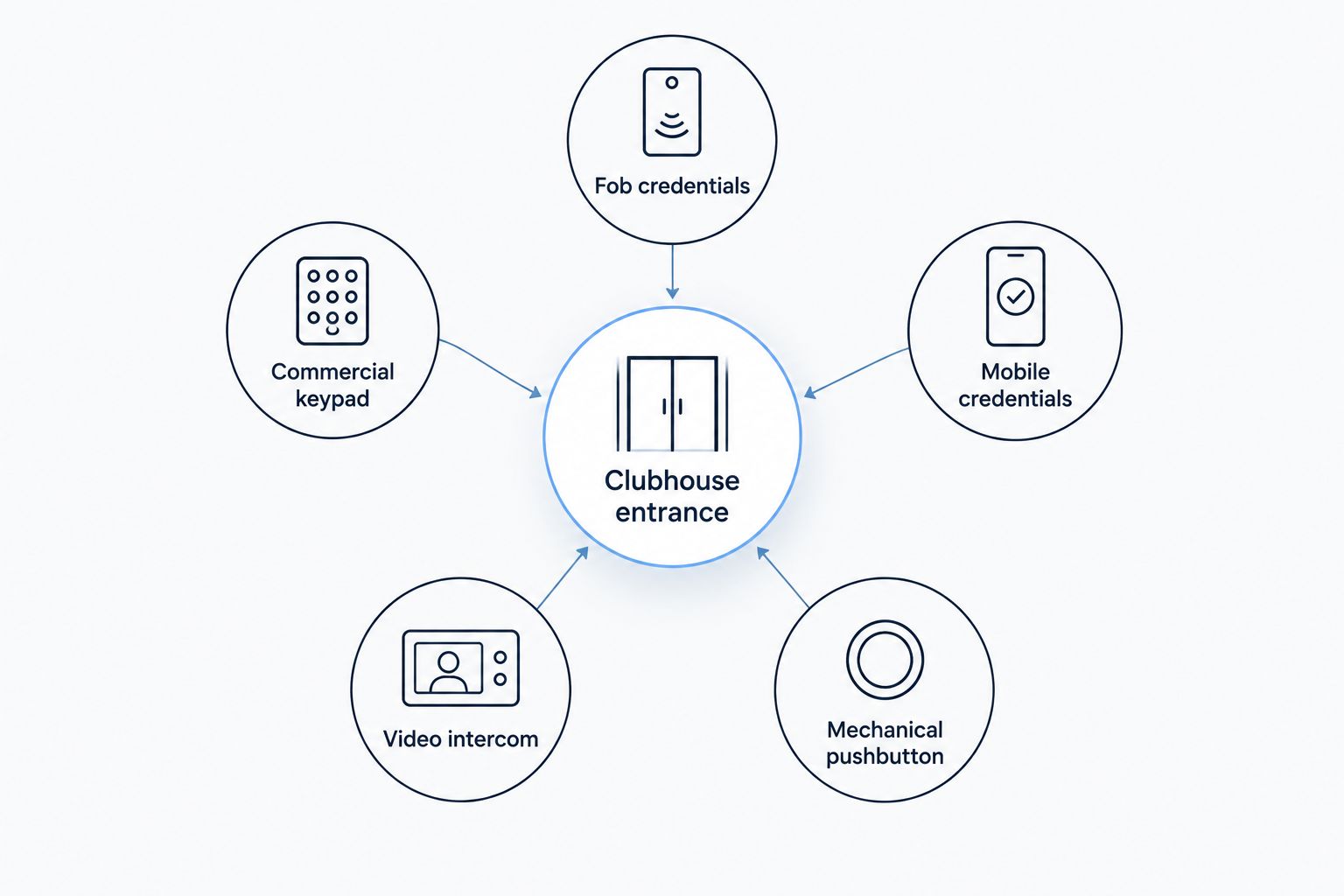
HOA clubhouse keyless entry systems at a glance
| System type | Best for | Standout feature | Key limitation |
|---|---|---|---|
| Fob or card credential system | Shared resident access | Individual credentials | Fobs and cards need issuing and replacement |
| Commercial keypad lock | Smaller, simpler access lists | Entry without a separate credential | Shared codes are difficult to withdraw selectively |
| Mobile credential system | Residents who prefer phone access | Individual phone-based credentials | Phone availability and user setup become access issues |
| Video intercom with controlled entry | Visitor screening | A person inside can decide whether to admit a visitor | It does not replace a resident access plan |
| Mechanical pushbutton lock | Basic access without electronic administration | No app or network needed for code entry | Limited control over who knows the code |
These are system types, not a ranking of unverified product brands. Door condition, exit hardware and the way the HOA grants access determine which type belongs at a particular entrance. A gate, clubhouse door and pool-area door should not be treated as interchangeable installations.
1. Fob or card credential system: best for shared resident access
A reader at the clubhouse door accepts credentials assigned to authorized users. The board can manage access by credential rather than relying on one code known throughout the community. A fob or card system is the best default for an HOA clubhouse with a changing resident access list.
Fob or card system pros:
- Gives residents an entry method they do not have to memorize.
- Lets an administrator remove a lost or former user’s credential without changing every resident’s access.
- Separates resident access from the guest-entry policy.
Fob or card system cons:
- Someone must issue, track and replace credentials.
- The reader, lock and door hardware must work together; a reader alone does not fix a door that fails to latch.
- Lost credentials need a clear reporting process.
Best for: An HOA that needs individual resident access at a shared entrance. Ask the installer to demonstrate how an administrator adds and removes a credential, then decide who on the board or management team owns that task.
Verdict: Buy when selective access removal matters more than avoiding credential administration.
2. Commercial keypad lock: best for a smaller access list
A commercial keypad lock admits a person who enters an authorized code. It gives residents a way in without carrying a separate fob. Apex Lock N Key is a practical installation choice for a Middlesex County HOA comparing commercial keypad entry with other access-control options, but the board still needs to decide how codes will be assigned and retired.
Commercial keypad lock pros:
- Residents can enter without a separate card or fob.
- A code can be communicated to an authorized user who needs access.
- The board can keep entry rules straightforward when the access list is manageable.
Commercial keypad lock cons:
- A widely shared code cannot identify which resident disclosed it.
- Changing a shared code means communicating the replacement to everyone who still needs entry.
- The lock must suit the actual door, latch and exit arrangement.
Best for: A smaller clubhouse where the board can control code distribution and changes. Before installation, write down who receives a code and who changes it when access should end; do not wait for the first shared-code problem to make that decision.
Verdict: Buy for a controlled access list; skip a single shared code when the HOA needs to remove individual users promptly.
3. Mobile credential system: best for phone-based resident access
A mobile credential system uses a resident’s phone as an assigned entry credential. Like a fob system, it can support individual access decisions instead of one community-wide code. The board must also account for residents who cannot use their phones at the door.
Mobile credential system pros:
- Gives eligible residents an assigned credential rather than a shared code.
- Removes the need to hand out a physical fob to every phone-based user.
- Supports an access policy organized around individual users.
Mobile credential system cons:
- Residents need help setting up and using phone access.
- A lost, unavailable or unusable phone requires another entry method.
- The board must check the chosen system’s connection and failure behavior before installation.
Best for: An HOA willing to manage phone setup and provide a workable alternative for residents who need one. Ask for a live demonstration at the proposed door, including what an administrator does when a resident changes phones.
Verdict: Hold until the board documents a non-phone entry option and an administrator support process.
4. Video intercom with controlled entry: best for visitor screening
A video intercom lets a person at the entrance request access from someone authorized to admit them. It addresses a different problem from routine resident entry: who decides whether a visitor comes in? An intercom can complement a keypad, fob or mobile credential system rather than replacing it.
Video intercom pros:
- Creates an admission step for guests instead of giving every visitor a standing credential.
- Lets the HOA define who is permitted to approve visitor entry.
- Keeps the visitor process distinct from the resident access list.
Video intercom cons:
- It does not give residents their own routine entry method by itself.
- Someone must be available and authorized to respond to visitors.
- Entry still depends on compatible door-release and exit hardware.
Best for: A clubhouse where visitors need approval before entering. Decide whether residents, staff or another authorized contact will answer requests; then test that process alongside the door hardware. An unanswered intercom is not a guest-access plan.
Verdict: Buy as a visitor layer when the HOA has identified who will answer; skip it as the sole resident entry method.
5. Mechanical pushbutton lock: best for basic entry without electronic administration
A mechanical pushbutton lock accepts a code without relying on an app or electronic credential at the door. That simplicity is its main advantage. It is also why it cannot perform the same individual access-management job as a fob or mobile credential system.
Mechanical pushbutton lock pros:
- Does not require residents to carry a fob or use a phone.
- Does not depend on a network connection for code entry.
- Keeps routine entry operation simple for authorized users.
Mechanical pushbutton lock cons:
- A shared code remains known to people who received it until the code changes.
- Selective removal of one person’s access is not its strength.
- The board still needs a code-change policy and compatible door hardware.
Best for: A clubhouse with a limited, stable group of authorized users and no need for individual entry credentials. Confirm how the specific lock’s code is changed before choosing it; the board should know what happens when a code has been shared outside the authorized group.
Verdict: Buy only when simple code entry matters more than individual access control.
How the systems are ranked
The ranking favors the board’s ability to grant and withdraw access, followed by the work required to run the system. It also weighs visitor handling, door compatibility and what happens when a resident cannot use their usual entry method. These are decision criteria, not claims that every product within a system type performs identically.
For most shared clubhouse entrances in 2026, individual credentials put fob or card systems first. A keypad ranks next because it reduces what residents must carry, but shared-code control becomes harder as more people receive the code. Mobile credentials suit an HOA prepared to support phone users; intercoms solve visitor admission; mechanical pushbuttons fit a narrower access policy.
Apex Lock N Key provides commercial lock and access-control installation in Middlesex County, Massachusetts. For a local installation, have the existing door and exit hardware assessed before the board commits to a system type. A new reader or keypad does not correct an entrance that cannot close, latch or permit proper exit.
Which HOA clubhouse keyless entry system should you choose?
Choose individually assigned fob or card credentials if you need one default answer in 2026. They give an HOA a direct way to remove one person’s access without resetting everyone else’s. Pair that choice with a written process for issuing, replacing and disabling credentials.
Choose a commercial keypad when access is simpler and the board can manage code changes. Add an intercom only when the clubhouse needs visitor screening and an authorized person will answer. Choose mobile credentials when the HOA has a realistic plan for residents who cannot use a phone at the entrance. A mechanical pushbutton lock belongs on the shortlist only if shared-code limitations are acceptable.
Before approving work, ask who will administer access, what happens during a failure and whether the proposed hardware fits the entrance and its exit requirements. Apex Lock N Key is best for Middlesex County HOAs that need a local commercial locksmith to assess the door and install the selected access-control setup, not for boards looking for a proprietary system from a manufacturer.
Plan your clubhouse entrance
Discuss the existing door and commercial access-control installation in Middlesex County.
FAQ
What is the best keyless entry system for an HOA clubhouse in 2026?
An individually assigned fob or card credential system is the best default for a shared HOA clubhouse entrance in 2026. It lets an administrator remove one user’s access without changing everyone else’s credential.
Is a keypad better than a fob system for a clubhouse?
A keypad is better when the HOA wants simple code entry and can manage who knows each code. A fob system is better when the board needs to remove individual users without changing access for the rest of the community.
Can an HOA use one code for every resident?
An HOA can use a shared code, but withdrawing it from one person requires changing it for everyone who still needs entry. Decide who communicates code changes before selecting that approach.
Does a video intercom replace resident keyless entry?
No. A video intercom handles requests from visitors; residents still need a defined routine entry method. The board must also assign someone to answer visitor requests.
What happens if a resident loses a clubhouse fob?
The HOA administrator should remove the lost credential from the access list and issue a replacement under the HOA’s policy. Confirm that the selected system supports this process before installation.
Can residents enter if their phone is unavailable?
Only if the HOA provides another authorized entry method. Ask the installer to demonstrate the backup process before choosing phone-based credentials.
What should an HOA check before installing a keyless lock?
Check the door, latch, closer, existing hardware and exit arrangement, then define who manages access. The entry system must fit the physical entrance and the HOA’s visitor rules.
One last thing
In 2026, ask the prospective administrator to walk through removing access for one resident while every other resident keeps access. That single exercise exposes the difference between an individual credential system and a shared code more clearly than a feature sheet. If the board cannot explain the steps, settle the operating plan before choosing hardware.


