
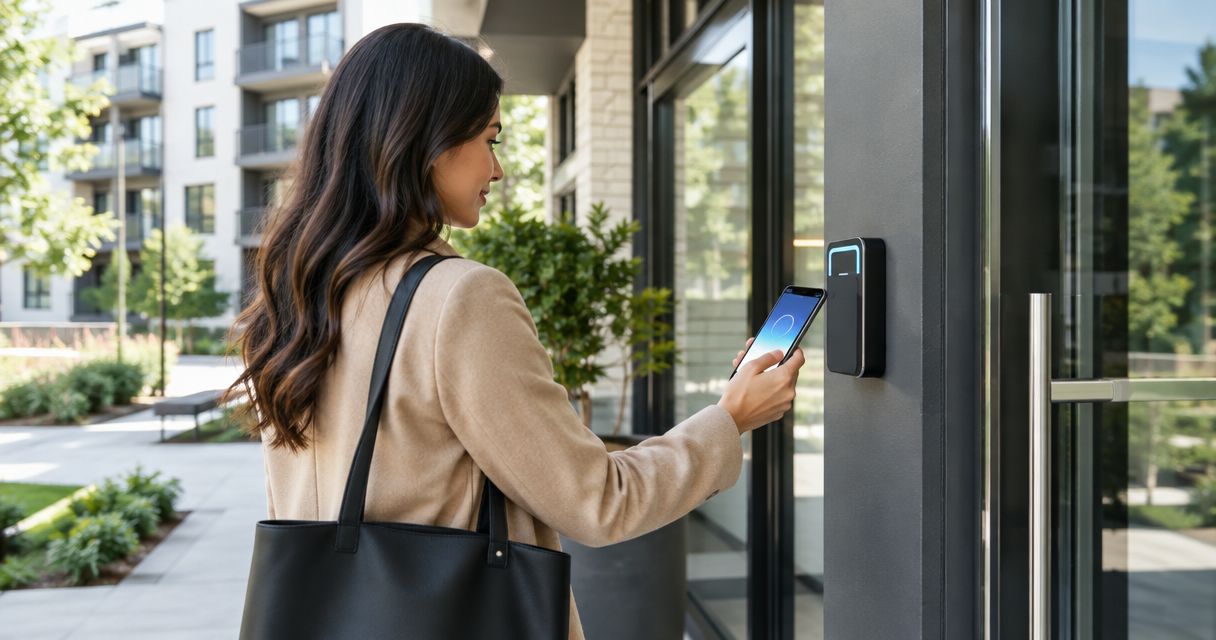
Best overall access control system for apartment complexes in 2026: video intercom paired with a smart lock at the main entrance. Best for buildings with high tenant turnover: key fob or proximity card systems. Best budget option: keypad/PIN entry at common doors. This guide ranks six access control approaches against the problems that actually cost property managers money — lost keys, unmanaged visitor traffic, and rekeying costs after every move-out — and tells you which one to install first.
- Video intercom + smart lock is the best access control system for apartment complexes with heavy visitor and delivery traffic in 2026.
- Key fob systems win for buildings with frequent tenant turnover because a lost card deactivates instantly, no rekeying required.
- Keypad/PIN entry remains the most budget-friendly option but needs a strict code-rotation policy to stay secure.
- Mechanical master key systems still matter as a power-outage backup, even in buildings that go fully digital.
- A licensed locksmith should size and wire any access control system before installation, not a general contractor.
Why this matters
Apartment complexes lose money on access control in two ways: unmanaged visitor entry that leads to package theft and unauthorized guests, and rekeying costs every time a tenant moves out with a physical key still in their pocket. A 2026 property manager juggling dozens of units cannot afford to send a locksmith to rekey every door after every lease turnover.
The right system fixes both problems at once. A property that installs commercial locksmith for apartment complexes and HOAs support alongside the right access control hardware cuts down on emergency lockout calls and gives on-site staff a way to deactivate a single tenant's access without touching anyone else's.
Apex Lock N Key installs and services every access control system on this list across Middlesex County, Massachusetts, so the comparison below reflects what actually holds up in multi-family buildings, not manufacturer marketing copy.
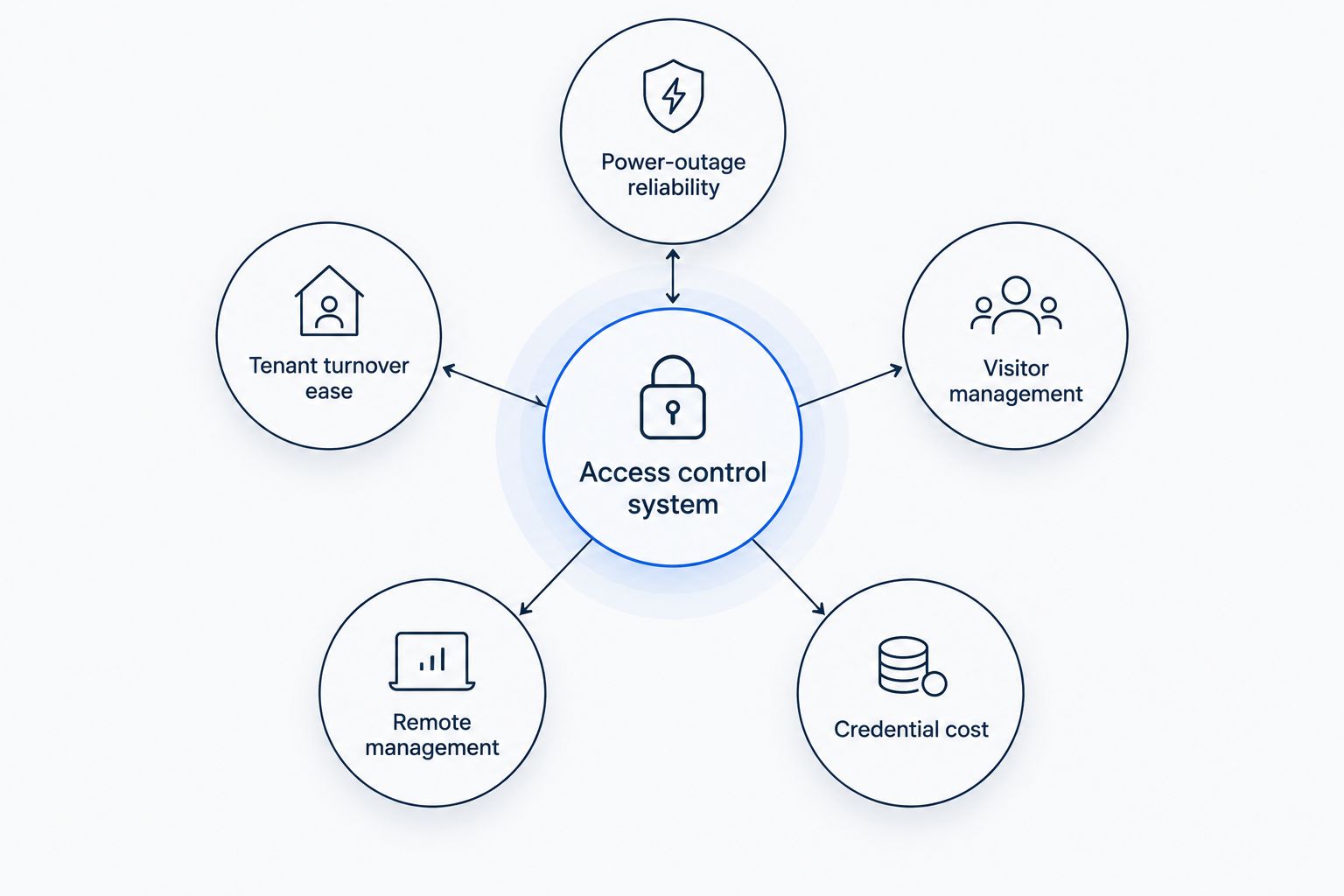
What makes the best access control system for apartment complexes
- Power-outage reliability — does the door still lock and unlock without electricity or Wi-Fi?
- Tenant turnover ease — can staff revoke one person's access in seconds without rekeying the whole building?
- Visitor and delivery management — can a resident buzz in a guest or courier without walking down?
- Remote management for staff — can a property manager see entry logs or unlock a door from a phone?
- Integration with existing hardware — does it bolt onto the current door and frame or require a full retrofit?
- Cost of ongoing credential replacement — what does it cost in staff time when a fob or code needs to change?
Access control systems for apartment complexes at a glance
| System | Best For | Standout Feature | Key Limitation |
|---|---|---|---|
| Video intercom + smart lock | High-rise buildings with heavy visitor traffic | Video verification and remote unlock for guests | Needs wiring and a network connection at the door |
| Key fob / proximity card | Large complexes with frequent tenant turnover | Deactivate a lost card instantly, no rekeying | Cards get lost, shared, or cloned without a tracking policy |
| Keypad / PIN entry | Small to midsize complexes on a tight budget | No fob or card to lose, simple to install | Shared codes spread between tenants over time |
| Mobile credential (app) | Newer, tech-forward buildings | The tenant's phone is the key; access updates remotely | Fails when a phone dies, loses signal, or isn't updated |
| Biometric access | High-security amenity spaces like gyms and package rooms | Cannot be lost, loaned, or duplicated | Higher cost per door and slower during peak traffic |
| Master key + mechanical hybrid | Older buildings that need a power-outage backup | Works with zero power and zero network | Rekeying every unit after a lost key is manual, unit by unit |
1. Video intercom + smart lock: best access control for high-visitor-traffic buildings
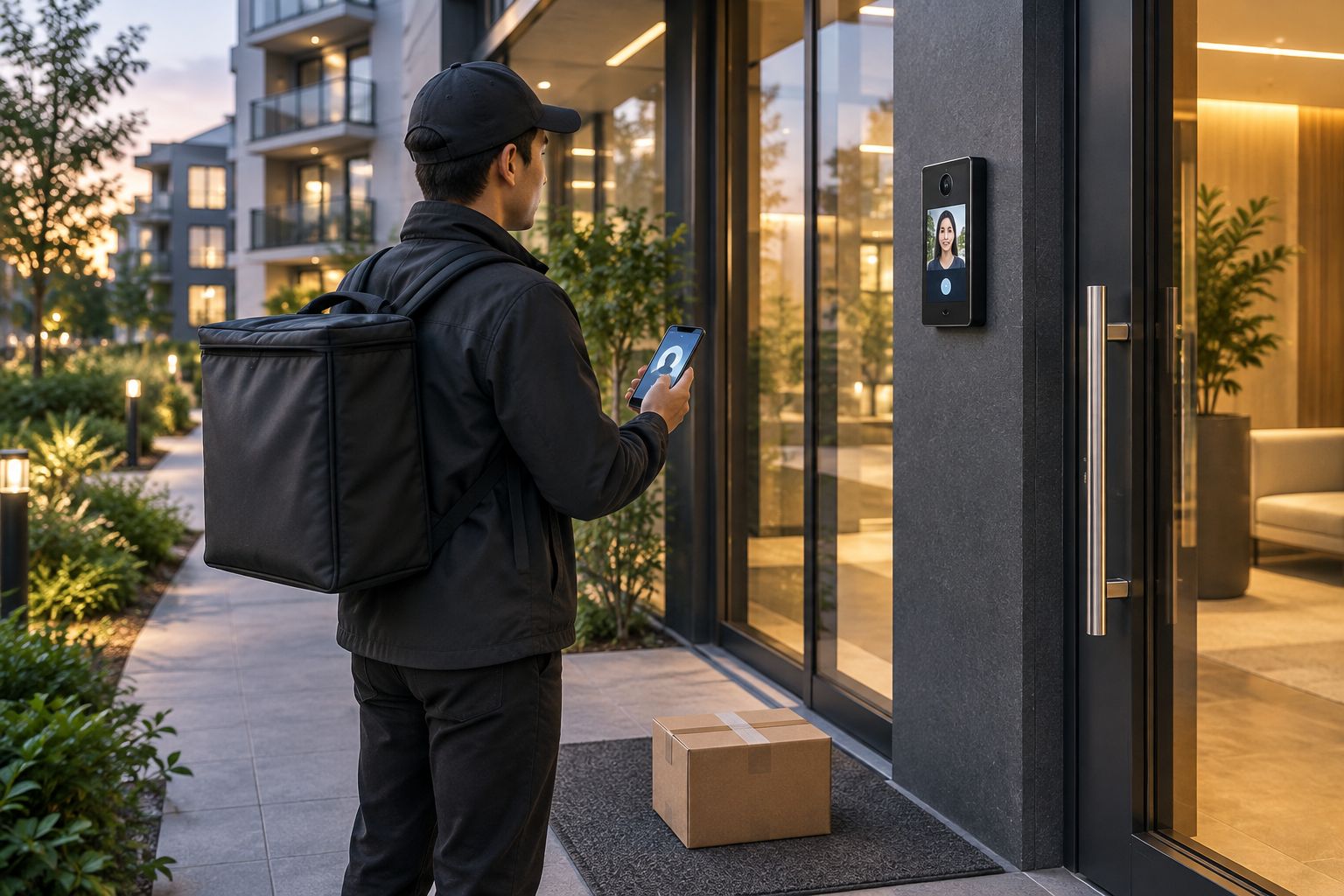
A video intercom at the main entrance lets a resident see and buzz in a guest, delivery driver, or dog walker without walking down to the lobby. Paired with a smart lock, the same panel can grant temporary access codes to a specific visitor for a specific window of time. This is the setup most 2026 multi-family construction defaults to because it solves the package-theft complaint that dominates online reviews for older buildings.
Video intercom pros:
- Residents see who they're letting in before unlocking anything
- Property staff get a log of every entry and buzz-in
- Reduces the "door propped open for a delivery" habit that undermines every other security measure
Video intercom cons:
- Installation on older buildings needs low-voltage wiring, which adds labor time
- A dead internet connection at the panel can knock out remote unlock features
- Higher upfront hardware cost per entry point than a standalone keypad
Best for: buildings with a single main entrance and consistent guest or delivery traffic. Verdict: Install now if visitor volume is your biggest complaint.
2. Key fob / proximity card: best access control for high tenant turnover
A fob or card system reads a credential at the door and checks it against a list managed from a computer or app. When a tenant moves out, staff deactivate that one card — the lock itself never changes. That single feature is why fob systems dominate large apartment complexes where move-outs happen every month.
Key fob pros:
- No rekeying labor after every lease turnover
- Entry logs show exactly who came through which door and when
- Lost or stolen fobs deactivate in seconds from a management dashboard
Key fob cons:
- Tenants lend fobs to friends or family, which the system can't stop on its own
- Cards can be cloned with cheap equipment if the reader technology is outdated
- Every exterior and common door needs its own reader, which adds up on a large property
Best for: complexes with 20+ units and regular tenant turnover. Verdict: Install now for any property with more than one lease turning over per month.
3. Keypad / PIN entry: best access control system for a tight budget
A keypad lock uses a numeric code instead of a physical key or card. It's the least expensive way to add access control to a shared entry or amenity door, and it doesn't require residents to carry anything extra. Apex Lock N Key installs these on common doors, laundry rooms, and side entrances where a full fob system isn't worth the cost.
Keypad pros:
- Lowest hardware and installation cost on this list
- No credential to lose, since the code lives in someone's memory
- Codes change in minutes without new hardware
Keypad cons:
- Codes get shared between tenants and eventually spread beyond the building
- No individual entry log unless the model supports user-specific codes
- Requires a strict rotation policy or the security benefit disappears within months
Best for: small to midsize complexes or single shared-door installations. Verdict: Install now for secondary doors; pair with a fob system on the main entrance for larger buildings.
4. Mobile credential (app-based) entry: best for newer, tech-forward buildings
Mobile credential systems turn a resident's smartphone into the access key over Bluetooth or Wi-Fi. Property managers issue and revoke access from a dashboard the same way they would with fobs, but there's no physical card to print or replace. This system fits newer construction and renovated buildings marketing themselves on convenience.
Mobile credential pros:
- No physical credential to lose or clone
- Access changes push instantly to a tenant's phone
- Reduces the front-desk workload of issuing and collecting fobs
Mobile credential cons:
- Fails when a resident's phone battery dies at the door
- Older residents or visitors without smartphones need a workaround
- Depends on the building's Wi-Fi or cellular coverage at each entry point
Best for: newer buildings with a tech-comfortable resident base. Verdict: Consider as a secondary layer alongside a fob or keypad backup, not a sole system.
5. Biometric access: best for high-security amenity spaces
Biometric readers use a fingerprint or similar scan instead of a credential. They show up in apartment complexes at fitness centers, package rooms, and mechanical or data closets where only staff or specific residents should ever get in. This isn't a front-door solution for most properties — it's a targeted fix for one or two high-value rooms.
Biometric pros:
- Cannot be lost, shared, or handed to a guest
- Removes the credential-sharing problem entirely
- Strong fit for rooms holding equipment, packages, or building infrastructure
Biometric cons:
- Highest per-door hardware cost on this list
- Scan speed slows down traffic during peak hours, like right after work
- Not practical to install at every unit door in a large complex
Best for: amenity rooms, package rooms, and mechanical spaces, not every unit. Verdict: Situational — install at one or two high-value doors, skip for general unit access.
6. Master key + mechanical hybrid: best backup for power-outage reliability
A well-designed master key systems for multi-unit apartment buildings setup lets staff enter any unit in an emergency using a graduated key hierarchy, while each tenant keeps their own individual key. Even buildings that go fully digital on the front door usually keep a mechanical master key system as backup, since a mechanical lock never depends on power or a network connection.
Master key hybrid pros:
- Works with zero electricity and zero network, every time
- Staff retain emergency access without needing every tenant's digital credential
- Lower recurring cost than maintaining electronic hardware at every door
Master key hybrid cons:
- Rekeying after a lost key is manual, one unit at a time
- No entry log — a mechanical key leaves no digital trail
- Doesn't solve visitor management or package theft on its own
Best for: older buildings and any property that wants a fail-safe layer under a digital system. Verdict: Keep as backup even after installing a digital system — never remove it entirely.
How this list was ranked
Each system was measured against the six criteria above: power-outage reliability, tenant turnover ease, visitor management, remote management, hardware integration, and ongoing credential cost. No system wins every category, which is why the ranking sorts by use case instead of naming one universal winner.
Which access control system should you choose in 2026?
For a mid-to-large complex with a single main entrance and regular deliveries, video intercom plus a smart lock is the strongest default pick for 2026. Buildings with more than one turnover a month should add a key fob system to the common doors. Smaller properties on a tighter budget get most of the benefit from a keypad on shared entries, backed by a mechanical master key system that never depends on power.
Get your apartment complex assessed
Licensed installation for fob, keypad, intercom, and master key systems in Middlesex County.
FAQ
What's the best access control system for apartment complexes in 2026?
Video intercom paired with a smart lock at the main entrance is the strongest overall pick for 2026 because it handles visitor and delivery traffic that older systems can't. Buildings with frequent tenant turnover often add a key fob system on top for individual access control.
Is a key fob system better than a keypad lock for apartment buildings?
Key fobs are better for buildings with regular tenant turnover because a lost or returned fob deactivates instantly without rekeying. Keypads cost less upfront but need a strict code-rotation policy since codes tend to spread between tenants.
Does access control still work during a power outage?
Most electronic systems, including fobs, keypads, and mobile credentials, lose function without power unless the building has battery backup at each door. A mechanical master key system is the only option that works with zero electricity, which is why it stays installed as a backup even in fully digital buildings.
Can property managers manage access remotely?
Yes, fob, keypad, and mobile credential systems all support remote management from a dashboard or app, letting staff add or revoke access without visiting the door. Mechanical master key systems don't offer this feature since there's no digital component to manage.
How much does it cost to install access control at an apartment complex?
Cost depends on the number of doors, the system type, and whether existing wiring can be reused, so figures vary property to property. A licensed locksmith can walk the site and price the job based on the actual door count and hardware chosen.
Should older apartment buildings replace mechanical master keys entirely?
No, mechanical master key systems should stay in place as a backup even after adding a digital system, since they work without power or network access. Replacing them entirely removes the only access method that survives an outage.
Do you need a licensed locksmith to install access control systems?
Yes, sizing a master key hierarchy, wiring an intercom, or setting up fob credentials correctly requires licensed locksmith work, not general contracting. A poorly installed system creates security gaps that show up months later, usually after a lockout or a lost credential.
What's the most secure access control option for shared amenity spaces?
Biometric access control is the most secure option for amenity rooms, package rooms, and mechanical spaces because a fingerprint can't be lost, shared, or loaned to a guest. It's not practical for every unit door, but it fits high-value shared spaces well.
One last thing
The system most apartment complexes get wrong isn't the front door — it's the amenity room. Buildings that spend the whole budget on a video intercom lobby often leave the gym, package room, and mechanical closet on a shared keypad code that every resident has memorized by year two. Lock down the high-value shared spaces with their own credential, even if it's just a separate keypad code from the front entrance.


