
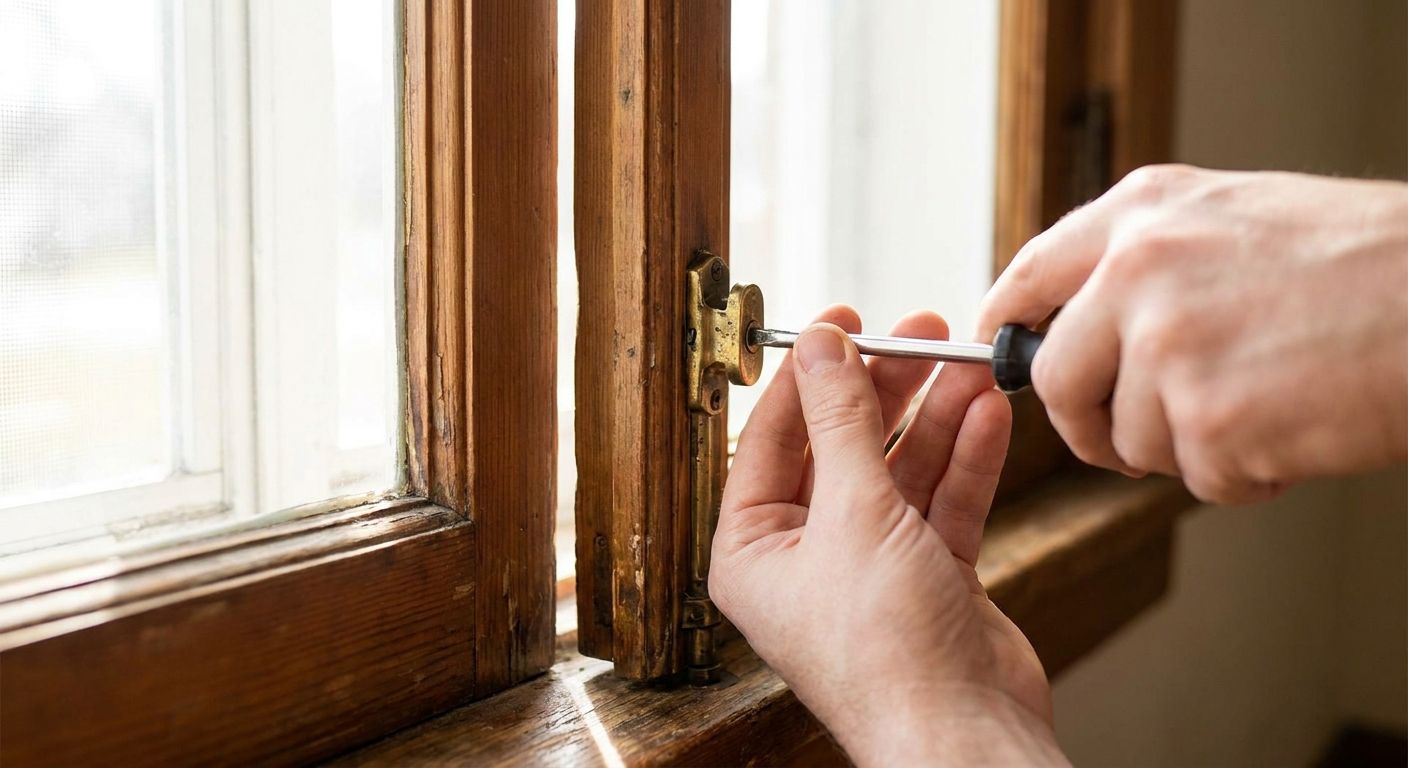
Window lock repair for older homes fixes stuck sash locks, worn crank mechanisms, and warped frame hardware so windows latch tight again without tearing out the whole window. Pre-1980s housing stock in Middlesex County brings problems newer construction doesn't: swollen wood sashes, nonstandard screw spacing, and decades of paint sealing locks shut.
- Window lock repair on older homes starts with cleaning and lubrication, not replacement hardware.
- Stripped screws and cracked strike plates need a licensed locksmith, not a bigger screwdriver.
- Match replacement sash locks to the original screw pattern - older frames rarely fit modern standard spacing.
- Secondary locks like pin stops add security without replacing hardware that still technically works.
- Apex Lock N Key handles window lock repair as part of broader home security work in Middlesex County.
Why window lock repair matters for older homes
A window that won't lock is a security gap most homeowners don't notice until a break-in or a home inspection flags it. Older frames settle over decades - wood shrinks in summer, swells in winter, and the sash lock that worked fine in 1995 stops catching by 2026.
The fix usually isn't a new window. It's cleaning, realigning, or swapping the lock hardware itself, and knowing when the problem has moved past a DIY job. Apex Lock N Key handles window lock repair as part of residential security work across Middlesex County, and the pattern is consistent: most stuck locks are a hardware or alignment problem, not a frame problem.
Inspect your existing window lock hardware
Start here before buying anything.
- Check sash locks and cam locks for rust, paint buildup, or stripped screws
- Test crank mechanisms on casement windows for grinding or slipping under load
- Look for gaps between sash and frame that keep the lock from catching fully
- Note if screws are stripped or the wood around the strike plate has softened
- Check storm windows and secondary locks separately - they fail on their own schedule
Clean and lubricate stuck mechanisms
Most stuck window locks are a dirt problem before they're a hardware problem.
- Scrape paint buildup off cam locks and strike plates with a utility blade, not a screwdriver
- Use a dry lubricant - graphite or silicone spray - instead of oil, which collects grit and gums up
- Work the mechanism open and closed a dozen times to break loose old, hardened lubricant
- Wipe off excess lubricant so it doesn't stain wood sills or window trim
- Test the lock through a full closure cycle, not just halfway
Realign warped sashes and frames
A lock that won't catch is often a frame that's shifted, not a broken latch.
- Loosen and reset hinge screws on casement windows that no longer sit flush against the frame
- Sand down swollen wood edges on double-hung sashes that stick before the lock even engages
- Shim behind the strike plate if the sash has settled over the decades
- Check storm windows against the primary sash before assuming the lock itself is the problem
Replace worn cam locks and sash latches
Once cleaning and realignment don't solve it, the hardware itself needs replacing.
- Match new hardware to the existing screw pattern - older sashes often use nonstandard spacing that modern hardware store kits don't fit
- Swap stamped-metal cam locks for solid brass or zinc-alloy versions that resist bending under repeated use
- Replace both halves of a sash lock (keeper and latch) together - replacing only the broken side leaves a mismatch
- On sliding windows and patio-style openings, hardware fails the same way sliding glass doors do - see sliding glass door lock installation and repair for the same failure pattern
- Test the new lock through a full open-close cycle before calling the job finished
Add secondary security hardware
This is where a faster, professional option starts to make sense over more DIY trial and error.
- Install pin locks or sash stops that let a window crack open for ventilation without fully unlocking it
- Add track locks on sliding windows so the sash can't be forced open even if the primary lock is defeated
- Skip secondary hardware on egress windows in bedrooms - it can block a fire escape route if installed wrong
- Treat window locks as one piece of a bigger plan, not a standalone fix
“If a screwdriver can't get purchase on the screw anymore, stop forcing it - that's a service call, not a bigger screwdriver.”
Bring in a licensed locksmith for stuck or stripped hardware
- Call when screws are stripped past the point a screwdriver can grip
- Call when the sash lock housing is cracked or the strike plate has pulled out of rotted wood
- A licensed locksmith stocks replacement hardware sized for older sash and casement styles that big-box stores don't carry
- Get a same-visit quote before work starts so there's no surprise line item once the job is underway
Schedule a seasonal maintenance check
- Recheck lock function each fall before storm windows go up and each spring after they come down
- Re-lubricate after winter humidity swings, the single biggest cause of stuck sashes in older New England homes
- Walk every window in the house, not just the ones used daily - unused windows fail quietest
- Log which windows needed work in 2026 so repeat failures get flagged early next season
Comparing your window lock repair options
| Option | Best For | Key Limitation |
|---|---|---|
| DIY cleaning and lubrication | Loose or sticky locks with no visible damage | Doesn't fix stripped screws or bent frames |
| Replacement sash or cam lock hardware | Locks that no longer catch or align at all | Needs to match old screw spacing, a common snag in pre-1980s homes |
| Secondary window locks (pin locks, sash stops) | Adding security without replacing working hardware | Adds a manual step every time the window opens |
| Licensed locksmith repair | Stripped screws, warped frames, mechanisms that won't budge | Requires a service call rather than a weekend project |
| Full window replacement | Frames too rotted or warped to hold any hardware | Highest cost and disruption - a window contractor job, not a locksmith job |
Get window lock hardware fixed right
Stripped screws or a cracked strike plate need a service call, not a bigger screwdriver.
Common mistakes homeowners make in older houses
- Painting over a stuck lock instead of freeing it first, which seals the failure in place for the next owner to find
- Using WD-40 or household oil on cam locks - it gums up with dust and grit within a season instead of a dry lubricant
- Replacing only the visible half of a sash lock instead of both keeper and latch, which leaves a mismatched fit
- Ignoring storm and secondary window locks because the primary sash lock looks fine on inspection
- Forcing a stripped screw with a bigger screwdriver instead of re-threading the hole or replacing the strike plate
FAQ
What's the best way to fix a window lock that won't catch in an older home?
Clean and lubricate the mechanism first with a dry lubricant, then check sash alignment before replacing hardware. Most stuck locks in older homes are a dirt or alignment problem, not a broken part.
Is window lock repair cheaper than replacing the whole window?
Yes, repairing or replacing sash lock hardware is almost always cheaper than a full window replacement. A full replacement only makes sense when the frame itself is too rotted or warped to hold hardware.
How much does window lock repair cost in Massachusetts in 2026?
Cost depends on how many windows need work and whether hardware needs to be custom-matched to an older frame. Get a same-visit quote from a licensed locksmith before work starts so there's no surprise line item.
Can a locksmith fix window locks, or do I need a window contractor?
A licensed locksmith handles sash locks, cam locks, and crank mechanisms. A window contractor is only needed when the frame itself is rotted or structurally compromised.
Why do window locks stick more in winter?
Wood sashes swell with winter humidity and shift the alignment between the lock and strike plate. Re-lubricating each fall before the weather turns is the single most effective preventive step.
Should I replace both sides of a sash lock or just the broken one?
Replace both the keeper and the latch together. Mixing an old keeper with a new latch is a common cause of locks that look fixed but don't catch reliably.
Are secondary window locks worth adding to an older home?
Yes, for windows on ground floors or near fire escapes and porches. Skip them on bedroom egress windows unless installed by someone who accounts for fire code exit requirements.
How often should window locks be inspected in an older home?
Twice a year, in fall before storm windows go up and in spring after they come down. Older homes see the fastest hardware wear from seasonal humidity swings, not daily use.
One last thing
The window that fails first in an older home is rarely the one used every day - it's the spare bedroom or basement window nobody touches, where paint and rust build up undisturbed for years. Check those first, not the kitchen window you open every summer.


