
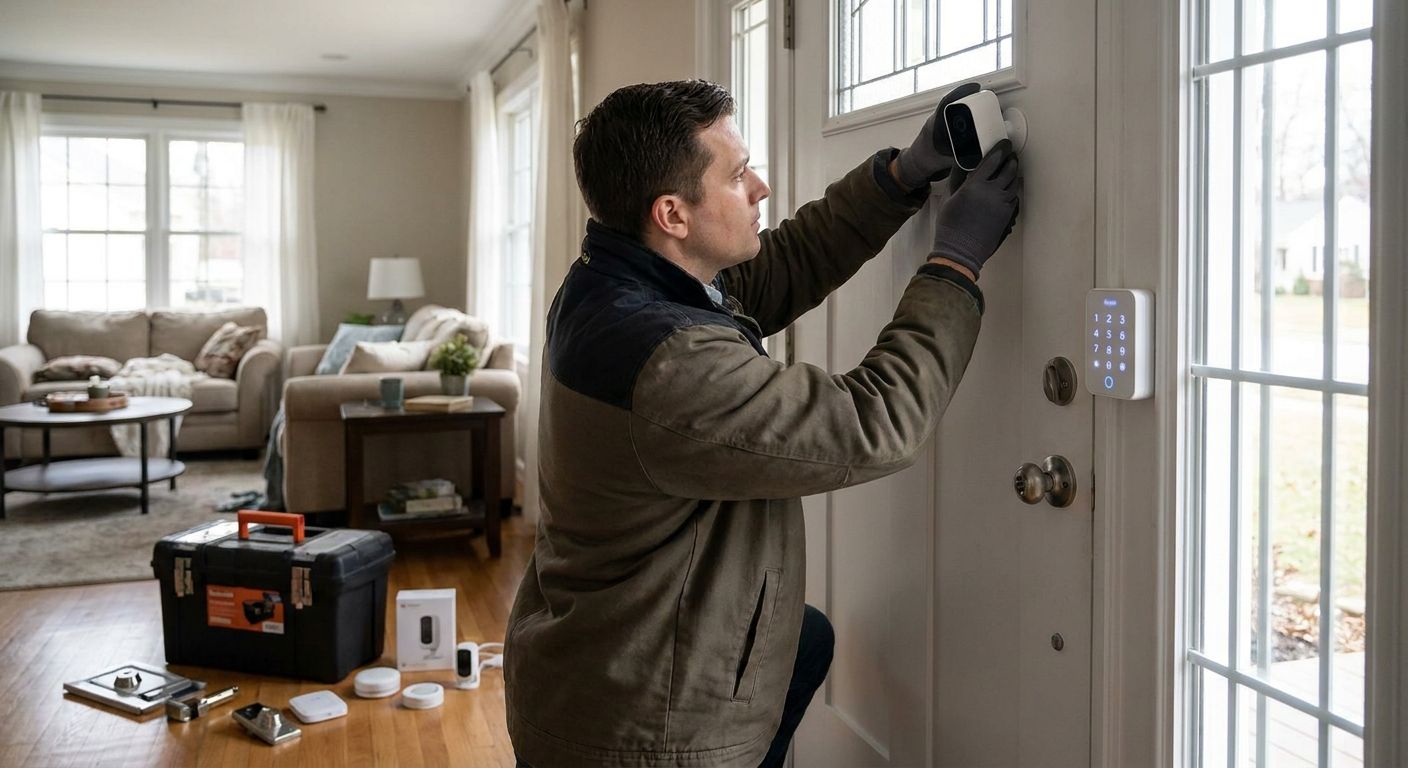
A break-in changes what "secure" means for your home—the locks a burglar already tested no longer count as protection, and this guide walks through exactly what to change first, second, and last in 2026.
- Rekey or replace every exterior lock within 24 hours of a break-in — don't wait for insurance approval.
- Electronic deadbolts with audit logs beat standard keyed locks for tracking who enters after 2026.
- Reinforce strike plates and door frames; most forced entries exploit weak hardware, not weak locks.
- A licensed locksmith documents damage for your claim and closes the same-day security gap in one visit.
Why this matters
A burglar who's been inside your home knows your floor plan, your hiding spots, and possibly copied a key before leaving. Standard renter's and homeowner's insurance policies in Massachusetts often ask for proof of a security upgrade before finalizing a burglary claim, and departments generally recommend rekeying or replacing locks immediately after any forced or unauthorized entry.
The locks themselves are rarely the failure point — door frames, strike plates, and hollow-core doors get kicked in far more often than deadbolts get picked. Fixing only the lock and ignoring the frame leaves the same weakness in place for round two.
What you'll need
- A licensed, insured locksmith or a new hardware set (grade 1 or grade 2 deadbolt)
- Photos of all damage for your insurance claim, taken before repairs start
- A full inventory of who currently holds keys — family, dog walker, cleaner, landlord
- A police report number if you filed one
- Basic tools if you're doing frame reinforcement yourself: drill, 3-inch screws, tape measure
- Budget for at least one electronic deadbolt if you're upgrading beyond a standard rekey
The steps
1. Rekey or replace every exterior lock immediately
This is the non-negotiable first move. If a key was taken, copied, or even briefly out of your control, the existing lock is compromised regardless of how new or expensive it is.
Residential rekeying after a break-in or attempted burglary resets every exterior cylinder to a new key pattern, usually in under an hour per door. Do this before you sleep in the house again — not next week. Common mistake: rekeying only the front door and leaving the back door or garage entry on the old key.
2. Inspect and reinforce door frames and strike plates
A kicked-in door usually fails at the strike plate screws, not the deadbolt. Standard builder-grade strike plates use 3/4-inch screws that barely reach the frame; swap them for 3-inch screws that bite into the wall stud.
Check for splintering around the jamb — even hairline cracks mean the frame won't hold under a second attempt. Expected outcome: the door resists a shoulder-check without flexing. Common mistake: reinforcing the strike plate but ignoring a hollow-core door that a fist can punch through.
3. Decide whether to rekey or fully replace the lock hardware
If the lock itself was damaged, drilled, or pried during the break-in, rekeying won't fix a bent cylinder or a cracked housing — you need new hardware. If the hardware is intact and only the key security is in question, rekeying is faster and cheaper.
How to choose between rekeying and replacing a lock breaks down which situation applies to you. Verdict: inspect the lock face and bolt for visible damage before you decide — don't guess.
4. Upgrade to an electronic deadbolt for entry tracking
A standard key can be copied without your knowledge; a code or app-based deadbolt logs every entry with a timestamp. After a break-in, that audit trail matters if you need to prove who was in the house and when.
Electronic deadbolt installation for homeowners covers setup on your existing door prep in most cases, meaning no carpentry required. Expected outcome: a unique code for each family member, changeable in seconds if one is ever shared. Common mistake: buying a smart lock online and skipping professional installation, which leaves the door misaligned and the bolt not fully seated.
5. Secure windows and secondary entry points
Sliding doors and ground-floor windows are the second most common entry point after doors. A window pin or secondary lock costs little and stops a slider from being jimmied off its track.
Walk the full perimeter of the house, not just the door that was forced. Common mistake: upgrading the front door lock and leaving a garage side-door on its original 1990s hardware.
6. Add exterior lighting and visible camera coverage
Motion-activated lighting at every entry point removes the cover of darkness that most break-ins rely on. Pair it with a visible camera at the front and back doors — visibility alone deters a repeat attempt more than any single lock upgrade.
Expected outcome: no dark approach path to any door on the property. Common mistake: installing cameras but leaving the footage unmonitored and unbacked-up.
7. Update your key inventory and revoke old access
After rekeying, make a fresh list of exactly who has a key or code and why. Contractors, former roommates, and old cleaning services accumulate access over years — a break-in is the natural point to reset that list to zero and reissue deliberately.
Common mistake: rekeying the house but handing out copies of the new key just as loosely as the old one.
Get your locks changed today
Licensed, insured, and available 24/7 across Middlesex County, MA.
Troubleshooting
My insurance company wants proof of a security upgrade before paying the claim. Ask the locksmith for an itemized invoice listing the new hardware and installation date — that's the documentation most Massachusetts adjusters ask for.
I'm not sure what a rekey versus a full lock replacement will cost. How much does a locksmith cost to rekey a house lays out 2026 pricing ranges so you can budget before the appointment, not during it.
The lock was damaged during the break-in and won't turn at all. Don't force it — a jammed or bent cylinder needs extraction, and forcing a broken lock often snaps the key inside, turning a repair into an emergency.
I'm a renter and my landlord hasn't approved a lock change yet. Massachusetts tenants generally have a right to reasonable security measures after a break-in; document the incident and request the change in writing the same day.
I got quotes that vary wildly for the same job. How to spot a locksmith scam before you get overcharged covers the red flags — vague phone quotes, cash-only demands, and unmarked vehicles are the biggest ones.
My smart lock won't pair with the app after installation. Most connectivity failures trace back to Wi-Fi range at the door, not the lock itself — a signal extender near the entry usually fixes it.
Tools and resources
- A licensed locksmith with same-day availability for the rekey and hardware inspection
- 3-inch wood screws for strike plate reinforcement
- A motion-activated exterior light fixture for each entry point
- Your homeowner's or renter's insurance claim number and adjuster contact
- A written key/code inventory, updated the day locks change
What to do next
Once the immediate locks are handled, walk through a full perimeter review rather than stopping at the door that was forced — a burglar who tested one entry point often knows about the weak ones too. If you haven't decided between a straight rekey and a hardware upgrade yet, the rekey-versus-replace guide above is the read to make before you call anyone out.
FAQ
What's the first thing to do for home security after a break-in?
Rekey or replace every exterior lock within 24 hours, since any key that was taken or copied during the break-in makes the old lock useless as protection. Follow that with a frame and strike plate inspection before anything else.
Is rekeying enough after a break-in, or do I need new locks entirely?
Rekeying is enough if the lock hardware itself wasn't damaged during the break-in — it resets the key pattern without replacing the mechanism. If the cylinder was drilled, pried, or bent, you need full hardware replacement instead.
How much does it cost to upgrade home security after a break-in in 2026?
Rekeying typically costs less than full lock replacement, and pricing varies by number of doors and hardware grade. Check current 2026 rates before budgeting for the full job, including any electronic deadbolt upgrade.
Are electronic deadbolts better than traditional locks after a break-in?
Electronic deadbolts add entry logging and code-based access that traditional keyed locks can't match, which matters when you need to track who enters after an incident. They cost more upfront but remove the risk of an uncopied key going missing again.
Should I call my insurance company before or after changing the locks?
Change the locks immediately and photograph the damage first — don't wait on insurance approval to secure the house. File the claim with those photos and the locksmith's invoice as documentation.
How long does it take to rekey a house after a break-in?
A licensed locksmith typically rekeys a full house of exterior doors in under two hours, often finishing a standard three-door home in one visit. Same-day and emergency service is standard after a break-in.
Can a landlord refuse to change locks after a break-in?
Massachusetts tenants generally have a right to reasonable security measures after a break-in, and most landlords approve a lock change quickly when notified in writing. Document the request and the incident the same day it happens.
What's the most common mistake homeowners make after a break-in?
Rekeying the front door and skipping the back door, garage entry, or shed — burglars who return often target the entry point that wasn't touched. A full-perimeter rekey closes that gap in one visit.
One last thing
The strike plate screws holding your deadbolt in place are probably the shortest, weakest part of the entire door assembly — swapping them for 3-inch screws that reach the framing stud takes ten minutes and stops more forced entries than a lock upgrade alone ever will. Do both, not one.


