
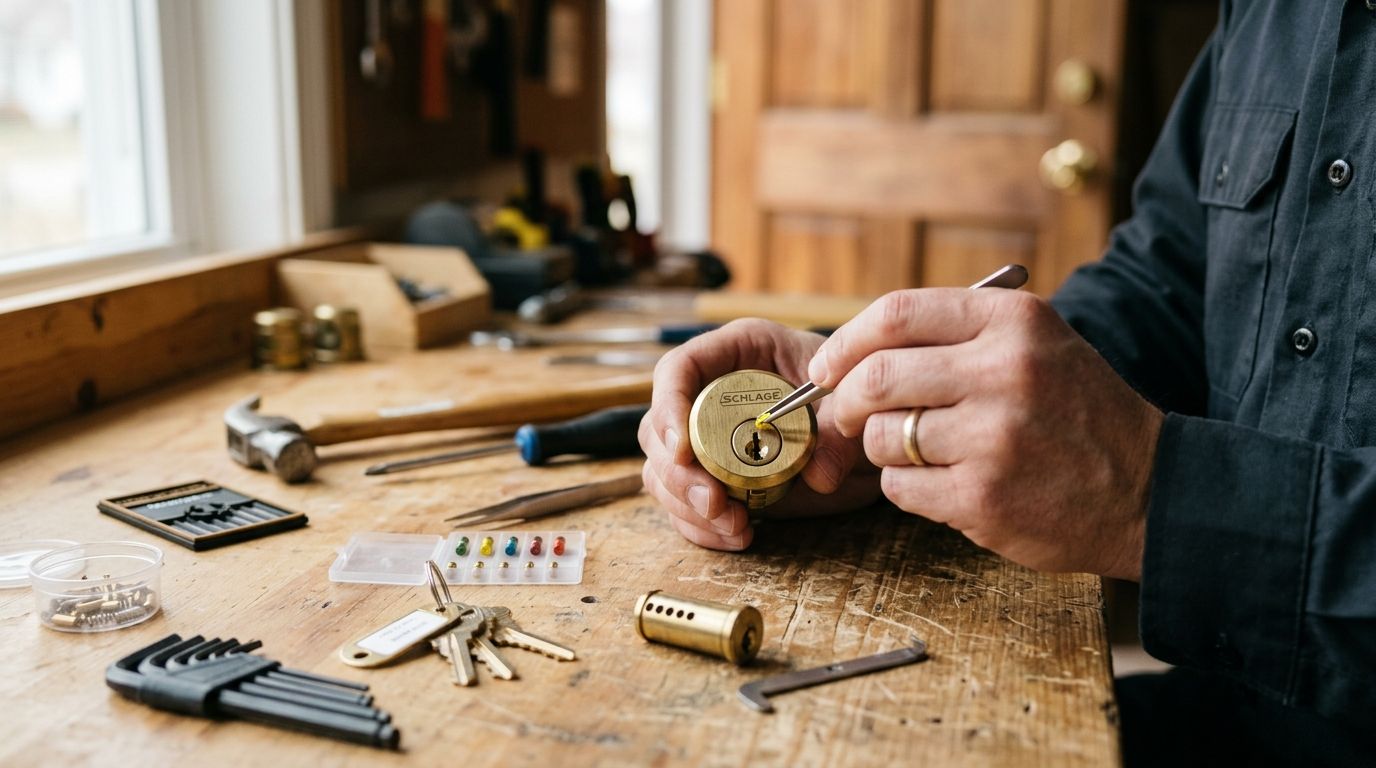
Rekeying a lock yourself is realistic if you already own a working key and buy a rekeying kit that matches your cylinder brand — Kwikset SmartKey locks rekey in under 10 minutes with no tools beyond the small key that ships with the lock, while a traditional Schlage-style pin-tumbler lock takes 20 to 30 minutes with a $15-range rekey kit and a bit of patience. The catch nobody mentions upfront: if you don't have a working key already, rekeying isn't an option at all — you need a locksmith to pick or drill the cylinder before any rekeying can happen.
- Rekeying a lock yourself works only if you already have a functioning key for that lock in 2026.
- Kwikset SmartKey locks rekey in under 10 minutes with no separate kit required.
- Traditional pin-tumbler locks (Schlage, Baldwin, most deadbolts) need a rekey kit and 20-30 minutes per lock.
- No working key means no DIY rekey — that's a lockout job for a locksmith, not a rekeying job.
- Apex Lock N Key handles residential rekeying across Middlesex County, MA when the DIY route hits a wall.
Why this matters
Rekeying changes which key opens a lock without replacing the hardware — you're swapping the internal pins, not the deadbolt or knob. That matters after you move into a new place, after a roommate leaves with a key, or after you've lost track of who has copies. It's cheaper than replacing the lock entirely, and in 2026 most hardware stores stock rekey kits for the major cylinder brands.
The skill ceiling is low for the right lock and high for the wrong one. A Kwikset SmartKey lock was engineered specifically for homeowner rekeying — no cylinder removal, no loose pins to lose in the carpet. A standard pin-tumbler lock asks you to disassemble a cylinder, track five or six tiny springs and pins, and reassemble it correctly, or the lock won't turn at all.
How to rekey a lock yourself
The process splits into two paths depending on your lock brand. Both assume you're starting with a key that currently works.
Kwikset SmartKey (no rekey kit required):
- Insert your current working key and turn it 90 degrees toward the unlocked position — don't remove it yet.
- Insert the SmartKey rekeying tool into the small hole on the side of the cylinder face until it stops, then pull it straight out.
- Remove the old key and insert your new key, turning it back to the upright, vertical position.
- Remove the new key and test it. The lock is now rekeyed to that key only.
Traditional pin-tumbler lock (Schlage-style, needs a rekey kit):
- Remove the cylinder from the door by unscrewing the mounting plate and pulling it free.
- Insert the kit's plug follower behind the plug and push the plug out of the housing, keeping the follower in place so springs don't scatter.
- Tip out the old springs and top pins and set them aside — you won't reuse them.
- Insert your new key into the plug and drop matching bottom pins into each chamber, checking the kit's bitting chart against the key's cuts.
- Reinstall the top pins and springs, cap the housing, and slide the plug back into the cylinder.
- Reinstall the cylinder in the door and test with both keys — the old key should no longer turn, the new one should turn smoothly.
If a pin gets stuck or the plug won't rotate after reassembly, stop and recheck the bitting chart before forcing anything. Forcing a misaligned plug is how a rekey job turns into a locksmith cost to rekey a house instead of a $15 DIY fix.
Kwikset SmartKey: the fastest DIY rekey
Kwikset built the SmartKey line around homeowner rekeying, which is why it skips the kit entirely. You need the small SmartKey learning tool that comes packaged with the lock, a working key, and the new key you want it to accept. There's no cylinder to remove and no pins to lose — the whole job happens through a single access hole on the lock face. This is the version of DIY rekeying that's genuinely low-risk for a first-timer in 2026.
Traditional pin-tumbler locks: rekey with a kit
Schlage, Baldwin, and most standard residential deadbolts use pin-tumbler cylinders, and rekeying them means physically swapping pins to match a new key's cuts. A universal rekey kit covers the common pin sizes for these brands, but the process rewards patience — working over a towel or shallow tray keeps dropped pins from disappearing. Budget the full 20 to 30 minutes per lock, especially the first time.
Why rekeying difficulty varies
- Lock brand and mechanism — SmartKey locks skip disassembly entirely; standard pin-tumbler locks don't.
- Whether you have a working key — no key means no DIY option, period.
- Number of locks to match — rekeying four exterior doors to one key takes four times as long as rekeying one.
- Pin count and security pins — high-security cylinders often use spool or serrated pins that are harder to seat correctly.
- Prior modifications — a lock that's been rekeyed before or has worn pins can bind even with a correct kit.
- Tool availability — a proper plug follower prevents the spring-scatter problem that derails most first attempts.
“If you don't have a working key already, you don't have a rekeying job — you have a lockout.”
That distinction is the whole decision tree. New homeowners closing on a house in 2026 usually inherit a working key from the seller, which makes DIY rekeying straightforward — see the notes on rekeying after closing on a new home for what to check before you start. Locked out with no key at all is a different call entirely.
Before you buy a kit, it's worth lining up what you'll actually need on the day — a checklist for prepping a locksmith visit covers the same groundwork whether you're doing it yourself or handing it to a pro.
Rekey gone sideways? Call a pro.
Licensed, 24/7 residential rekeying across Middlesex County, MA.
Can you rekey a lock without the original key?
No — rekeying requires a working key to set the new pin configuration, so without one you need a locksmith to pick, bump, or drill the lock open first. Once it's open, a locksmith can rekey it on the spot using the new key you want to keep. This is the single most common reason a DIY rekey attempt stalls before it starts.
Is rekeying a lock the same as replacing it?
Rekeying is not the same as replacing a lock — rekeying swaps the internal pins so a new key works while the hardware stays the same, and replacing means installing an entirely new lock body. Rekeying costs less and takes less time, but it only works on locks in good mechanical condition; a worn or damaged cylinder needs replacement instead.
How long does it take to rekey a lock yourself?
Rekeying a lock yourself takes about 10 minutes for a Kwikset SmartKey lock and 20 to 30 minutes for a traditional pin-tumbler lock once you have the right kit. First attempts run longer — budget extra time if you're rekeying more than one door to match a single key.
FAQ
How much does it cost to rekey a lock yourself in 2026?
A universal rekey kit for a pin-tumbler lock runs in the range of a single hardware store purchase, and Kwikset SmartKey rekeying needs no kit at all beyond the tool included with the lock. Hiring a locksmith costs more but covers labor, diagnosis, and multiple locks matched to one key.
What tools do I need to rekey a lock myself?
A Kwikset SmartKey lock needs only the small learning tool packaged with it and your current key. A traditional pin-tumbler lock needs a rekey kit with a plug follower, replacement pins, and a bitting chart matched to your key's cuts.
Can I rekey a Schlage lock without a locksmith?
Yes, if you have a working key and a compatible rekey kit — the process takes about 20 to 30 minutes per lock and involves removing the cylinder, swapping the pins, and reassembling it. Skip this if the cylinder shows visible wear or the plug won't turn smoothly beforehand.
What happens if I rekey a lock wrong?
A misaligned pin or spring usually means the plug won't turn with either the old or new key, locking you out of a lock that used to work. At that point the cylinder needs to be reopened and the pins reseated correctly, either by redoing the kit steps or calling a locksmith.
Do all locks in a house need to be rekeyed to the same key?
No, but most homeowners rekey every exterior door to one key for convenience — this means repeating the rekeying process on each lock rather than doing it once. A locksmith can master-key multiple doors to one key in a single visit if you'd rather not repeat the steps yourself.
Is rekeying enough after losing my house keys?
Rekeying is the standard fix after losing house keys, as long as you still have at least one working spare to start the process. Without any working key left, the lock needs to be opened by a locksmith before rekeying can happen.
One last thing
The detail most DIY guides skip: rekeying only changes which key fits — it does nothing about a compromised deadbolt, a worn strike plate, or a door that's been forced before. If your rekey job is happening after a break-in attempt or a lease change rather than routine key management, check the lock's mechanical condition first, because a pristine new pin set inside a damaged cylinder still won't secure the door.


