
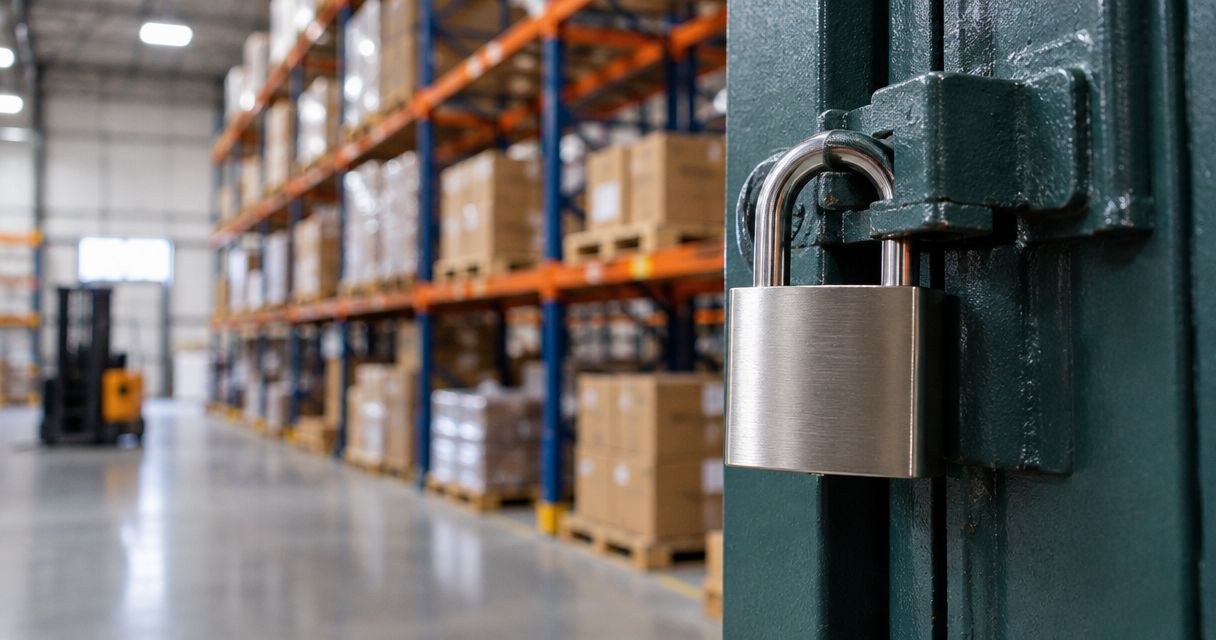
A warehouse padlock only matters the day someone tries to cut it, pick it, or pry a frozen shackle open at 6am. The Abus 83/45 hardened steel padlock is the best commercial padlock for warehouses overall in 2026, the Medeco high-security padlock is the pick for facilities that need pick-resistant, restricted-key protection, and the Master Lock Pro Series 6835 is the best budget option for warehouses with several doors to cover.
- Abus 83/45 wins overall for warehouse and storage doors on hardened steel and a disc-detainer cylinder.
- Medeco padlocks are the pick for high-security compliance thanks to a UL 437-listed, restricted keyway.
- Master Lock Pro Series 6835 is the budget option for warehouses covering many doors on one order.
- American Lock A700 handles exposed gates and New England winters better than standard padlocks.
- Mul-T-Lock padlocks fit best into a master key system across multiple warehouse entrances.
Why this matters
A loading dock roll-up door and a chain-link gate don't fail the same way. One gets attacked with bolt cutters, the other gets shimmed or picked because nobody upgraded the padlock past what came free with the hasp.
Commercial padlocks are rated under two different standards worth knowing: ASTM F883 covers general padlock performance, while UL 437 is the listing that matters for high-security applications like restricted keyways and pick resistance. In Middlesex County, add a third variable — winters that push well below 20°F, which is enough to seize a cheap shackle or crack a body that wasn't built for freeze-thaw cycles.
Apex Lock N Key installs and advises on commercial locksmith service for warehouses and distribution centers across the county, and the padlock choice below reflects what actually holds up on loading docks, storage bays, and fenced yards — not just what's cheapest at a big-box store.
“A padlock rated for a filing cabinet does nothing for a loading dock roll-up door.”
What makes the best commercial padlock for warehouses
- Shackle material and hardening — boron-alloy or hardened steel resists bolt cutters and hacksaws far better than standard steel.
- Body construction — laminated steel, solid brass, or a disc-detainer housing changes how hard the lock is to pick or shim.
- Security rating — UL 437 listing or ASTM F883 compliance signals the lock has actually been tested, not just marketed as "heavy duty."
- Weatherproofing — sealed cylinders and rust-resistant coatings matter for anything mounted outdoors year-round.
- Rekeying and master-key compatibility — whether the padlock can join an existing key system instead of adding one more key to the ring.
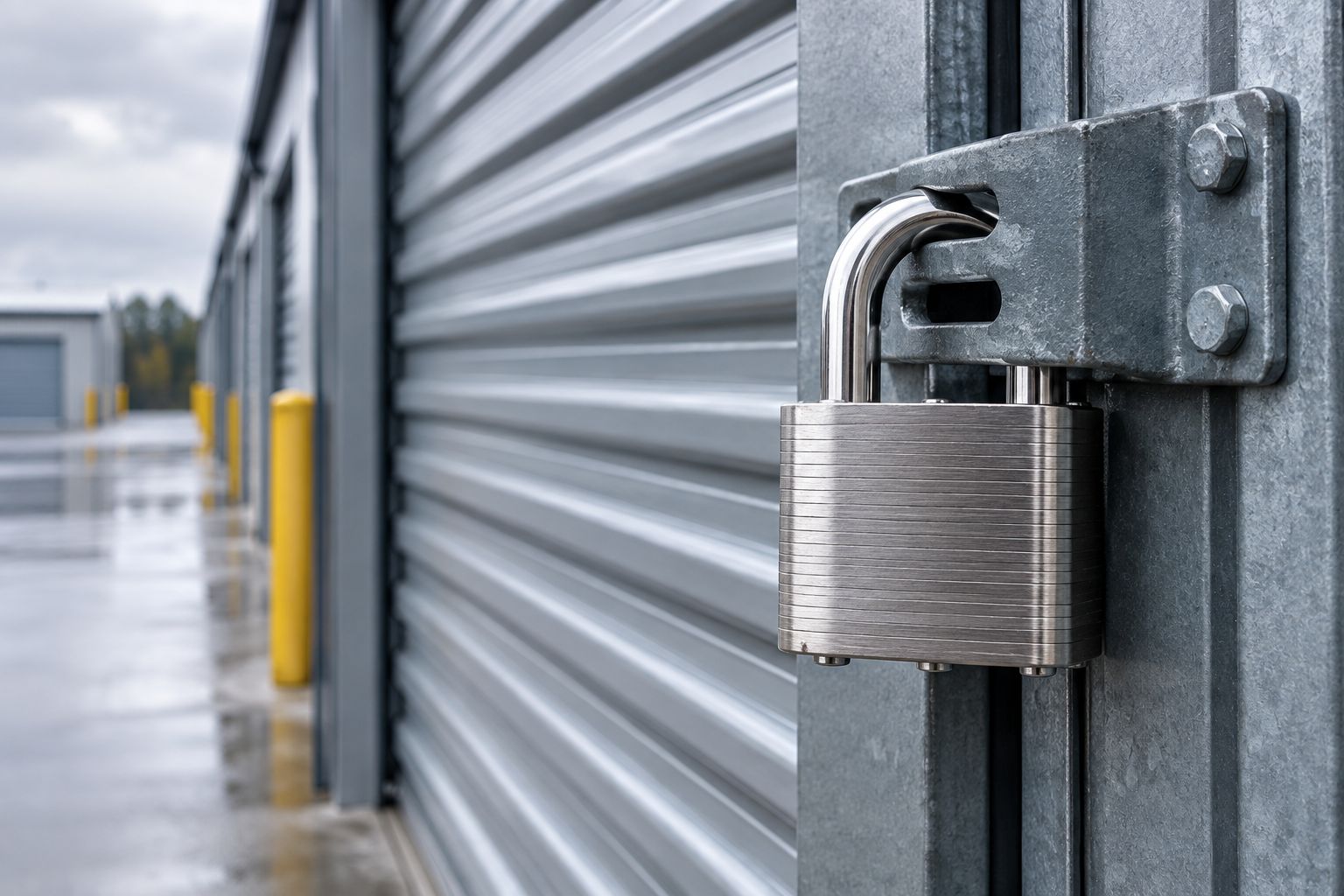
Commercial padlocks for warehouses at a glance
| Padlock | Best for | Standout feature | Key limitation |
|---|---|---|---|
| Abus 83/45 | Warehouse and storage doors overall | Hardened steel shackle, disc-detainer cylinder resists picking | Not rekeyable into a standard master system |
| Medeco high-security padlock | High-security compliance | UL 437-listed cylinder with a restricted keyway | Costs more per unit than standard commercial padlocks |
| Master Lock Pro Series 6835 | Budget coverage across many doors | Laminated steel body at a lower price point | Pin-tumbler cylinder is easier to pick than disc-detainer designs |
| American Lock A700 | Exposed gates and outdoor equipment | Weatherproof, boron-alloy shackle built for freeze-thaw cycles | Bulkier body doesn't fit every hasp |
| Mul-T-Lock padlock | Warehouses on a master key system | Telescoping pin cylinder integrates with existing master keys | Setting up the master system needs a locksmith visit |
1. Abus 83/45: best commercial padlock for warehouse and storage doors overall
The Abus 83/45 pairs a hardened steel shackle with a disc-detainer locking mechanism instead of a standard pin-tumbler cylinder, which makes it noticeably harder to pick or shim than a typical hardware-store padlock. The rubber-covered body also takes impact and weather better than bare metal, which matters on a door that gets slammed shut daily.
Abus 83/45 pros:
- Hardened steel shackle resists bolt cutters and hacksaws
- Disc-detainer cylinder is harder to pick than a standard pin-tumbler lock
- Rubber-covered body reduces rust and dent damage on exterior doors
Abus 83/45 cons:
- Not natively rekeyable into a Master Lock or Medeco keyed-alike system
- Replacement keys usually need to come from a locksmith rather than a hardware counter
Best for: warehouse roll-up doors and storage bay entrances that need one strong lock per door. Verdict: Buy.
2. Medeco high-security padlock: best for pick-resistant, restricted-key compliance
Medeco padlocks carry a UL 437-listed cylinder with a restricted keyway, meaning duplicate keys can only be cut by an authorized dealer or locksmith. Facilities with insurance-mandated security upgrades or regulated inventory tend to specify UL 437 hardware by name for exactly that reason. For a broader look at what qualifies as high-security in a commercial setting, see the best high-security lock brands for commercial buildings.
Medeco padlock pros:
- UL 437 listing satisfies insurance and compliance requirements standard padlocks don't meet
- Restricted keyway stops employees from cutting unauthorized duplicates at a hardware store
- Angled pin cylinder resists picking and bumping better than a standard tumbler
Medeco padlock cons:
- Costs more per unit than commercial-grade Abus or Master Lock options
- Replacement keys require going through an authorized dealer, which adds a step compared to a copy-anywhere key
Best for: warehouses under an insurance mandate or handling regulated inventory that needs documented key control. Verdict: Buy.
3. Master Lock Pro Series 6835: best budget padlock for multi-door warehouses
Master Lock's Pro Series line uses a laminated steel body and a boron shackle at a lower price point than the high-security brands above, which matters when a facility needs a dozen padlocks instead of one. It won't out-perform a disc-detainer or restricted-keyway lock, but it's a real step up from a consumer-grade padlock.
Master Lock 6835 pros:
- Lower per-unit cost makes outfitting many doors affordable
- Boron shackle resists cutting better than Master Lock's base consumer lines
- Widely stocked, so a damaged lock is easy to replace fast
Master Lock 6835 cons:
- Standard pin-tumbler cylinder is more pickable than the Abus or Medeco designs above
- Not UL 437 listed, so it won't satisfy strict insurance or compliance requirements
Best for: warehouses locking down many low-value doors, gates, or sheds where budget matters more than pick resistance. Verdict: Buy for volume coverage; skip it on your highest-value entry point.
4. American Lock A700: best for exposed gates and outdoor equipment in New England winters
The A700's laminated steel body and boron-alloy shackle are built for outdoor exposure, which matters on a fenced yard or chain-link gate that sits through every freeze-thaw cycle Massachusetts winters bring. Below 20°F, a cheap shackle can seize or crack; this one is designed around that swing instead of ignoring it.
American Lock A700 pros:
- Laminated steel body sheds rust better than painted or plated bodies
- Boron-alloy shackle holds up against bolt cutters and cold-weather cracking
- Common in industrial lockout/tagout programs, so parts and keys stay easy to source
American Lock A700 cons:
- Bulkier body doesn't fit every hasp or chain-link opening
- Standard keying isn't restricted, so it doesn't stop unauthorized duplication on its own
Best for: outdoor gates, fenced yards, and equipment lockers exposed to Massachusetts winters. Verdict: Buy.
5. Mul-T-Lock padlock: best for warehouses running a master key system
Mul-T-Lock's telescoping pin cylinder integrates into an existing master key system, so one authorized key opens padlocks across multiple warehouse doors without weakening security at any single entry point. It's the right call when the goal is one key hierarchy instead of a ring of mismatched padlocks. If you're setting this up for a facility with several units, master key systems for self-storage facility owners covers the same logic applied to storage sites.
Mul-T-Lock padlock pros:
- Fits into a master-keyed system alongside interior doors and gates
- Telescoping pin design resists picking better than a standard pin-tumbler cylinder
- Locksmith-controlled key blanks limit unauthorized duplication
Mul-T-Lock padlock cons:
- Setting up a master key system requires a locksmith visit, not a self-install
- Per-unit cost sits closer to Medeco than to Master Lock's budget line
Best for: multi-door warehouses or distribution centers that want one key hierarchy instead of five different padlock brands. Verdict: Buy if you already run or plan to run a master key system.
Need help choosing the right padlock?
Apex Lock N Key advises on and installs commercial security hardware across Middlesex County.
How we ranked
Every padlock above got measured against the same five criteria: shackle hardening, body construction, whether it carries a UL 437 or ASTM F883 rating, weatherproofing, and rekeying flexibility. No padlock wins on all five — the Master Lock 6835 loses on pick resistance what it gains on cost, and the Medeco loses on price what it gains on compliance. That trade-off is the point of a ranked list instead of a single "best" answer.
Which commercial padlock should you choose?
For a single warehouse door that needs to be hard to defeat, buy the Abus 83/45. If an insurer or a compliance requirement is driving the decision, buy the Medeco high-security padlock and don't substitute a cheaper option just to save money on the invoice. Covering ten doors on a budget calls for the Master Lock Pro Series 6835, exposed gates in Massachusetts winters call for the American Lock A700, and a facility already running a master key system should standardize on Mul-T-Lock.
FAQ
What's the best commercial padlock for a warehouse in 2026?
The Abus 83/45 is the best overall pick for warehouse and storage doors in 2026 because of its hardened steel shackle and disc-detainer cylinder. It resists picking and shimming better than a standard pin-tumbler padlock without the added cost of a restricted-keyway system.
Is a Medeco padlock worth the extra cost for a warehouse?
Yes, if an insurance policy or compliance requirement calls for documented key control. Medeco's UL 437 listing and restricted keyway justify the higher per-unit cost anywhere unauthorized key duplication is a real risk.
What does a UL 437 rating mean on a padlock?
UL 437 is a listing that means the padlock has been tested for pick resistance, drill resistance, and restricted key control. Look for the UL 437 mark on the cylinder or packaging rather than taking a "high security" label at face value.
Can commercial padlocks be rekeyed to match my existing keys?
Some, like Mul-T-Lock, are built to integrate into an existing master key system, but setting that up requires a locksmith rather than a self-install. Others, like the Abus 83/45, are not designed to be rekeyed into a shared system at all.
What padlock holds up best in Massachusetts winters?
The American Lock A700 is built for outdoor exposure, with a laminated steel body and boron-alloy shackle that resist freeze-thaw cracking. Standard padlocks left on outdoor gates can seize once temperatures drop below 20°F.
Do I need a master key system for a warehouse with several doors?
Not always, but it saves carrying a separate key for every door once you're past three or four entry points. A padlock like Mul-T-Lock that supports master keying makes that upgrade possible without replacing every lock on the property.
What's the difference between ASTM F883 and UL 437 padlock ratings?
ASTM F883 is a general performance standard for padlocks, covering baseline durability. UL 437 is the stricter listing reserved for high-security locks, testing specifically for pick resistance and restricted key control.
One last thing
The shackle is usually the weak point people obsess over, but the cylinder freezing is what actually strands people outside a warehouse in a Massachusetts January. A dry graphite lubricant, not oil, keeps a commercial padlock's cylinder from seizing shut when temperatures drop — oil attracts grit and gums up the pins over a New England winter instead of protecting them.


