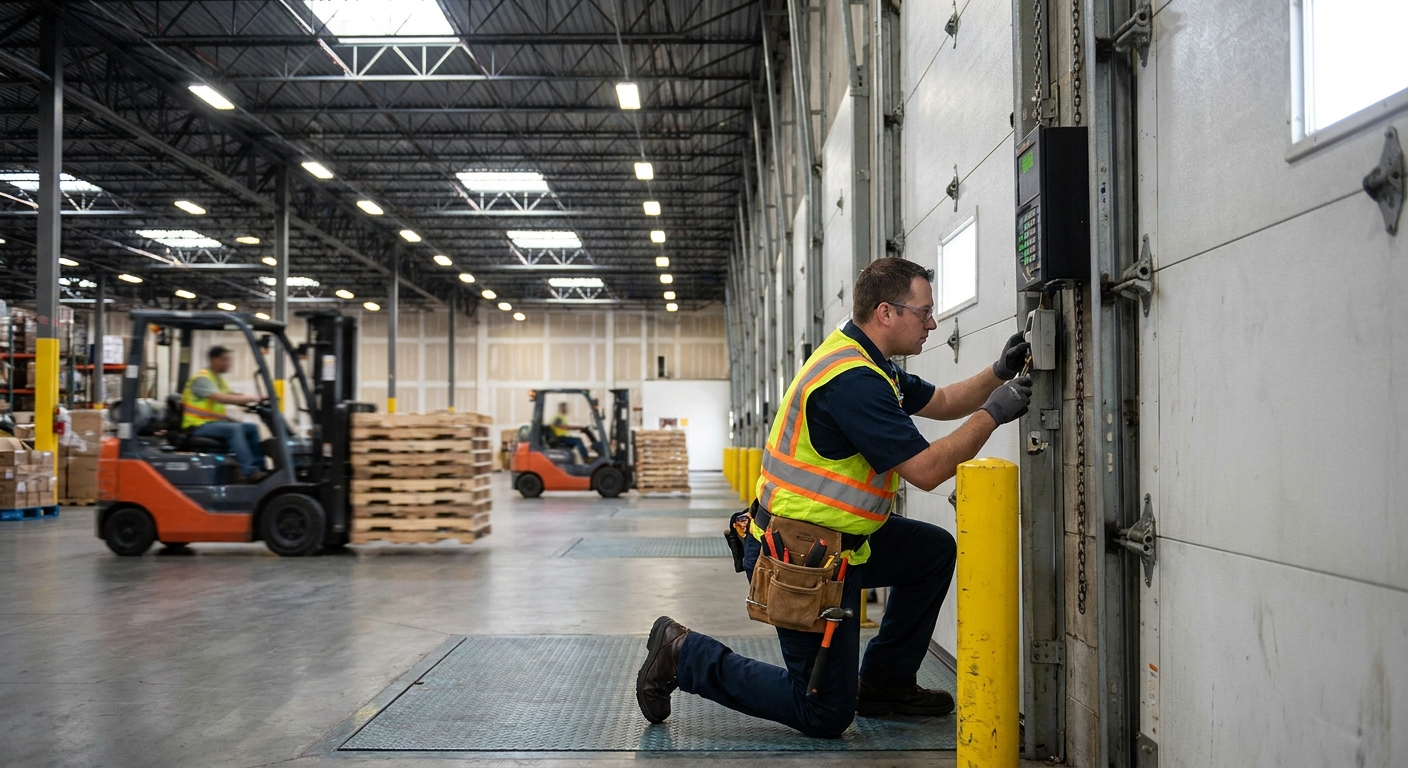
Warehouse and distribution center security is a different problem than a house or a storefront. Multiple entry points, shift-based staff turnover, high-value inventory, and loading dock doors that see hundreds of openings a day mean the wrong lock setup turns into a liability fast — this guide breaks down what a commercial locksmith for warehouses should actually install, and what to skip.
- Electronic access control with audit logs is the 2026 standard for multi-shift warehouses — buy it over standalone keypads.
- Grade 1 ANSI cylinders on roll-up doors resist bump and pick attacks that Grade 2 hardware fails in under a minute.
- Rekey after every warehouse manager or driver turnover — a single missing key can mean 20+ vulnerable doors.
- Master key systems save time for multi-building distribution centers but need a licensed locksmith to design the hierarchy correctly.
- Apex Lock N Key handles commercial lock and access-control installs across Middlesex County, MA on a 24/7 basis.
Why this matters
A distribution center in Middlesex County isn't securing one front door — it's securing dock doors, office entries, cage storage, and often a fenced perimeter gate, all running on different shift schedules. Apex Lock N Key sees the same pattern across warehouse clients in 2026: the lock hardware was chosen for the building's original tenant, not the current operation, and nobody's updated it since move-in.
That gap is where theft, insurance disputes, and OSHA compliance headaches start. A commercial locksmith for warehouses isn't optional infrastructure — it's the layer that decides whether a badge system, a key audit, or an insurance claim actually holds up.
Who this is for
This guide is built for warehouse managers, distribution center operations leads, and facility managers in Middlesex County who oversee buildings with 3 or more access points, rotating shift staff, or third-party drivers and contractors coming through daily. If your site has a single office door and no dock, this level of hardware is overkill — a standard commercial rekey covers you.
What to look for in a commercial locksmith for warehouses
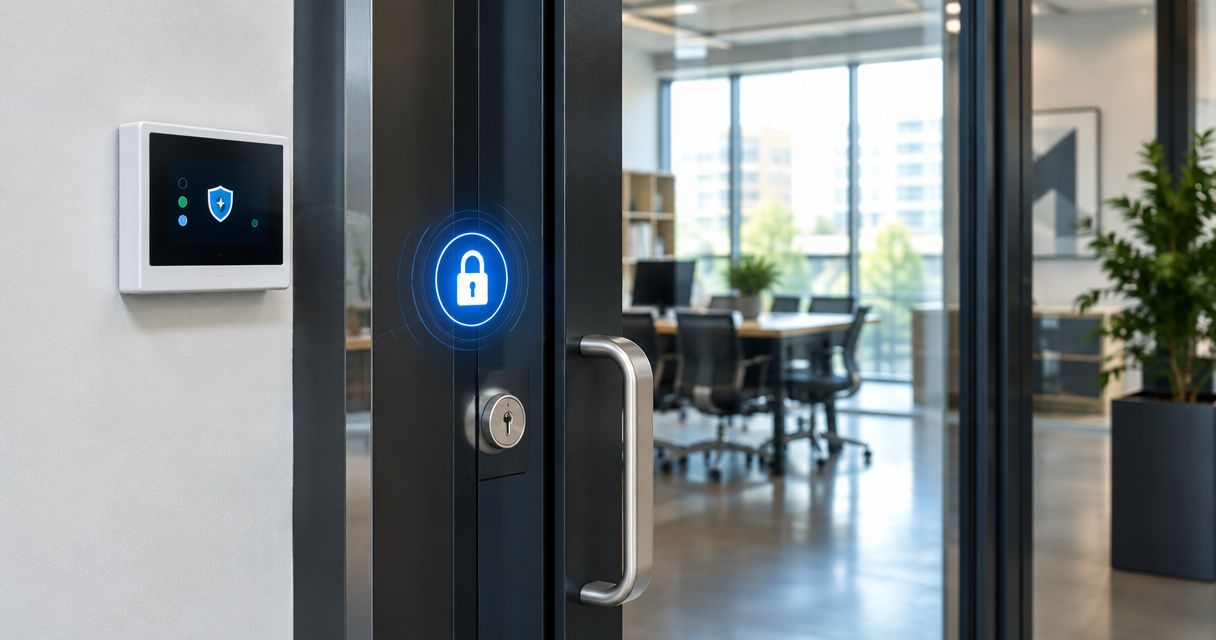
Access control with audit trails
Any lock system without a log of who entered and when is a liability in 2026, especially for facilities storing high-value freight. Badge or keypad systems that timestamp entries let you pinpoint exactly who was on-site during a shortage, which matters more than the lock hardware itself.
High-security cylinder ratings
Grade 1 ANSI or UL 437-rated cylinders resist picking, bumping, and drilling far longer than the Grade 2 or residential-grade hardware that gets installed by general contractors during buildout. A warehouse dock door with a Grade 2 lock can be defeated in under a minute with basic bump keys.
Master key hierarchy control
Distribution centers with multiple buildings or restricted zones (cage storage, IT rooms, dock offices) need a keying system where a master opens everything and sub-masters open only assigned zones. Get this design wrong and you either lock managers out of areas they need or give drivers access to zones they shouldn't touch.
24/7 emergency response
A jammed dock door lock at 4am during a shift change stops trucks, not just people. Any locksmith you're vetting needs a real 24/7 mobile response, not a next-business-day callback.
Multi-site scalability
If you're running more than one facility, the hardware and keying system need to scale without re-keying every building from scratch every time you add a location.
Compliance and insurance alignment
Some commercial insurance policies for warehouses specify minimum lock grades or require documented access logs after a loss claim. Confirm your locksmith understands what your policy actually requires before installation, not after a claim gets denied.
Top picks for warehouse and distribution center security
Electronic access control systems — the audit trail pick. Keypad or badge-based systems log every entry with a timestamp, which is the single biggest upgrade a multi-shift warehouse can make in 2026. Look for systems supporting at least 50 user credentials with individual deactivation — critical when drivers or seasonal staff rotate weekly. Verdict: Buy for any site with 10+ employees or contractor traffic.
Grade 1 ANSI cylinders on dock and roll-up doors — the perimeter fix. These resist the bump-key and pick attacks that take out standard hardware in under 60 seconds. If your dock doors still have the builder-grade cylinders from original construction, this is the first thing to replace. Verdict: Buy.
Master key systems — the multi-zone fix. A properly designed hierarchy lets a facility manager carry one key for the whole site while restricting cage storage or IT rooms to a sub-master. This only works when a licensed locksmith designs the pinning correctly — a DIY master key setup is one of the most common security gaps found during commercial audits. Verdict: Consider if you're running 3+ restricted zones; skip if your site is a single open floor.
Rekeying after staff turnover — the low-cost maintenance move. Every warehouse manager, forklift operator, or driver who leaves without returning a key represents an open door until you rekey. This is the cheapest line item on this list and the one most often skipped. Cost varies by door count, and general residential rekey pricing gives a useful cost baseline even though commercial jobs scale with door volume — see the locksmith cost breakdown for rekeying for how per-door pricing works. Verdict: Buy, and set a recurring schedule tied to your HR turnover reports.
Standalone keypad deadbolts for office areas — the convenience pick. Fine for a single admin office door with low traffic, but these lack the audit logging and load capacity that dock and warehouse floor doors need. Verdict: Consider for interior office doors only; skip for perimeter or dock applications.
Get a warehouse security assessment
Licensed, 24/7 commercial locksmith service across Middlesex County, MA.
What to avoid
- Residential-grade deadbolts on dock doors. They're built for a homeowner's front door traffic volume, not hundreds of daily openings from forklift crews and drivers.
- Keyless entry systems with no audit log. A code-only keypad with no per-user tracking gives you convenience but zero accountability when inventory goes missing.
- DIY master key rekeying. Getting the pinning wrong on a master key system either locks out staff or, worse, lets a sub-master key open zones it shouldn't — both are expensive mistakes to unwind.
Verdict comparison
| Solution | Best for | Audit trail | Verdict |
|---|---|---|---|
| Electronic access control | Multi-shift, high-traffic sites | Yes | Buy |
| Grade 1 ANSI cylinders | Dock and roll-up doors | No | Buy |
| Master key system | Multi-zone facilities | Partial | Consider |
| Scheduled rekeying | Post-turnover maintenance | No | Buy |
| Standalone keypad deadbolt | Single interior office door | No | Consider |
FAQ
What does a commercial locksmith for warehouses actually install?
A commercial locksmith for warehouses typically installs electronic access control, Grade 1 ANSI-rated cylinders on dock and roll-up doors, and master key systems for multi-zone facilities. The exact scope depends on door count and shift structure.
How often should a warehouse rekey its locks?
Rekey after every manager, driver, or shift-lead departure, not on a fixed annual schedule. A missing key from an employee who left months ago is an open door until the cylinder gets rekeyed.
Is electronic access control worth it for a small distribution center?
Yes if you have 10 or more employees or regular contractor and driver traffic in 2026 — the audit trail alone pays for itself the first time inventory goes missing and you need to know who was on-site.
What's the difference between Grade 1 and Grade 2 lock hardware?
Grade 1 ANSI-rated cylinders resist picking, bumping, and drilling far longer than Grade 2, which is common builder-grade hardware. Dock doors and perimeter entries should use Grade 1 minimum.
Can one locksmith handle multiple warehouse buildings on the same key system?
A licensed locksmith can design a master key hierarchy that scales across multiple buildings without rekeying each site independently, as long as the system is planned before the first building is keyed.
How much does commercial rekeying cost compared to residential?
Commercial rekeying scales with door count rather than a flat per-visit rate, since warehouses often have 10 or more doors versus a handful in a residential rekey job.
Do warehouses need 24/7 locksmith availability?
Yes — a jammed dock door lock during a shift change or overnight delivery stops trucks and freight, not just foot traffic, so response time outside business hours matters.
What's the biggest security mistake distribution centers make?
Skipping rekeying after staff turnover is the most common gap found during commercial audits, since it costs the least but gets deprioritized behind bigger hardware purchases.
One last thing
The hardware upgrade gets the attention, but the recurring rekey schedule tied to your HR turnover reports is the cheapest security move on this list and the one most facilities never set up — put a date on the calendar in 2026 instead of waiting for an incident to force the conversation.