
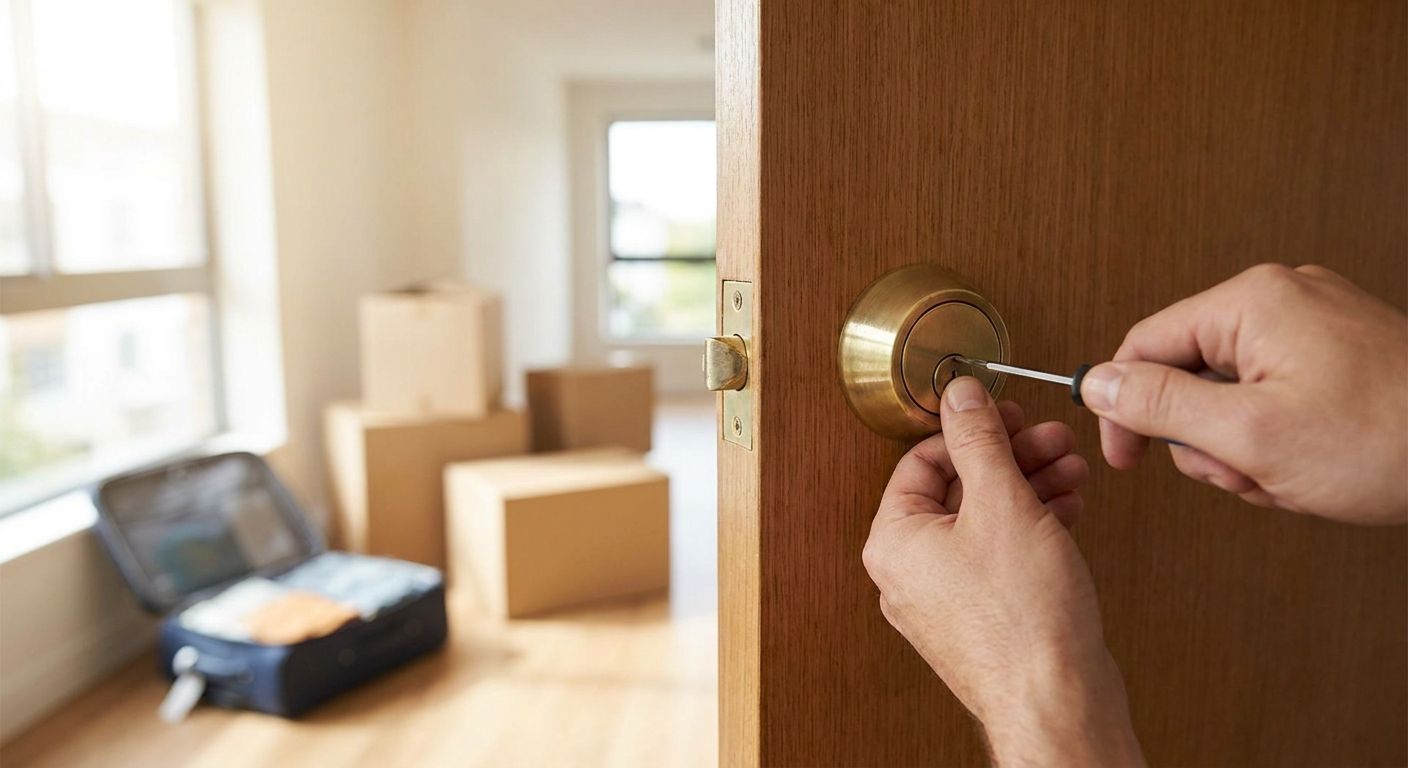
When a roommate moves out or a relationship ends, the keys they're carrying don't stop working just because they're gone. Rekeying the locks is the fastest way to shut off access without replacing hardware you already own.
- Rekeying locks after a roommate moves out replaces the internal pins, so every old key stops working immediately — that's the default move for most Middlesex County homes.
- A licensed locksmith rekeys all exterior doors in a single visit; skipping the back door or garage entry defeats the purpose.
- Smart lock codes and garage remotes need a separate reset — a mechanical rekey doesn't touch them.
- Full lock replacement, not rekey, is the right call when a cylinder is damaged or a lock is over 15 years old.
- Same-day rekeying from a licensed locksmith beats waiting until the ex-roommate's spare key surfaces somewhere it shouldn't.
Why this matters
A departed roommate or ex-partner may still have a key even if they swear they handed it over. Copies get made without anyone knowing, and in 2026 a $5 hardware-store key duplicate is still the easiest way for someone to walk into a home they no longer live in. Apex Lock N Key handles rekeying as a same-visit job across Middlesex County, MA, which matters when the person who moved out still has your address.
Rekeying isn't about distrust — it's a basic reset any time a household changes. Landlords do it between tenants. Homeowners should do it between roommates, exes, and anyone else who had a key for longer than a weekend.
Who this is for
This guide is for anyone who shared a lease or a mortgage with someone who's no longer in the picture — a roommate who broke a lease early, an ex-partner who moved their stuff out, or an adult child who left for college and left keys behind. If you're a landlord managing a tenant turnover instead of a personal move-out, the process is similar but the logistics differ enough that a dedicated resource fits better. It's also relevant if you co-signed a lease with multiple roommates and only one person is leaving — the other keyholders still need working keys after the rekey.
What to look for in a rekey after a roommate or partner moves out
Coverage of every exterior entry point
A rekey that only touches the front door misses the back door, the side entry, and the garage service door — all doors that likely shared a spare with the person who left. Ask the locksmith to confirm every exterior cylinder gets rekeyed in the same visit, not just the one you remembered.
Rekey vs. full replacement
Rekeying swaps the internal pins so old keys stop working, but it only makes sense on hardware that's still in good shape. A cylinder with worn pins, a sticking deadbolt, or a lock older than 15 years is a better candidate for replacement than rekey — patching an old lock doesn't fix the mechanical wear underneath.
Who else has copies
Before scheduling, make a mental list: did the roommate give a key to a partner, a dog walker, or a friend crashing on the couch during a rough patch? A rekey shuts off every existing key at once, so it doesn't matter how many copies are floating around — but knowing the number helps you decide how urgent the timeline is.
Smart lock codes and garage remotes need their own reset
Mechanical rekeying only affects pin-and-tumbler cylinders. If the home has a keypad deadbolt, a video intercom, or a garage door opener the ex-roommate paired to their phone, those need a separate code change or remote deauthorization — a rekey doesn't touch software.
Timing relative to move-out day
The safest sequence is rekeying the same day the person's belongings leave, not a week later. A gap of even a few days is enough time for someone upset about the split to let themselves back in before the locks change.
Same-day availability
A rekey job is quick mechanical work, not a multi-day project. A licensed, insured locksmith working 24/7 in Middlesex County should be able to get to a home the same day the request comes in, especially when the ask is straightforward: rekey, not replace.
Top picks: what actually gets used after a move-out
Standard cylinder rekey — the default move. Most residential deadbolts and knob locks use a 5-pin cylinder, and a rekey swaps those pins in one visit so every existing key — including the roommate's — stops working the moment the locksmith finishes the last door. It's mechanical work, not a hardware swap, so the existing deadbolt and strike plate stay in place. Verdict: Buy — this is the right call for the vast majority of roommate and partner move-outs where the hardware itself is fine.
Electronic deadbolt installation — the upgrade pick. If you're already paying for a locksmith visit, swapping to a keypad deadbolt means the next access change is a 30-second code reset instead of another service call. That's a real advantage for households that rotate roommates often or want to hand out temporary codes to a dog walker or cleaner. Electronic deadbolt installation replaces the entire lock body, not just the pins, so it costs more upfront than a rekey. Verdict: Consider — worth it if you expect to manage access changes again within a year or two.
Full lock replacement — when the hardware itself is the problem. A rekey assumes the cylinder is mechanically sound. If a lock sticks, the key wiggles before it turns, or the deadbolt has been in place since before 2015, replacing it outright solves both the access problem and the wear problem in one visit. Verdict: Consider — skip the rekey conversation entirely if the lock already needed attention before the move-out happened.
Rekey plus a broken key extraction check — the overlooked combo. It's common for an ex-roommate's key to be left in a lock, snapped off during a heated exit, or jammed from age. If a key won't come out or a cylinder won't turn cleanly, that's a separate mechanical issue from the rekey itself and needs to get resolved first. Verdict: Buy — bundle it into the same visit rather than scheduling two separate calls.
What to avoid
- Assuming a "give me the key back" conversation is enough. Verbal promises don't stop a copy that was already made months earlier.
- Rekeying the front door only. Side doors, garage entries, and sliding door locks are just as exposed if they share a keyway with the front.
- Waiting for a "good time." The good time is before the moving truck leaves, not after an awkward text exchange two weeks later.
Get locks rekeyed same day
Licensed, insured, and available 24/7 across Middlesex County, MA.
Verdict comparison
| Option | Best for | Touches hardware? | Verdict |
|---|---|---|---|
| Standard cylinder rekey | Sound locks, fast turnaround | No — pins only | Buy |
| Electronic deadbolt install | Frequent roommate turnover | Yes — full lock swap | Consider |
| Full lock replacement | Worn or aging hardware | Yes — full lock swap | Consider |
| Broken key extraction + rekey | Snapped or jammed keys | Yes — cylinder repair | Buy |
Costs vary by door count and hardware condition — the average rekey cost breakdown covers what to expect for a typical Middlesex County home in 2026.
FAQ
Should I rekey locks after a roommate moves out?
Yes — rekeying replaces the internal pins so any key your former roommate had stops working immediately. It's the standard response any time a household loses a keyholder, whether that's a roommate, ex-partner, or subletter.
Is rekeying cheaper than replacing the locks?
Rekeying is generally less expensive than full replacement since it reuses the existing lock body and only swaps the pins. Replacement makes more sense when the hardware itself is worn, damaged, or outdated.
How long does it take to rekey a house in 2026?
A standard rekey across all exterior doors typically finishes in a single visit. The exact time depends on how many doors need new pins and whether any cylinders are damaged.
Do I need to rekey the garage door too?
Yes, if the garage has a service door with a keyed cylinder. A garage door opener with a remote or keypad code needs a separate reset, since rekeying doesn't affect electronic access.
Can a locksmith rekey the same day someone moves out?
A licensed, 24/7 locksmith can typically schedule a same-day rekey, especially for straightforward jobs that don't require replacing hardware. Same-day service closes the access gap before a spare key becomes a problem.
What's the difference between rekeying and changing locks?
Rekeying swaps the internal pins so old keys stop working while the lock body stays the same. Changing locks replaces the entire mechanism, which costs more but is necessary when the hardware is worn or damaged.
Does rekeying work on smart locks?
Mechanical rekeying only applies to pin-and-tumbler cylinders, not electronic keypads. A smart lock needs its access code changed or reset instead, which is a separate step from a physical rekey.
What if my ex-roommate still has a key and won't give it back?
Rekeying solves this regardless of whether the key is ever returned, since the old key stops matching the new pins the moment the work is done. There's no need to track down every copy that was made.
One last thing
A rekey handles the physical key, but it doesn't touch anything digital tied to the home — smart lock codes, garage remotes, video intercom access, or a shared key lockbox code from a former Airbnb-style arrangement. Anyone auditing access after a move-out in 2026 should walk through both the mechanical locks and every electronic entry point in the same pass, not just the ones with a physical key.


