
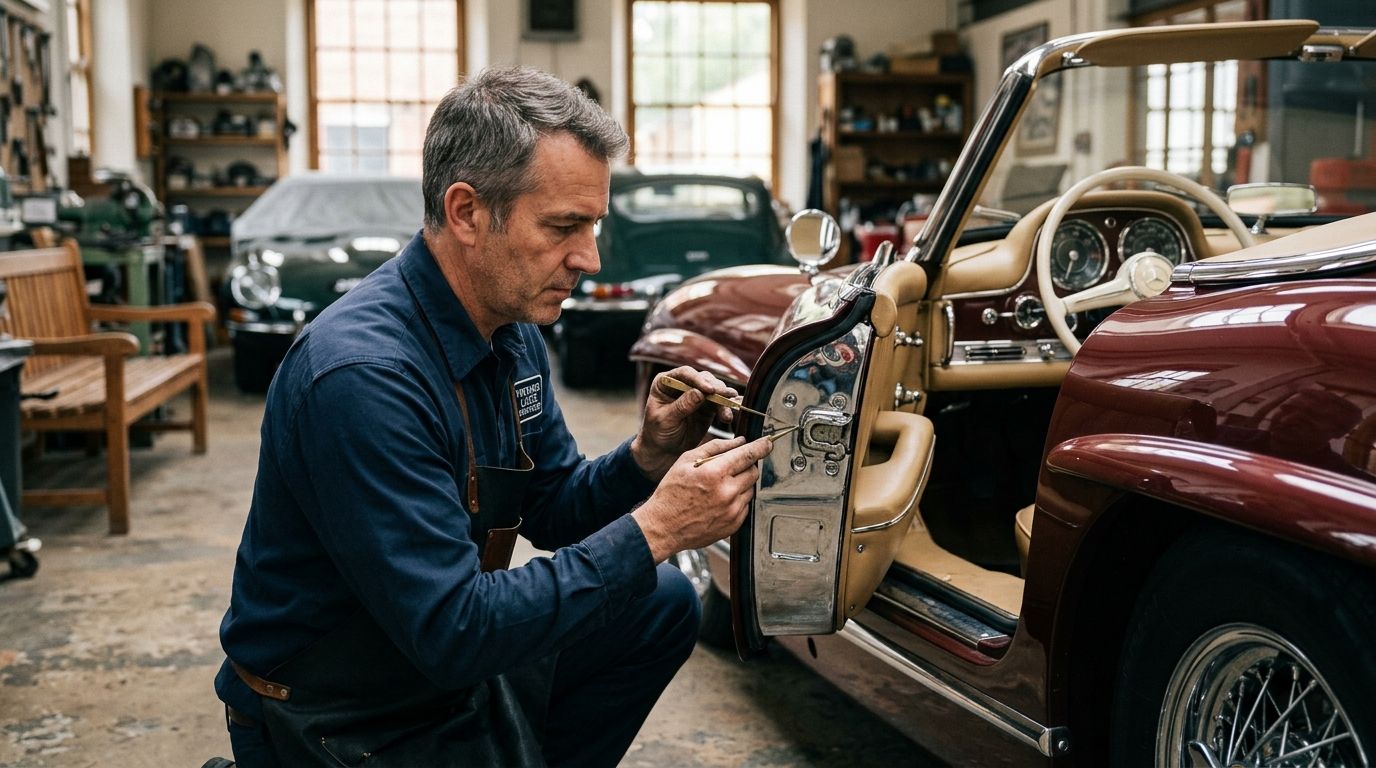
Antique and vintage car locksmith service is mobile key-cutting, lock repair, and ignition work performed on vehicles built before modern transponder systems, with the aim of getting a classic car unlocked or running again without damaging original hardware that can't be replaced from a parts bin. Pre-1980s vehicles use flathead, wafer, or pin-tumbler locks that don't talk to a computer, and a locksmith who only knows modern chip keys can do real damage trying to force a fix that doesn't apply.
- A locksmith for antique cars works by code-cutting or impressioning, not chip programming — verify this before booking anyone in 2026.
- Apex Lock N Key handles mechanical ignition and lock repair for classic vehicles across Middlesex County, Massachusetts.
- Drilling a stuck antique ignition is often reversible damage if a specialist is called first; it's permanent damage if a generalist drills it out.
- Get a spare key cut and stored off-vehicle before your original wears down — most owners wait until it's too late.
Why this matters for antique and vintage car owners
A 1967 Mustang or a 1974 Triumph doesn't have a chip in the key, doesn't have a dealership that stocks its ignition cylinder, and doesn't forgive a locksmith who treats it like a 2020 Camry. Parts for a lot of these ignitions stopped being manufactured decades ago, so the tumbler in the car now is often the only one that will ever exist for it.
That changes the math on every lock decision. A worn wafer that would get swapped for $40 on a modern car has to be cleaned, repaired, or hand-fitted on a classic, because there's no replacement part to order. Get the wrong person on the job and you're not looking at a repair bill — you're looking at a car that can't be started or a dashboard cut open to fix it.
Identify your ignition and door lock type before calling anyone
Most of the wasted time on a classic car lockout comes from someone showing up with the wrong tools for the era. A few minutes of identification before the call saves an hour on-site.
- Check whether the ignition is a separate cylinder mounted in the dash, steering column, or floor — placement varies a lot by make and decade
- Note the manufacturer and approximate year; lock mechanisms changed multiple times even within one model line
- Look for existing key-code stampings on the lock face, glovebox, or original paperwork
- Photograph the key blade shape if you still have a worn or broken original
- Flag any prior non-factory lock swaps — some restorations installed later hardware that changes the job entirely
Get keys cut by code or by original, not by dealer chip programming
A dealership parts counter is built around current-generation transponder systems. Ask for a key for a car built before the mid-1990s and most service departments will tell you they can't help, because their equipment and software start where chip keys start.
- Have the vehicle identification number and any factory key code on hand before the call
- Ask specifically whether the locksmith cuts keys by code or by impressioning a blank against the worn original
- Confirm the blank stock still exists for your lock family — some pre-war and low-production makes need custom blanks
- Request two cut keys minimum on the same visit, since getting a second visit scheduled for a rare lock takes longer
- Apex Lock N Key's transponder and lost-key replacement service covers mechanical cutting alongside chip-based work, which matters if your classic has been retrofitted with a later ignition
Rekey or repair a worn tumbler instead of replacing it
Rekeying resets the internal pins so an old key stops working and a new one does, without swapping the whole lock body. On a classic car, this is almost always the better first move than a full replacement, because the housing and face plate are often irreplaceable trim pieces.
- Ask for cleaning and lubrication of the tumbler before any pin replacement is attempted
- Request the technician preserve the original lock face and housing, even if internal pins get swapped
- Have both door locks and the ignition rekeyed to the same new key in one visit
- Get a written note on what was done, useful if you sell the car or need warranty-adjacent work later
- Skip full-lock replacement unless the housing itself is cracked or missing teeth internally
Handle a stuck or frozen ignition switch carefully
A classic ignition that won't turn is usually a worn tumbler, dried lubricant, or a slightly bent key, not a dead lock. Forcing it is how a $150 repair turns into a $600 one.
- Stop turning the key the moment you feel resistance beyond normal drag
- Try a second key if you have one, since a bent or worn original is a common cause
- Avoid aftermarket lock lubricant sprays that gum up old mechanisms; graphite works better on vintage tumblers
- Call a locksmith who repairs and cleans mechanical ignitions rather than defaulting to replacement — ignition switch repair for cars that won't start covers this exact failure mode
- Never let anyone drill the ignition as a first step; drilling is the last resort, not the default
Know when to call a locksmith vs. a restoration shop
A locksmith fixes locks, keys, and ignitions. A restoration shop rebuilds engines, bodies, and interiors. The line blurs on classic cars because ignition and steering column work overlaps both trades.
- Call a locksmith for lock cylinders, key cutting, rekeying, and ignition switch mechanics
- Call a restoration shop if the steering column itself is damaged, cracked, or was previously modified
- Ask a locksmith upfront whether they've worked on pre-1980s vehicles specifically, not just "older cars"
- Get a second opinion before any drilling or column disassembly is approved
Protect the car's value during any lock work
Original hardware adds resale and show value. Replacement parts, even correct reproductions, usually don't hold the same value at auction or for concours judging.
- Ask whether the technician can work non-destructively before agreeing to any drilling
- Request the original lock face, cylinder, and key be returned to you even if a repair replaces internal parts
- Keep documentation of any lock or ignition work for the car's provenance file
- Avoid non-factory replacement locks unless the original is truly beyond repair
Plan for lost-key scenarios before they happen
Most antique car owners only think about keys after one goes missing or snaps in the ignition. A little planning now avoids a stressful call later.
- Get a spare cut and stored somewhere other than the vehicle or garage
- Record any factory key code from paperwork or the lock face while it's still legible
- Ask your locksmith to note the lock family and blank type on file for faster future service
- If your only key is already lost, replacing a car key without the original fob walks through what a locksmith needs to cut a new one from scratch
Comparing your options for antique car lock work
| Option | Best for | Key limitation |
|---|---|---|
| General mobile locksmith (no classic-car experience) | Simple modern lockouts, not antique work | Often unfamiliar with wafer/pin mechanisms and non-standard blanks |
| Antique/classic car specialist locksmith | Mechanical ignition repair, key-by-code cutting, rekeying original hardware | Fewer providers offer this specifically; confirm experience before booking |
| Dealership service department | Newer vehicles with active parts support | Most can't service pre-1990s mechanical ignitions at all |
| Restoration shop | Column, body, or interior rebuilds tied to the ignition | Not focused on lock and key work specifically; slower turnaround for a simple lockout |
Apex Lock N Key is best for classic and antique car owners in Middlesex County who need mechanical lock and ignition repair without drilling or replacing original hardware first. Confirm mechanical key-cutting capability before any visit is scheduled, since not every mobile locksmith stocks blanks for older vehicles.
Common mistakes antique car owners make
- Calling the dealership first. Most service departments stop supporting mechanical ignitions once a model moves past a certain generation, and the call wastes time you didn't need to lose.
- Letting a generalist drill the ignition on the first visit. Drilling is often reversible damage when handled by someone who knows classic tumblers, and permanent damage when it isn't.
- Storing only one key for the whole car. A single worn original with no backup is how a simple rekey turns into an emergency.
- Using modern lock lubricant on old mechanisms. Some sprays gum up decades-old tumblers instead of freeing them; graphite is the safer default for vintage locks.
- Assuming replacement parts exist. For a lot of pre-1980s makes they don't, which is exactly why rekeying and repair beat replacement as the first move.
Get your classic car unlocked right
Licensed, insured mobile service across Middlesex County, Massachusetts.
FAQ
Can a locksmith cut a key for a car with no chip or transponder?
Yes. Antique and vintage vehicles built before the mid-1990s generally use mechanical keys with no chip, and a locksmith who works on classic cars cuts them by code or by impressioning against a worn original.
Is it safe to drill a stuck antique car ignition?
Drilling should be the last resort, not the first step. Most stuck antique ignitions are caused by a worn tumbler, dried lubricant, or a bent key, and those are fixable without drilling.
Do dealerships service ignitions on pre-1980s cars?
Most dealership service departments in 2026 are set up for current-generation transponder systems and don't stock parts or tools for mechanical ignitions from decades earlier.
What's the difference between rekeying and replacing a classic car lock?
Rekeying resets the internal pins so a new key works while keeping the original housing and face plate intact. Replacement swaps the whole lock, which matters on a classic because original housings are often irreplaceable.
How do I find a locksmith who works on antique cars specifically?
Ask directly whether the locksmith has cut keys or repaired ignitions on pre-1980s vehicles, not just "older cars" in general, since the mechanisms and blank stock are different from anything from the last three decades.
Should I get a spare key made before my original wears out?
Yes. A worn original key on an antique car is harder to duplicate later, so cutting a spare now while the key still reads clearly avoids a harder job down the road.
Can a locksmith rekey both the doors and the ignition to one key?
Yes, on most classic vehicles a locksmith can rekey the door locks and ignition to the same new key in a single visit, which is standard practice and worth requesting upfront.
One last thing
The mechanism working against you on a classic car isn't age, it's rust and dried lubricant inside a tumbler that hasn't turned in years. A cylinder that looks frozen solid in 2026 often frees up completely with cleaning and graphite, no drilling and no replacement parts required. That's the detail most owners don't hear until after a generalist has already reached for a drill.


