
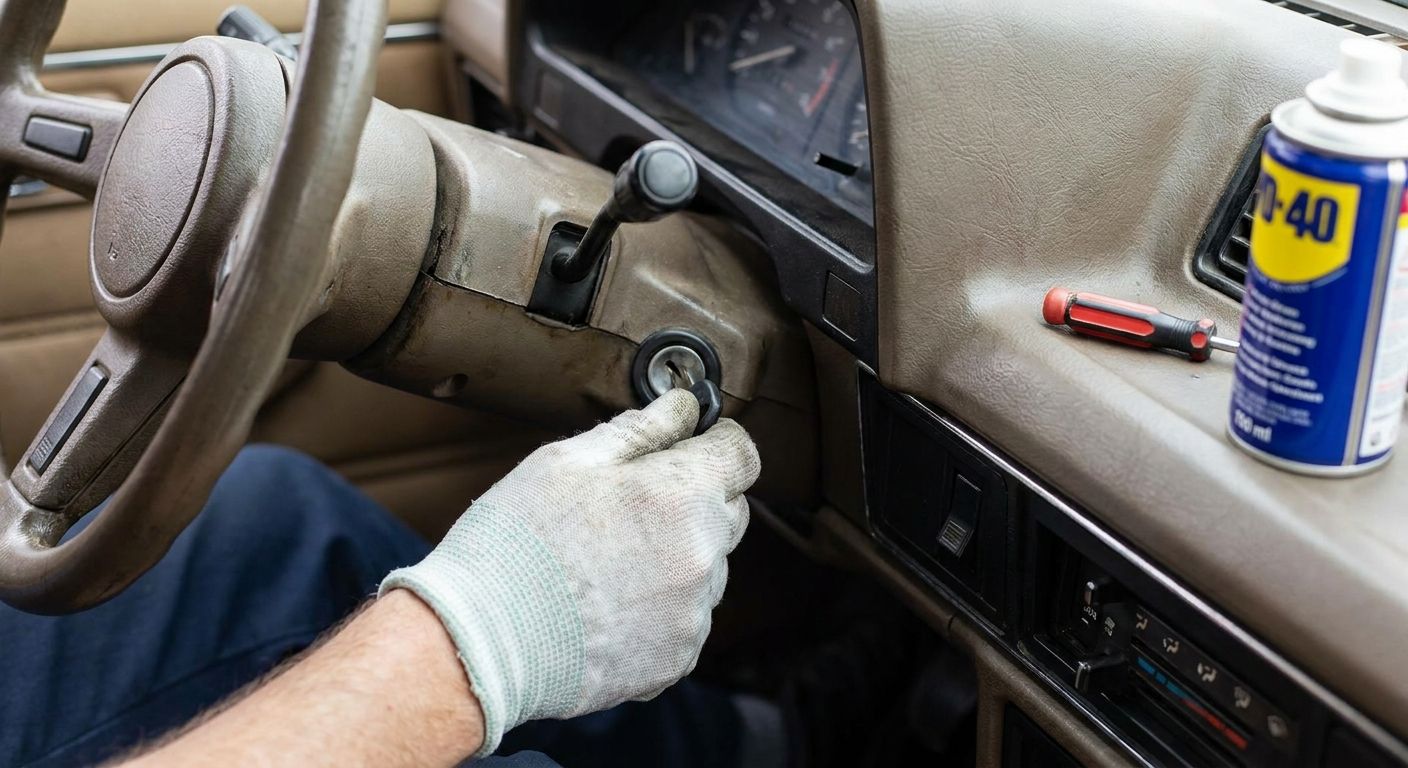
An ignition that won't turn with the key is almost always mechanical, not electrical — and in 2026 most cases still trace back to a worn key, a dirty cylinder, or a steering wheel that's locked itself in place. This guide walks through the fixes you can try in your driveway before you call for backup.
- An ignition won't turn with key most often because of steering wheel lock, a worn key, or a dirty cylinder — try these before replacing anything.
- Graphite lubricant fixes sticky cylinders; WD-40 makes it worse by attracting grit.
- A key that turns but won't crank the engine points to ignition switch failure, not the lock cylinder — Apex Lock N Key handles ignition switch repair on-site.
- Snapped key stuck in the ignition is an emergency extraction job, not a DIY fix.
Why this matters
An ignition cylinder is a mechanical lock with small spring-loaded pins, and it wears the same way a front door lock does — slowly, then all at once. Push-button and traditional key ignitions fail for different reasons, but in both cases the fix is usually cheaper and faster than people assume once the actual cause is identified.
Misdiagnosing the problem is the expensive mistake. Drivers who force a stuck key often snap it off inside the cylinder, turning a 15-minute fix into an ignition switch repair call plus a tow if the car is stuck in gear. Work through the steps below in order — they're sequenced from most common cause to least.
What you'll need
- Your primary key and a spare, if you have one
- A can of powdered graphite or Teflon-based dry lubricant (not WD-40 or oil-based sprays)
- A flashlight
- 10 to 15 minutes
- Confirmation the transmission is fully in Park (automatic) or Neutral with the clutch depressed (manual)
The steps
1. Confirm the gear position and brake pedal
Most modern vehicles won't release the ignition unless the shifter is fully seated in Park and, on many models, the brake pedal is pressed at the same time. This is a safety interlock, not a fault.
Rock the shifter slightly while wiggling the key — a shifter that looks like it's in Park but hasn't clicked all the way in is one of the most common reasons an ignition won't turn with key in 2026-model vehicles with electronic shift interlocks.
Common mistake: forcing the key harder instead of reseating the shifter first. Force bends tumbler pins.
2. Release the steering wheel lock
If the wheels were turned sharply when the car was parked, the steering lock engages and physically blocks the ignition cylinder from rotating.
Hold light pressure left and right on the steering wheel while turning the key. You'll feel a small give and the key will turn freely once the lock disengages — this single step resolves a large share of ignition won't turn with key complaints without any tools.
Common mistake: yanking the wheel hard in one direction only. Alternate side to side instead.
3. Inspect the key for wear or debris
Run a flashlight over the key's teeth. A key that's been duplicated multiple times, bent slightly, or coated in pocket lint won't seat deep enough to turn the tumblers.
Compare it against a spare if you have one — a visibly shorter or rounded edge on the worn key means it's the problem, not the ignition.
4. Lubricate the cylinder — never oil-based spray
Spray a short burst of graphite or dry Teflon lubricant directly into the keyway, then insert and remove the key five to six times to work it through the pins.
WD-40 and other petroleum sprays feel like they help for a day, then attract dust and grit that gums the cylinder shut within weeks. This is the single most common DIY mistake that turns a $0 fix into a locksmith call two months later.
Expected outcome: the key inserts more smoothly and turns with noticeably less resistance.
5. Try your spare key
If a spare turns the ignition without issue, the problem is your primary key, not the car. Stop using the worn key and get it duplicated from a key that still works, since duplicating a worn key copies the wear pattern.
If neither key turns, the cylinder itself is the problem — move to step 6.
6. Tap gently around the ignition housing
With the key inserted but not forced, tap lightly on the steering column housing around the ignition with the handle of a screwdriver — never the key itself. Worn tumbler pins sometimes just need a small jolt to reseat.
Common mistake: using a hammer or striking hard. This can crack the plastic housing or misalign the cylinder further.
7. Check the fob battery on push-to-start vehicles
If your car uses a push-button start, a dead key fob battery mimics an ignition problem — the button won't engage or the dash flashes a key-not-detected warning. Most vehicles have a backup slot near the button for holding the fob directly against the sensor.
Swapping a coin-cell battery is usually a five-minute fix — see the car key fob battery guide for the walkthrough by vehicle type.
8. Stop and call a locksmith if none of the above works
If the key still won't turn after lubrication, wiggling, and a spare key test, the cylinder or switch has failed internally. Continued forcing risks snapping the key off inside the ignition, which turns a repair into an emergency extraction.
Ignition still won't turn?
Apex Lock N Key responds 24/7 across Middlesex County, MA.
Troubleshooting
Key turns but the engine won't crank. This points to the ignition switch, not the lock cylinder — the switch is the electrical component behind the cylinder that sends power to the starter. Mechanical fixes like lubricant won't touch it; this is an ignition switch repair job.
Key won't insert at all. Debris, a bent key, or a previously broken key fragment lodged in the cylinder are the usual causes. Don't jam a second key in to try to push it out.
Key snapped off inside the ignition. Stop immediately — pulling at a broken key fragment with pliers usually pushes it deeper. This calls for broken key extraction, which removes the fragment without damaging the cylinder.
Key turns partway and stops. Almost always the steering lock. Revisit step 2 with more deliberate side-to-side pressure before assuming cylinder failure.
Push-to-start button does nothing, dash shows no key detected. Dead fob battery first, weak cellular interference second. Try the backup fob slot before assuming an ignition fault.
Ignition works fine cold but sticks after the car's been running. Heat expansion on worn tumbler pins is a known cause on vehicles over 8-10 years old — this is a wear pattern, not a one-time fluke, and it gets worse without lubrication.
Tools and resources
- Graphite or dry Teflon lock lubricant (avoid oil-based sprays)
- A working spare key for comparison testing
- Flashlight for inspecting the keyway
- Broken key extraction service if a fragment is stuck
- Car key fob battery replacement guide for push-to-start systems
What to do next
If your key still won't turn after working through every step, don't keep forcing it. A licensed locksmith can inspect the tumblers and switch without removing the steering column in most cases, and catching it early avoids a snapped key or a tow. Apex Lock N Key handles ignition diagnostics and repair as a mobile call across Middlesex County, so you don't need to get the car towed anywhere first.
FAQ
Why won't my ignition turn with the key at all?
The most common causes are an engaged steering wheel lock, a worn or dirty key, or debris in the cylinder. Try wiggling the steering wheel while turning the key before assuming the ignition itself has failed.
Is it safe to use WD-40 on a sticky ignition?
No — WD-40 and other oil-based sprays attract dust and grit that gum up the cylinder within weeks. Use a dry graphite or Teflon-based lubricant instead.
How do I know if it's the ignition switch or the lock cylinder?
If the key turns smoothly but the engine won't crank, the ignition switch has likely failed. If the key won't turn at all, the problem is almost always the mechanical lock cylinder.
Can a locksmith fix an ignition that won't turn, or do I need a mechanic?
A licensed locksmith handles ignition cylinder and switch repair on most vehicles without removing the steering column. A mechanic is only needed if the starter motor or wiring itself has failed, which is rare.
What should I do if my key snaps off in the ignition?
Stop trying to remove it with pliers or tools — this usually pushes the fragment deeper into the cylinder. Call an emergency locksmith for broken key extraction instead.
Why does my push-to-start car say key not detected?
A dead fob battery is the most common cause in 2026 model vehicles. Try holding the fob against the marked backup sensor near the start button before assuming a bigger problem.
Does cold weather make an ignition harder to turn?
Cold can stiffen a lubricant that's already gummed up with dirt, but it rarely causes a working ignition to fail outright. If it only happens in winter, the cylinder likely needed lubrication before the cold made it worse.
How much does ignition switch repair cost in 2026?
Cost depends on the vehicle and whether the switch or the full cylinder needs replacement. A mobile locksmith visit gets you an on-site quote before any work starts.
One last thing
The steering wheel lock trick resolves the majority of "ignition won't turn" calls locksmiths see, and it costs nothing to try. Do it first, every time, before assuming you need a repair.


