
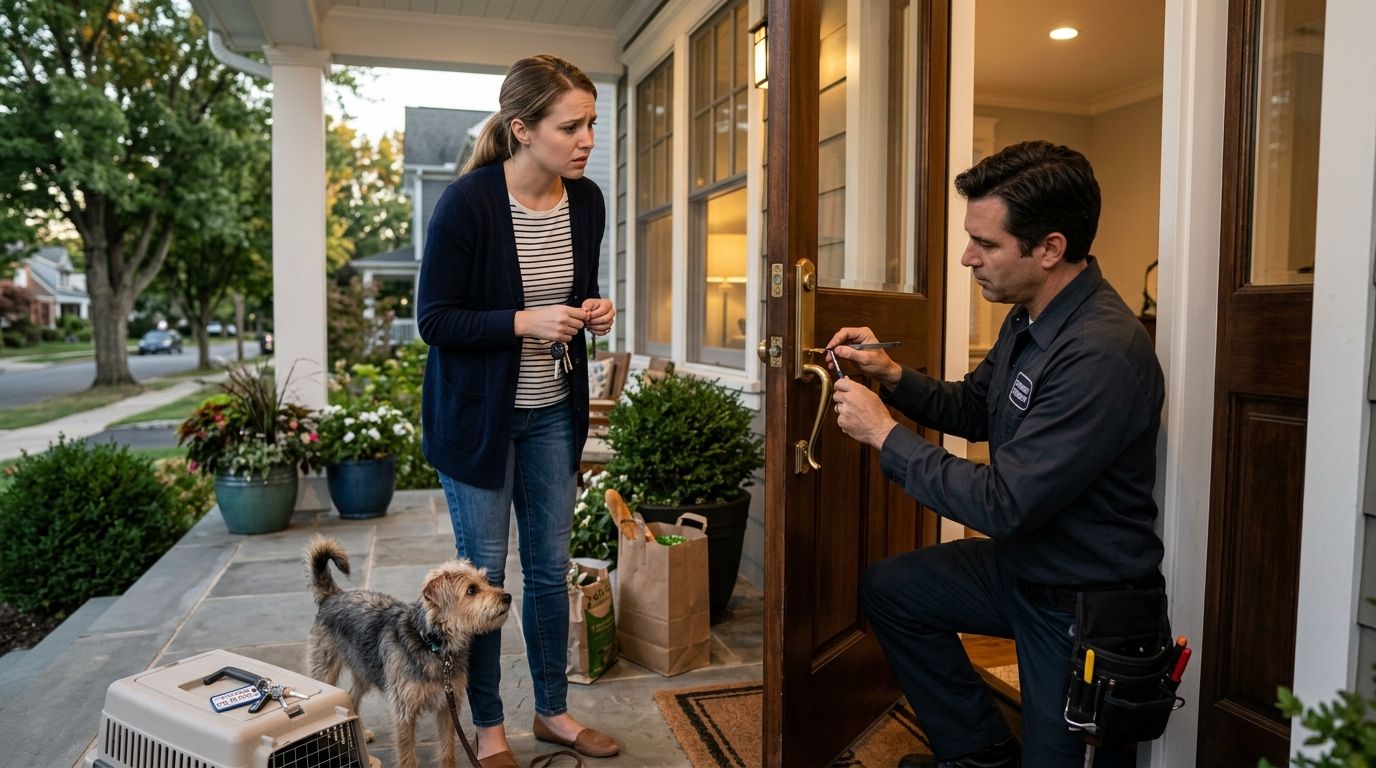
Pet sitters and house sitters need one thing when a lockout happens: a licensed locksmith who can open the door fast, without damaging a client's property or blowing your credibility with the homeowner. A house-sitting lockout is a liability problem first and a locksmith problem second — you're accountable for someone else's home and animals, and the wrong move (forcing a window, drilling a lock yourself) can cost you the gig and the client relationship.
- Emergency locksmith for house sitters means a licensed technician who arrives fast and won't damage a client's doors, locks, or landscaping.
- Apex Lock N Key runs 24/7 mobile lockout response in Middlesex County, MA for sitters, drivers, and homeowners.
- Call the homeowner before you call anyone else — most lockouts have a lockbox or spare key you don't know about.
- Non-destructive entry (picking, bypass) beats drilling for a house sitter because you don't own the lock and can't authorize a full replacement.
- Document the lockout with photos and a timestamp so the homeowner has a record if a lock gets rekeyed afterward.
Why this matters for pet sitters and house sitters
You're not the homeowner. You don't have a spare key stashed in a junk drawer, you can't legally break a window to get in, and you're usually managing a dog that needs to go out or a cat that needs feeding on a schedule. That combination — time pressure, an animal depending on you, and zero ownership of the property — is what separates a house-sitter lockout from a regular homeowner lockout.
Most house-sitting and pet-sitting platforms also put liability language in their service agreements. If you force entry, damage a lock, or leave an animal unattended for hours while you figure out a fix, that's on you contractually, not the client. A licensed mobile locksmith who documents the call and uses non-destructive entry protects you on both fronts: the animal gets attended to and the homeowner's property stays intact.
Confirm the lockout before you call anyone
Don't assume the worst. A surprising share of "lockouts" are actually a stuck deadbolt, a door that swelled in humidity, or a key that's simply in the wrong pocket.
- Check every door — front, back, garage, side entry — before declaring a full lockout
- Try the key again slowly; a worn key sometimes needs a slight jiggle, not force
- Look for an unlocked window or pet door only if you know the homeowner is fine with that entry point
- Confirm you have the right key on the ring; sitters juggling multiple properties mix keys up constantly
- Note the exact lock brand and type (deadbolt, smart lock, keypad) — a locksmith will ask
Contact the homeowner immediately
This step comes before the locksmith call, not after. The homeowner may have a solution you don't know about, and they need to be looped in regardless of how the lockout resolves.
- Text and call — don't wait for a callback before taking the next step
- Ask if there's a lockbox, a neighbor with a key, or a hidden spare
- Ask if the home has a keyless entry system for short-term rentals with a backup code
- Get verbal permission to call a locksmith on their behalf if you can't reach them within 10-15 minutes
- Confirm who's paying for the service call before the locksmith arrives
Check for a lockbox or hidden key first
Many homeowners set up a lockbox specifically for sitters, dog walkers, and contractors — it's the fastest fix and it costs you nothing.
- Ask the homeowner directly if a lockbox exists, even if they didn't mention one at drop-off
- Check the porch light, a fake rock near the entry, or a side gate — common hiding spots
- If a lockbox code fails or the box itself is jammed, a locksmith can service it without destroying the box
- Real estate agents managing multiple properties often rekey lockboxes for house and property access for exactly this reason — ask if the property has one on file
Call a licensed emergency locksmith
Once you've ruled out a spare key or lockbox, this is the move. Apex Lock N Key runs 24/7 mobile locksmith service across Middlesex County, Massachusetts, and dispatches technicians for exactly this scenario — a sitter locked out with an animal on the other side of the door.
- Confirm the technician is licensed and insured before they start work — ask outright, it's a normal question
- Give the exact address, lock type, and whether pets are inside and how they'll react to a stranger entering
- Ask for non-destructive entry first; drilling should be a last resort, not the default
- Get a timestamp and a written or texted confirmation of the service performed
Locked out with a pet waiting inside?
24/7 mobile locksmith response across Middlesex County, MA.
Secure the pet and the property while you wait
A locksmith arrival can take a while depending on distance and time of day. Use the wait time productively instead of pacing the driveway.
- Check if the pet has water and shade access from outside if it's warm
- Peek through windows to confirm the animal isn't in distress, without forcing entry
- Note any barking, scratching, or signs of stress to report to the homeowner
- Keep the yard secure — don't prop a gate open while waiting on the locksmith
Document everything for the homeowner
A house sitter's job doesn't end when the door opens. The paper trail protects you if the homeowner questions how the lock was accessed.
- Photograph the lock before and after service
- Save the locksmith's invoice or receipt, even if the homeowner is reimbursing you
- Note the exact time the animal was let out relative to the lockout start
- Send the homeowner a short recap: what happened, who you called, what it cost
Ask about rekeying if the lock was picked or drilled
Non-destructive entry (picking, bypass tools) generally leaves the existing lock functional. Drilling does not — the cylinder is destroyed and needs replacement.
- Ask the locksmith which method they used and why
- If drilling was necessary, get the homeowner's go-ahead before authorizing a rekey or lock swap
- For a spare key going forward, homeowners can arrange a spare house key duplication service so a future sitter isn't stuck
- Confirm the new key (if one is cut) gets added to whatever key system the homeowner uses for future sitters
Comparison: your options when you're locked out on a sitting job
| Option | Best for | Response speed | Key limitation |
|---|---|---|---|
| Licensed mobile locksmith | Any lockout with a pet or time pressure | Fast, 24/7 dispatch | Requires a service call and technician travel time |
| Homeowner's spare key or lockbox | Lockouts where the homeowner planned ahead | Immediate if it works | Only helps if you know it exists and the code/key is current |
| Neighbor or emergency contact with a key | Properties with a trusted local contact | Depends on availability | Not every property has one, and it's not always disclosed to sitters |
| DIY lock picking or forcing entry | Nobody, as a house sitter | Variable, often slower than a pro | Damages a lock you don't own and creates liability exposure |
Verdict: call a licensed locksmith before you touch a lock you don't own. The comparison above makes the tradeoff obvious — every non-professional option either depends on information you may not have or puts you at fault for damage.
Common mistakes house sitters and pet sitters make
- Trying to force a door or window instead of calling a locksmith — even a small crack in a frame can turn into a repair bill you're responsible for
- Not confirming licensing before letting a technician start work — a legitimate locksmith will show ID and credentials without hesitation
- Skipping the homeowner call until after the lockout is resolved — homeowners want to know in real time, not after the fact
- Forgetting to ask about a lockbox that already exists — sitters often assume there's no backup access when one was set up specifically for them
- Not documenting the service call — a photo and a timestamp take 30 seconds and protect you if questions come up later
FAQ
What should a house sitter do first when locked out?
Check every entry point and confirm it's an actual lockout, then contact the homeowner before calling anyone else. Many properties have a lockbox or hidden spare the sitter doesn't know about.
Is it safe to call a locksmith without the homeowner's permission?
Get verbal or texted permission first if at all possible, since the homeowner is paying for and authorizing entry to their own property. If they're unreachable and a pet is in distress, document your attempts to reach them before proceeding.
How fast can an emergency locksmith respond to a lockout in Middlesex County, MA?
Apex Lock N Key dispatches mobile technicians 24/7 across Middlesex County, and response time depends on the technician's location relative to the property at the time of the call.
Will a locksmith need to drill the lock to get a sitter inside?
Not usually — licensed technicians try non-destructive entry methods like picking or bypass tools first. Drilling is reserved for locks that are damaged, jammed, or otherwise unresponsive to standard techniques.
Who pays for a locksmith call during a house-sitting job?
That depends on the sitting agreement between the sitter and homeowner, and it should be settled before the technician arrives, not after. Confirming payment upfront avoids an awkward conversation once the door is open.
Should a sitter keep a spare key on hand for future visits?
A spare key held by a sitter reduces lockout risk on repeat jobs, provided the homeowner agrees to it and it's stored securely. Homeowners can have a duplicate cut specifically for a recurring sitter arrangement.
What if the pet is in visible distress during the lockout?
Tell the locksmith dispatcher immediately so the call can be prioritized, and check on the animal through a window without forcing entry yourself. A licensed technician working non-destructive entry can usually get the door open in minutes once on scene.
One last thing
The detail most sitters miss: a lockbox that works one week can fail the next if the homeowner changed the code and forgot to update it for you. Confirm the current lockbox code at drop-off, not after you're already locked out — it's a 30-second question that prevents the entire scenario above.


