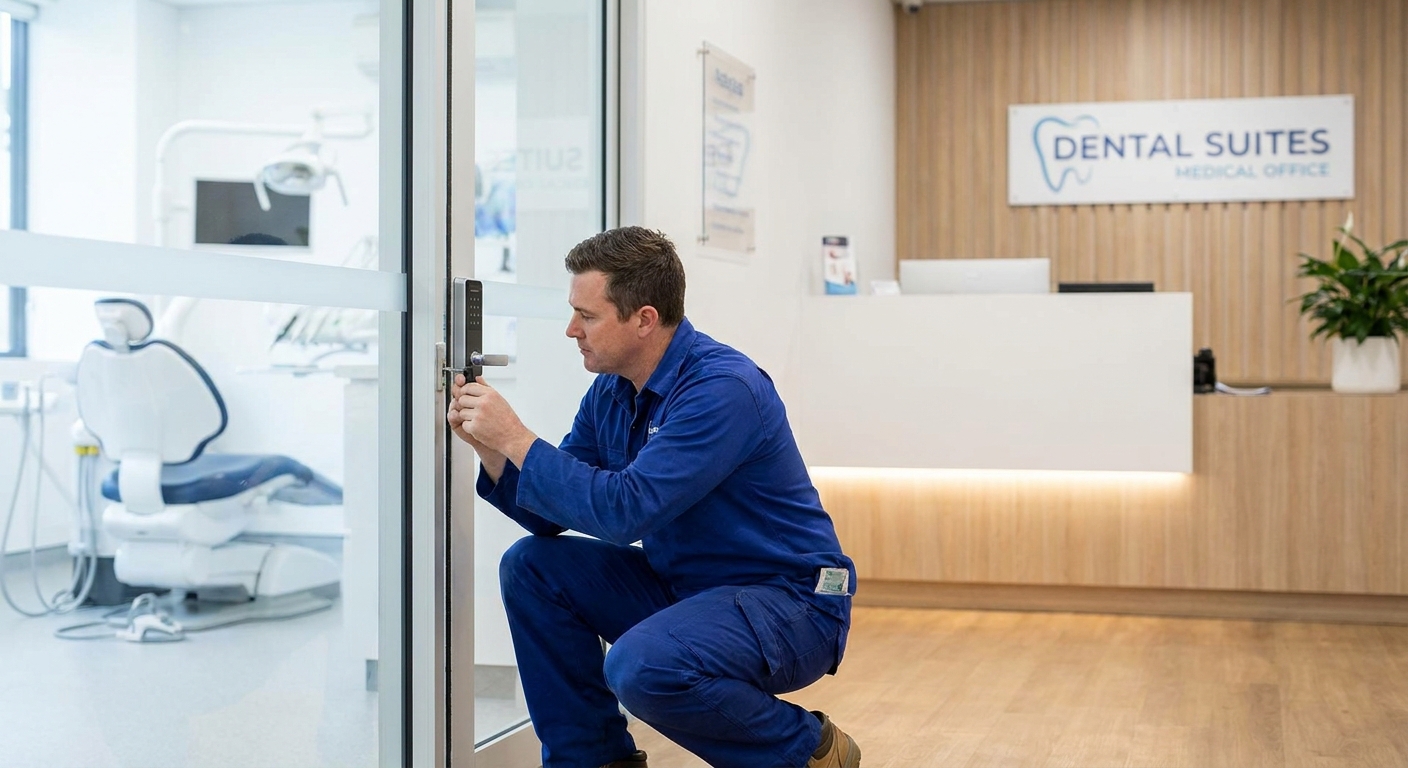
Medical and dental practices in Middlesex County carry security risks a residential locksmith never sees — controlled substance cabinets, patient record rooms, and staff turnover that residential rekeying schedules don't cover. This guide breaks down what a commercial locksmith for medical offices actually needs to get right in 2026, and which upgrades protect the practice instead of just the front door.
- A commercial locksmith for medical offices should carry MA licensing plus commercial liability coverage, not just a residential bond.
- Master key systems with 3+ access tiers are the standard fix for multi-provider practices in 2026.
- Rekey immediately after any staff departure with controlled-substance or records access — Apex Lock N Key treats this as non-negotiable.
- ANSI Grade 1 deadbolts and panic hardware for fire egress are the baseline, not the upgrade.
Why this matters
A medical or dental office isn't a house with a sign out front. Front desk staff, hygienists, associate providers, and cleaning crews all need different levels of access, and every one of those keys is a liability the day someone leaves the practice. HIPAA doesn't dictate lock hardware directly, but state and payer audits increasingly ask how records rooms and med storage are physically secured — and "we changed the locks once in 2019" is not an answer anyone wants to give in 2026.
Apex Lock N Key handles this as a Middlesex County-based commercial locksmith, working directly with practice managers and office owners rather than generic building maintenance vendors. The calculus for a medical office is different from a retail storefront: fewer doors, higher-value contents behind a subset of them, and staff rosters that turn over more than owners expect.
Who this is for
This guide is built for practice managers, dentists, physicians, and office administrators responsible for physical security at a medical or dental practice with 2-20 staff members — solo practitioners adding their first associate, multi-provider clinics consolidating suites, and practices that have never audited who holds a key to the med room. If your practice handles controlled substances, patient files, or after-hours deliveries, the criteria below apply directly.
What to look for in a commercial locksmith for medical offices
Verified commercial licensing and insurance
Massachusetts requires locksmiths to carry a license, but commercial liability coverage on top of that license is what protects the practice if a lock failure leads to a break-in or a records exposure. Ask for the license number and certificate of insurance before any technician touches a door — a legitimate commercial locksmith produces both without hesitation.
Experience with multi-tier master key systems
A solo-practitioner office might need two key levels. A five-provider clinic with a shared records room and a controlled-substance cabinet needs three or four. A locksmith who's only ever rekeyed single-family homes typically doesn't stock the hardware or understand the key-bitting logic to build this correctly on the first visit.
After-hours and emergency response time
Medical offices get locked out at odd hours — a hygienist arriving at 6:45am for a 7am patient, a physician locked out after a late surgery consult. A locksmith who can't respond same-day, every day, isn't built for a practice that opens before most services do.
Compliance with fire and life-safety egress codes
Exit doors in medical offices are subject to fire code requirements that residential doors aren't — panic hardware, egress-compliant deadbolts, and door closers all get inspected. A locksmith unfamiliar with commercial egress code can install hardware that fails an inspection.
A documented rekey policy tied to staff changes
The practices that get burned are the ones with no rule for when locks get changed. The ones that don't are the ones that rekey the moment a staff member with records or medication access leaves, no exceptions.
Electronic access control as an option, not a requirement
Keypad and card-access systems solve the "who has a physical key" problem, but they cost more upfront and need someone to manage the credential list. A locksmith worth hiring will tell you honestly whether your practice size justifies it yet, instead of upselling it to every client.
Top security upgrades for medical and dental offices
Master key systems — the multi-provider fix. A 3-tier master key system separates front desk, exam room, and controlled-substance storage access so no single key opens everything. Practices with 4+ providers typically need this within the first year of adding a second associate. Buy if your practice has more than three staff roles with different access needs.
High-security ANSI Grade 1 deadbolts — the baseline. Grade 1 deadbolts resist forced entry significantly longer than the Grade 2 or 3 hardware found in most retail storefronts, and they're the standard commercial locksmiths install on exterior and records-room doors. Buy for every exterior door and any room storing patient files or medication.
Rekeying after staff turnover — the low-cost fix. This is the cheapest line item on this list and the one most practices skip. Pricing scales with door count rather than square footage, and rekey pricing guides for standard residential jobs give a useful baseline for what per-cylinder labor typically runs, even though a commercial job usually adds a few more doors to the count. Buy every time a staff member with records or med-room access leaves.
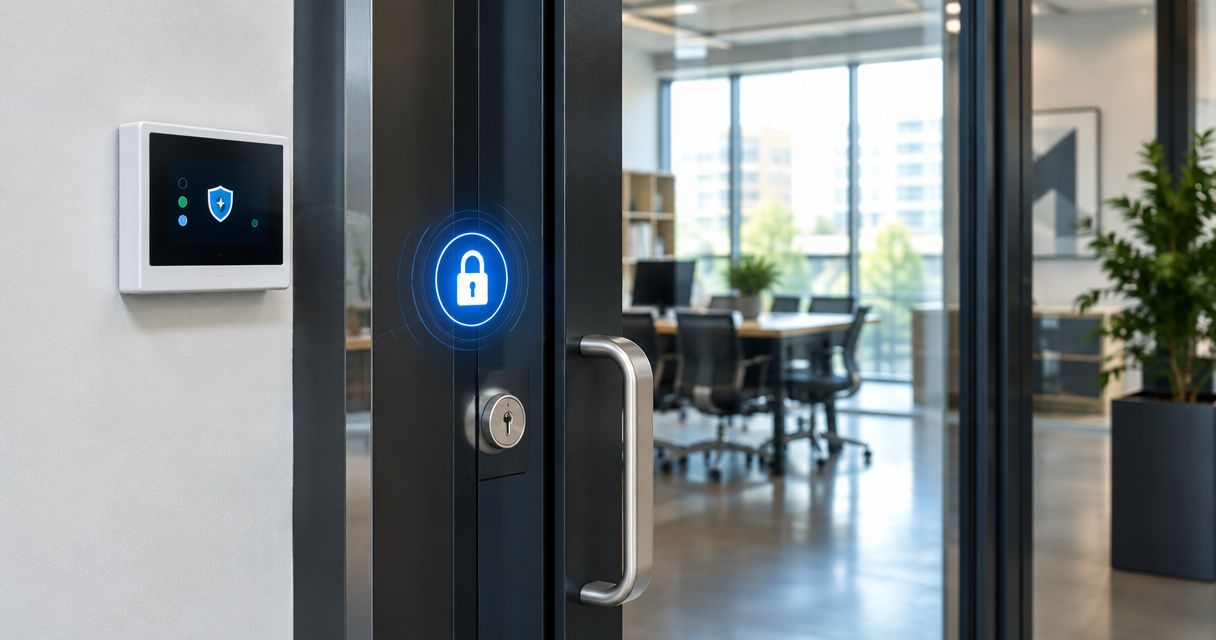
Electronic keypad or card access — the wildcard. Credential-based access removes the "who has a copy of the key" problem entirely, but it requires someone on staff to manage user codes and revoke access promptly. Consider this once the practice passes five staff members or adds a second location.
Panic and exit hardware — the compliance item. Fire code requires functioning panic hardware on rated egress doors in commercial occupancies, and it's often the first thing an inspector checks. Buy if your practice hasn't had exit hardware reviewed in the last two years.
Get a security walkthrough for your practice
Licensed, insured commercial locksmith service across Middlesex County, available 24/7.
What to avoid
- A locksmith who only lists residential services online. If a company's site is built around home lockouts and car keys with no mention of master keying or commercial hardware, they likely don't stock the parts for a multi-tier practice setup.
- Rekeying only the front door after a staff departure. If the person who left had access to the records room or med cabinet, those cylinders need rekeying too — not just the exterior entrance.
- Skipping the certificate of insurance request. A locksmith without commercial liability coverage puts the practice at risk if hardware fails after installation.
Verdict comparison
| Upgrade | Best for | Typical priority | Verdict |
|---|---|---|---|
| Master key system | 4+ provider practices | High | Buy |
| Grade 1 deadbolts | All exterior/records doors | High | Buy |
| Post-turnover rekey | Any staff departure with key access | High | Buy |
| Electronic keypad access | 5+ staff or multi-location | Medium | Consider |
| Panic/exit hardware | Fire code compliance | Medium | Buy |
FAQ
What does a commercial locksmith for medical offices actually do differently from a residential locksmith?
A commercial locksmith for medical offices builds multi-tier master key systems, installs fire-code-compliant exit hardware, and handles higher door counts than a typical residential job. Residential locksmiths generally don't stock commercial-grade cylinders or master key blanks.
How often should a dental or medical office rekey its locks?
Rekey immediately after any staff member with access to records or medication storage leaves the practice, not on a fixed calendar. Practices with frequent staff turnover in 2026 are rekeying multiple times a year for this reason alone.
Is electronic access control worth it for a small practice?
Electronic keypad or card access is usually worth the added cost once a practice passes five staff members or opens a second location. Below that size, a well-built mechanical master key system covers the need at lower cost.
How much does a commercial locksmith cost for a medical office rekey?
Commercial rekeying scales by door and cylinder count rather than square footage, and per-cylinder labor tracks close to standard residential rekey pricing with additional charges for master key programming. Get an on-site quote for an exact number since door count varies by suite layout.
Do medical offices need panic hardware on all exit doors?
Fire code typically requires panic or fire exit hardware on rated egress doors in commercial occupancies, including medical suites. Check with your local Middlesex County building inspector for the exact requirement on your specific suite.
What's the difference between a master key and a grand master key system?
A master key opens a defined set of locks within one practice, while a grand master key spans multiple locations or suites under one ownership. Most single-location medical practices only need a standard master key system, not a grand master tier.
Can a locksmith rekey a medical office after hours?
A commercial locksmith offering 24/7 service can rekey a practice outside business hours so patient appointments aren't disrupted. Apex Lock N Key schedules these jobs before or after clinic hours specifically for this reason.
Should a medical office use the same locksmith for commercial and emergency lockout calls?
Using one licensed commercial locksmith for both routine security work and emergency lockouts means the technician already knows your key system and door hardware. That familiarity speeds up emergency response compared to calling a locksmith who's never worked on the property before.
One last thing
The cheapest security upgrade on this entire list is also the most skipped: rekeying the exam room and med storage cylinders the same week a staff member with access leaves. Most practices only rekey the front door, if they rekey at all, and that gap is where break-ins and internal theft claims actually originate in 2026.
Apex Lock N Key builds master key systems, installs Grade 1 hardware, and handles emergency rekeys for medical and dental practices across Middlesex County, and a commercial locksmith for medical offices should be able to walk your suite and quote all three in one visit.